






German Shelf Clock
A german shelf clock brings mechanical precision and rich cabinet-making into domestic rooms, combining brass movements with timber cases.
German Shelf Clock
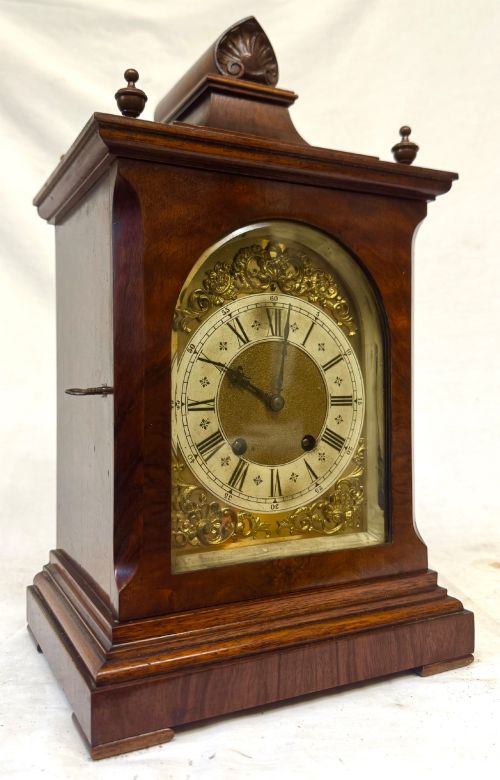
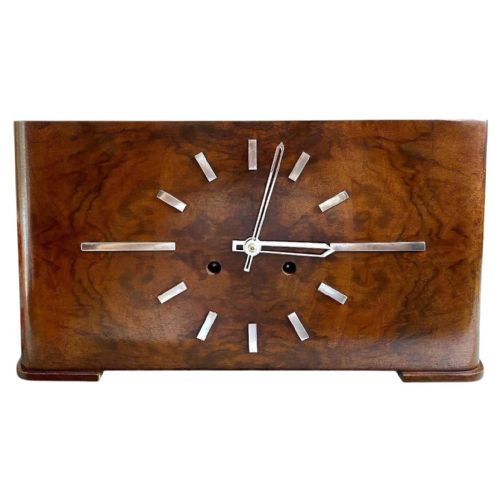
A german shelf clock encompasses mantel and bracket timepieces designed for domestic interiors, originating from the nineteenth and early twentieth centuries. These pieces span varied stylistic movements, moving from ornate nineteenth century revivals toward clean geometric lines in later decades.
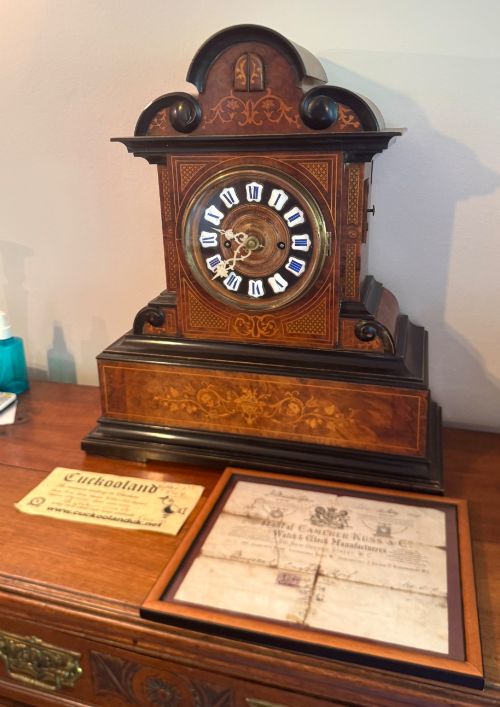
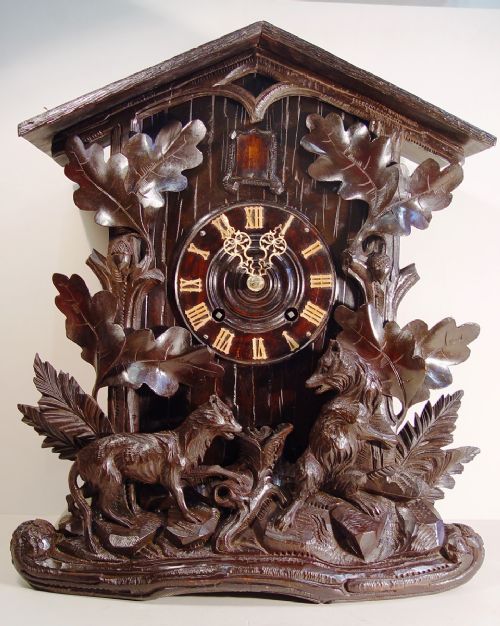
The most common examples encountered on this page date from the nineteenth century and the early decades of the twentieth century. These domestic timepieces take the form of mantel clocks, bracket clocks, and traditional cuckoo designs intended for placement on furniture surfaces.
How they were made
Casework relies heavily on walnut, burr walnut, and ebonised wood, sometimes accented with gilt ormolu, brass, and glass components. Makers applied marquetry and polished finishes to timber surfaces to create visual depth and decorative contrast.
Internal mechanical systems utilise brass gear trains and striking mechanisms driven by weights or springs. Enamel dials display numerals, while chrome and metal elements appear in later twentieth century designs to reflect shifting industrial aesthetics.
German Shelf Clock Retail Price Guide 2026
Typical asking prices for german shelf clock among the pieces listed under this phrase on Sellingantiques today, from the lower quarter to the upper quarter. They describe what is for sale here now, not the wider market.
Several clocks wear their time proudly, bringing the gentle ticking of brass and walnut into modern quiet rooms.
What varies in quality
The sophistication of the movement largely dictates the standard of a german shelf clock, ranging from standard time-only mechanisms to complex chiming and twin fusee configurations. Heavier brass castings and refined escapements distinguish higher grade engineering.
Cabinetwork execution separates mass production from master craftsmanship, visible in the selection of burr walnut veneers, precise marquetry inlay, and hand-carved details on Black Forest pieces. Superior dial legibility and undamaged enamel faces further elevate a piece.
H.A.C.·Lenzkirch·Haller·Junghans·Pfeilkreuz Junghans·Beha
The German Shelf Clock Glossary
- Mantel clock
- A freestanding clock designed to stand upon a fireplace mantel or shelf. These domestic timepieces often feature striking mechanisms to mark the hours.
- Bracket clock
- A portable clock originally designed to sit on a wall bracket or table surface. They frequently incorporate substantial brass dials and protective glass panels.
- Twin fusee
- A mechanical system utilising cone-shaped pulleys and chains or cords to equalise the force of the mainspring. This mechanism promotes more consistent timekeeping across the winding cycle.
- Ormolu
- Gilded bronze or brass applied as decorative mounts on furniture and clock cases. The technique creates a bright metallic accent against dark timber surfaces.
- Marquetry
- The art of applying thin veneers of wood and other materials to a structure to form decorative patterns. Craftsmen use contrasting timbers to build intricate pictorial designs.
German Shelf Clock: Frequently Asked Questions
Where should I place a german shelf clock?
These clocks find a natural home on stable flat surfaces like mantelpieces, sideboards, or dedicated clock brackets. Position them away from direct heat sources and damp environments to protect the internal brass mechanisms and timber casework.
Ensure the surface is level so the pendulum swings evenly and the striking train operates correctly without binding.
How do I wind my clock?
Use the appropriate key to wind the springs or raise the weights gently until you feel resistance. Avoid overwinding, as this can strain the internal mechanical components.
Consult the specific movement type before adjusting hands, moving them only in the permitted direction to preserve the striking sequence.
What periods do these clocks cover?
The available selection spans the nineteenth century through to the Art Deco period of the nineteen-thirties. Early examples often showcase ornate revival styles or traditional carved woodwork.
Later pieces embrace modernist principles, incorporating chrome and geometric timber forms characteristic of the Bauhaus era.
How do I identify a Black Forest clock?
Black Forest examples are typically distinguished by carved wooden cases featuring naturalistic motifs, foliage, or animal figures. Many incorporate traditional cuckoo mechanisms and musical or striking trains.
These pieces reflect the distinct regional woodworking traditions of the Black Forest region in Germany.