


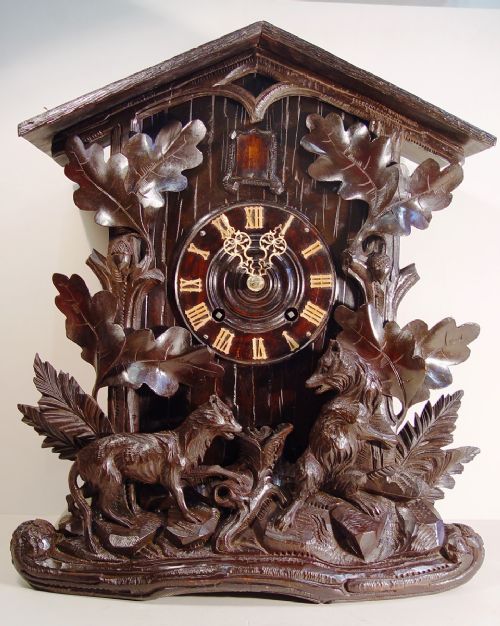


German Mantle Clock
These german mantle clock pieces bring rich cabinet-work and precise striking movements into any room.
German Mantle Clock
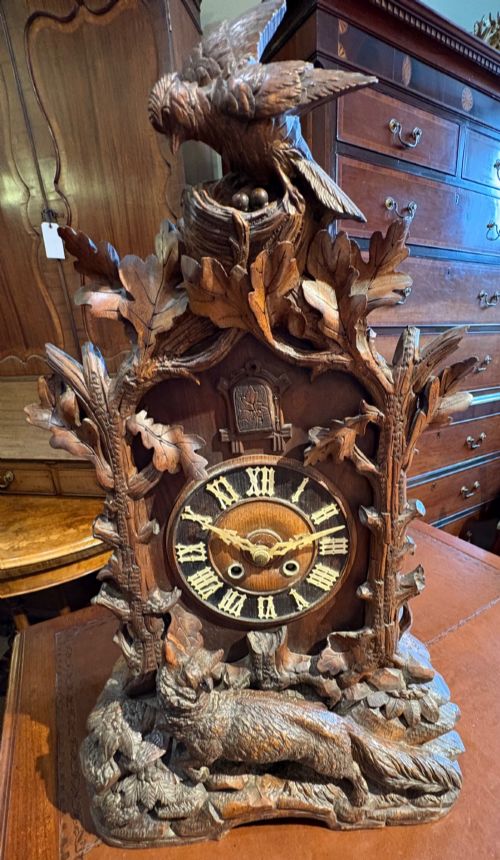
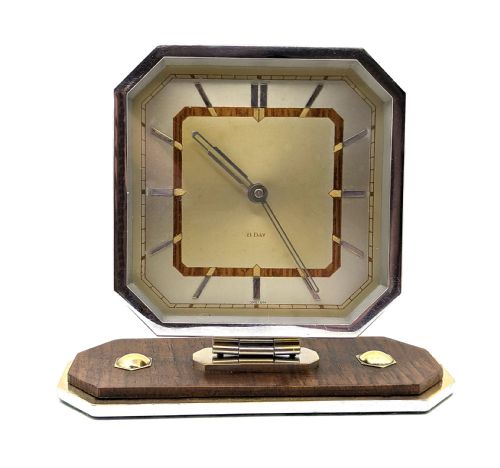
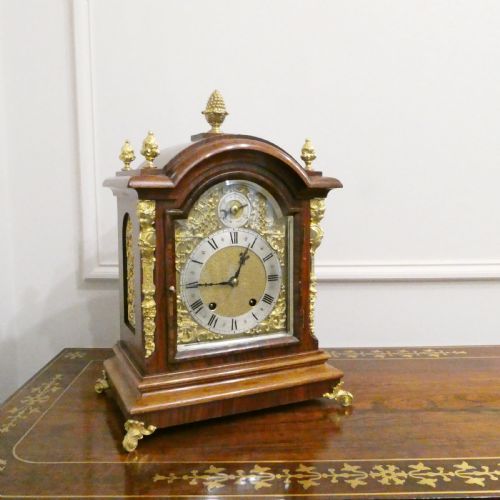
A german mantle clock spans the nineteenth century through the art deco period, offering diverse styles from elaborate black forest carvings to streamlined chrome desks. Buyers encounter bracket clocks, striking library clocks, and porcelain garnitures alongside cuckoo and torsion mechanisms.
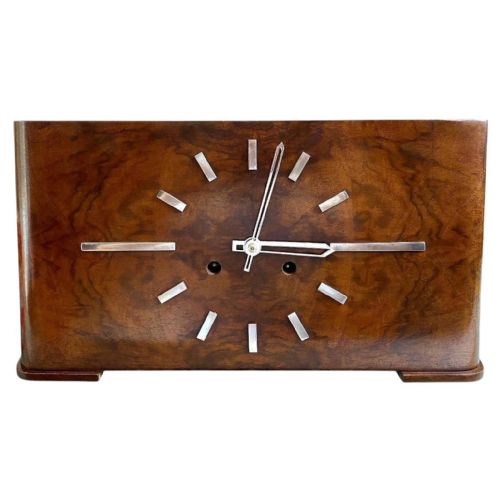
The nineteenth century examples draw on rococo revival, gothic revival, and german historicism, utilising rich walnut, oak, and brass. Art deco pieces from around nineteen thirty favour clean walnut veneers and chromium plating.
Mantel clocks and desk clocks appear frequently, often complete with mechanical movements by makers such as mauthe, haller, junghans, and winterhalder and hofmeier.
What Varies in Quality
The refinement of the cabinet-making separates standard production from exceptional pieces, particularly in carved black forest wood and figured walnut veneers. Finely cast ormolu mounts and hand-painted porcelain enrich the overall presence of the clock.
Mechanical complexity and the reputation of the workshop dictate the standing of the movement, from simple striking trains to intricate twin fusee or torsion systems. Signed movements by notable makers generally indicate higher manufacturing standards.
The listings combine nineteenth century walnut bracket clocks with nineteen thirties chrome art deco desk pieces.
Mauthe·Haller·Schneckenburger·B H A·Meissen·Winterhalder & Hofmeier·Junghans·Lenzkirch·Beha·Diehl
The German Mantle Clock Glossary
- Bracket clock
- A portable clock originally designed to sit on a wall bracket. These pieces often feature fine wooden cases and carrying handles.
- Torsion clock
- A clock regulated by a torsion pendulum that rotates back and forth. This mechanism allows the clock to run for a year on a single winding.
- Ting tang
- A striking mechanism that uses two bells to sound the quarters. It produces a distinctive two-note chime before the full hour strikes.
- Twin fusee
- A movement utilising fusee cones and chains to equalise the pull of the mainspring. This system ensures even power delivery as the spring unwinds.
- Clock garniture
- A set comprising a central clock flanked by matching decorative objects such as urns or vases. These matched suites originate from porcelain factories like meissen.
German Mantle Clock: Frequently Asked Questions
How do I wind an eight day german mantle clock?
Insert the key into the winding arbours on the dial and turn gently until resistance is felt. Take care not to overwind the mainspring.
Most eight-day movements require weekly attention to keep accurate time and maintain the striking train.
Where should I place a heavy walnut bracket clock?
Choose a sturdy mantelpiece or firm piece of furniture away from direct sunlight and dampness. A level surface ensures the pendulum beats evenly.
Heavier wood and brass pieces need solid support to protect the internal suspension spring from knocks.
How do I tell an art deco clock apart from earlier Victorian pieces?
Art deco clocks from around nineteen thirty rely on geometric chrome frames and streamlined walnut veneers. They lack the ornate carvings seen in nineteenth century black forest or gothic revival styles.
Victorian and earlier pieces display rich surface decoration, elaborate brass ormolu, and traditional porcelain garnitures.
What is the difference between a striking clock and a chiming clock?
A striking clock sounds the exact hour and sometimes the half-hour on a bell or gong. A chiming clock plays a short melody at the quarter hours before sounding the hour.
Movements like the ting tang use two notes to mark the passage of time without playing a full tune.