




German Landscape Painting
German landscape painting captures open views and rural scenes through oils, pastels, and porcelain enamels.
German Landscape Painting
German landscape painting encompasses oil paintings, pastels, and painted topographical porcelain spanning several centuries. The selections include rural views, mountain settings, and townscapes rendered by various hands.
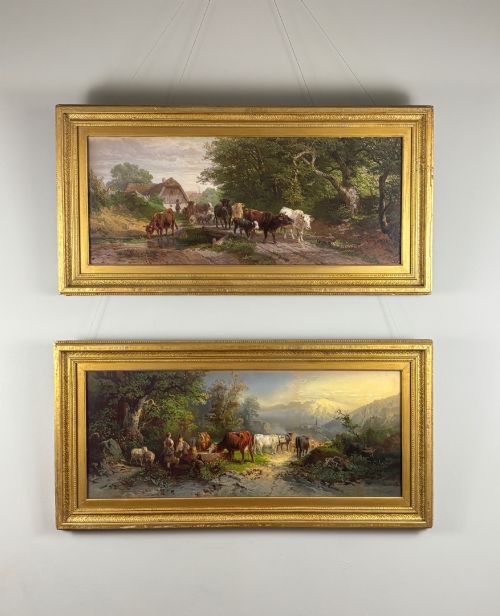
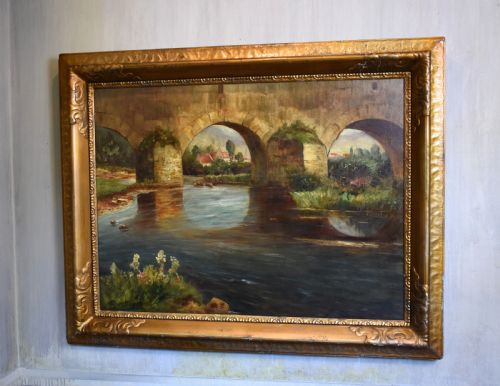
The version most commonly encountered on this page is the nineteenth-century oil painting on canvas or wood panel, often depicting forests, rivers, and architectural landmarks.
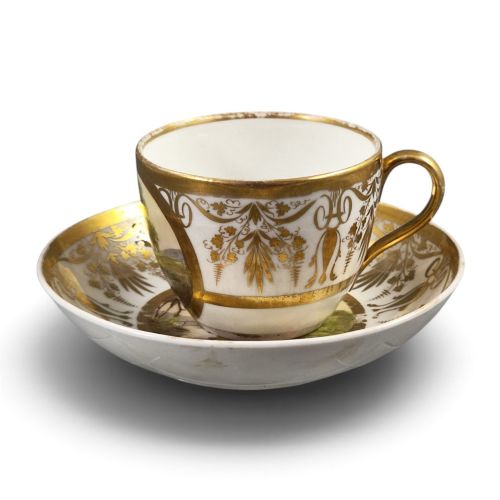
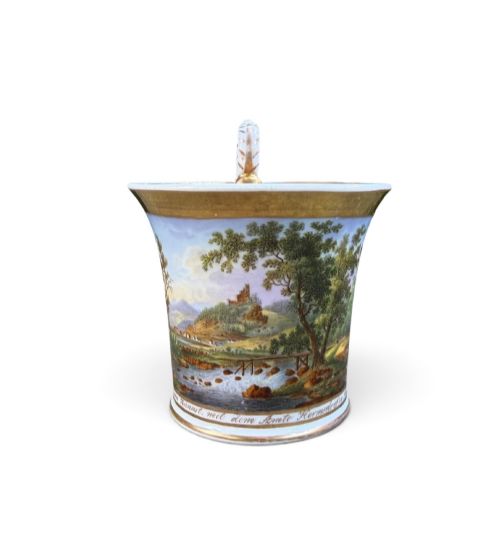
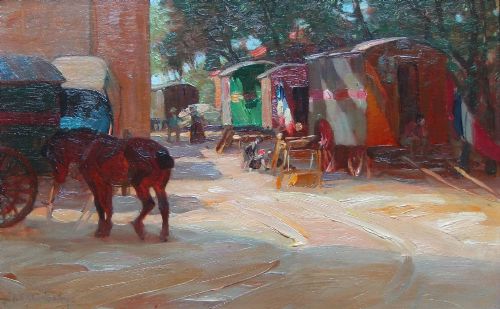
Works range from Biedermeier cabinet cups with painted landscapes to mid-nineteenth-century school pieces and twentieth-century German Expressionist canvases.
Materials and methods
Works are executed primarily in oil paint upon canvas or wood board, while porcelain pieces utilise hard-paste porcelain decorated with enamel and gold leaf.
Frames and decorative elements frequently employ giltwood, and certain works utilise pastel on paper to capture townscapes and village views.
Materials across these listings include oil paint, canvas, wood, hard-paste porcelain, enamel, gold leaf, and pastel.
Assessing quality
Quality rests in the precision of the brushwork and the handling of light within the scene, distinguishing accomplished academic and named artist works from anonymous school pieces.
The clarity and preservation of the paint surface, canvas stability, and the original execution of accompanying frames or porcelain bodies dictate the standing of each piece.
KPM Berlin·Johann Friedrich Voltz·Heinrich Harder·Karl Herrle·Franz Reder-Broili·Ludwig Hermann·Wilhelm Alexander Meyerheim·Melchior Kern·Carl Otto Fey·Karl Adam Heinisch·Gudrun Sibbons
The German Landscape Painting Glossary
- Biedermeier
- An influential style in Central Europe during the nineteenth century, emphasising domestic utility and clean realism.
- Hard-paste porcelain
- A durable ceramic composition fired at high temperatures, providing a smooth white body ideal for detailed miniature landscape painting.
- German Expressionism
- A twentieth-century modernist movement focused on emotional experience and bold brushwork rather than strict optical realism.
- Giltwood
- Timber treated with gold leaf or gold powder, commonly applied to ornate picture frames accompanying nineteenth-century oils.
- Topographical
- Depicting a specific real place accurately, a frequent subject for both porcelain cabinet cups and nineteenth-century canvas works.
German Landscape Painting: Frequently Asked Questions
What periods do these paintings cover?
The works span from the mid-eighteenth century through the nineteenth century and into the mid-twentieth century.
Represented eras include Georgian, Biedermeier, and German Expressionist periods.
Are all the works on canvas?
Most works utilise oil paint on canvas or wood panels, though some pieces are executed in pastel on paper.
Additionally, hard-paste porcelain items feature hand-painted enamel landscapes.
How do I identify a townscape?
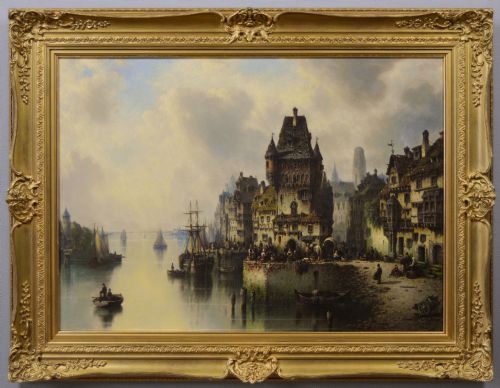
Townscapes typically depict harbours, quays, castles, or urban river scenes rather than open rural fields.
Artists such as Ludwig Hermann specialised in busy continental town and harbour views.
Where were these porcelain cups made?
Topographical porcelain items originate from factories such as KPM Berlin and Meissen.
These pieces combine functional cabinet cups and saucers with miniature enamel landscapes.