






German Jugendstil Glass
German Jugendstil glass brings organic form and rich surface decoration together, offering a striking addition to any table.
German Jugendstil Glass
German Jugendstil glass encompasses decorative vessels and tableware produced primarily around the turn of the twentieth century. When exploring german jugendstil glass, buyers encounter diverse forms such as hock glasses, roemers, decanters, and vases.
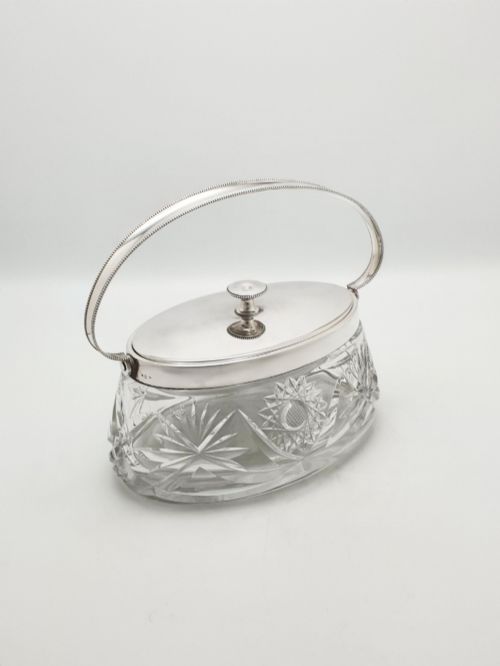
The objects frequently combine blown glass bodies with metal mounts in silvered pewter or silver plate. Most pieces originate from the period between eighteen ninety and nineteen twenty, reflecting the height of the Art Nouveau movement in Germany and Bohemia.
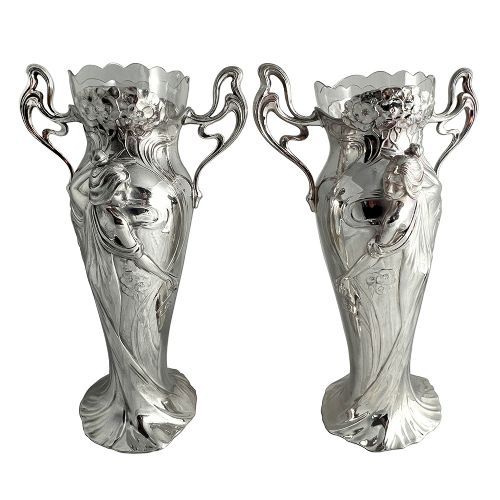
Vessels span functional dining accessories like cordial glasses and biscuit boxes alongside purely decorative centrepieces and baskets. Collectors meet delicate enamelled glassware alongside substantial figural metalwork cradling glass inserts.
How they were made
Makers utilised free-blowing and mould-blowing techniques to shape crystal and coloured glass into organic silhouettes. Artisans then applied surface enrichment including polychrome enamel, gold leaf, and cameo carving.
Metal components were cast in pewter or base metal before receiving silver plating or silvered finishes. These mounts often incorporated organic motifs, figural maidens, and whiplash lines designed to encase or complement the glass body.
German Jugendstil Glass Retail Price Guide 2026
Typical asking prices for german jugendstil glass among the pieces listed under this phrase on Sellingantiques today, from the lower quarter to the upper quarter. They describe what is for sale here now, not the wider market.
Several vessels feature figural maiden mounts seemingly guarding the contents within.
What varies in quality
Quality rests in the crispness of the glass cutting and the precision of hand-enamelled floral or geometric decoration. Superior examples display careful integration between the blown glass and any metal mountings.
The artistic ambition of the design dictates distinction, separating standard production wares from works bearing specific studio attributions. Preservation of delicate elements like original glass liners, gold leaf, and surface patination elevates a piece.
Theresienthal·Frits Heckert·WMF·Ferdinand von Poschinger·Orivit·Adelbert Niemeyer
The German Jugendstil Glass Glossary
- Jugendstil
- The German variant of Art Nouveau, characterised by flowing organic lines and natural motifs. It dominated design from the late nineteenth century until the First World War.
- Roemer
- A traditional Germanic stemmed drinking vessel featuring a wide bowl and a studded prunt stem. These glasses often display polychrome enamel decoration.
- Silvered pewter
- A base alloy treated with a silver coating to mimic solid silver while allowing intricate, fluid casting. This material frequently frames glass vessels in this genre.
- Hock glass
- A tall wine glass traditionally used for white wine, often featuring an enamelled bowl and a coloured stem. They appear in matched sets from this period.
- Cameo glass
- A vessel created by fusing layers of different coloured glass and carving away the exterior layer to reveal a contrasting design. This technique allows for detailed relief patterns.
German Jugendstil Glass: Frequently Asked Questions
What is german jugendstil glass?
German Jugendstil glass refers to decorative glassware and mounted vessels produced during the Art Nouveau era in Germany and Bohemia. These pieces embrace organic forms and naturalistic surface decoration.
Items range from delicate enamelled hock glasses to robust silvered pewter decanters and centrepieces. They represent a specific intersection of glassblowing and metalwork craftsmanship.
How are these pieces dated?
Pieces are dated by examining stylistic markers, maker marks, and manufacturing techniques typical of the period around nineteen hundred. Design characteristics align closely with the broader European Art Nouveau movement.
Makers often stamped their metal mounts with specific factory ciphers. Glass bodies are contextualised by their enamelling styles and forming methods.
How were cordial glasses used?
Cordial glasses served small portions of sweet liqueurs or spirits at the conclusion of formal meals. Their delicate size suited rich after-dinner drinks.
Many surviving sets feature intricate hand-enamelled decoration, showing they were valued display items as well as functional tableware.
How do I care for enamelled glass?
Enamelled glass requires gentle hand washing in lukewarm water using mild soap. Abrasive cleaners and immersion in hot water can damage the historic enamel and gold leaf.
Display pieces away from direct sunlight to preserve the vibrancy of polychrome enamels and iridescent finishes.