

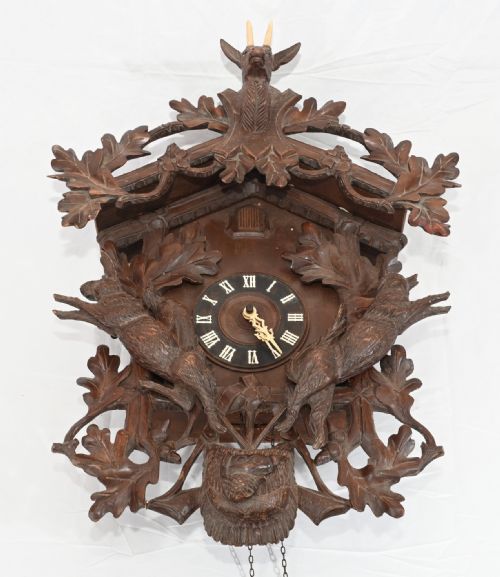


German Black Forest Clock
A german black forest clock brings carved wood, mechanical ingenuity, and traditional craftsmanship directly into a room.
German Black Forest Clock
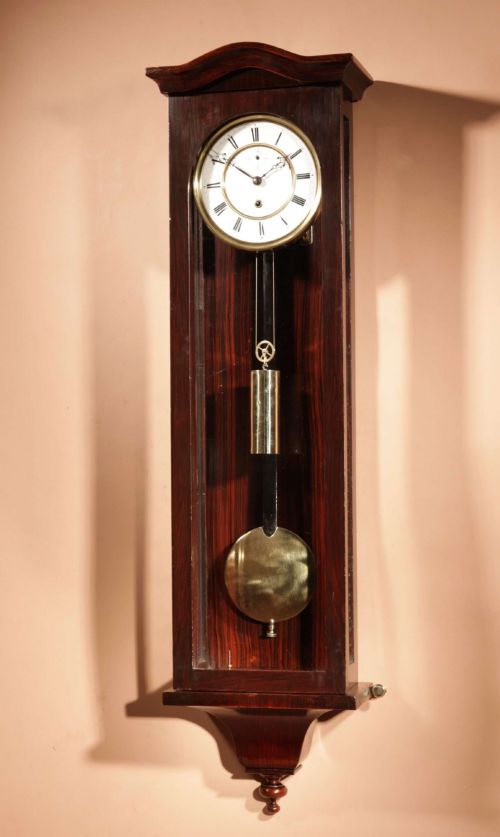
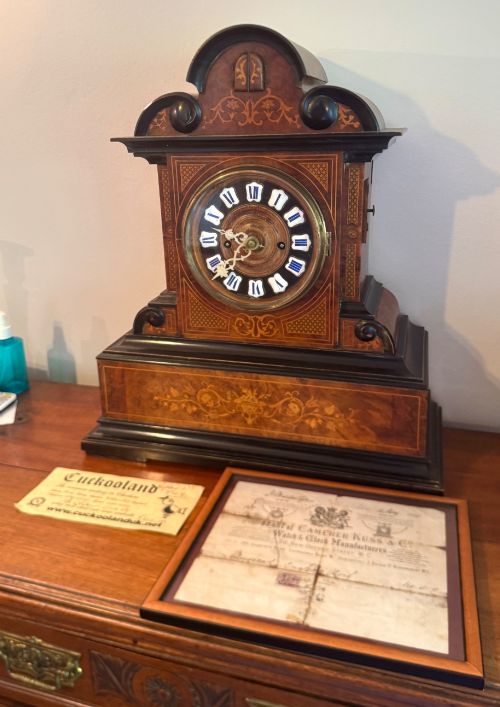
When you search for a german black forest clock, you encounter a distinct tradition of horology originating from the Black Forest region in Germany. The selection spans wall clocks, mantel clocks, bracket clocks, longcase clocks, and barometers reflecting regional craftsmanship.
The pieces on this page primarily date from the nineteenth century, with examples extending into the twentieth century. Styles range from traditional carved wood designs to Vienna regulators, Art Nouveau, Art Deco, and French Rococo interpretations.
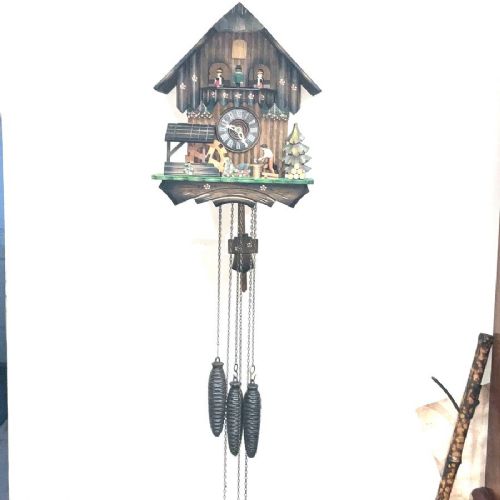
Most items are housed in walnut, carved wood, or oak, often featuring brass, glass, and enamel details. You will find cuckoo mechanisms, musical automata, and twin fusee movements among the recorded forms.
How they were made
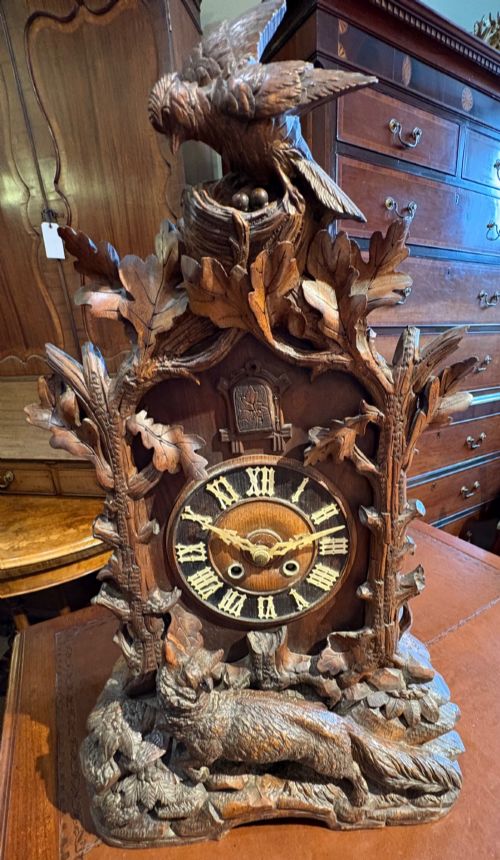
Woodcarving forms the foundation of these pieces, utilising walnut and oak shaped by hand into intricate foliage, animals, and architectural motifs. Ebonised finishes and marquetry veneer provide contrast on select mantel and bracket clocks.
Clockmakers fitted brass movements, porcelain or enamel dials, and glass viewing panels into the timber cases. Mechanical complexity varies from simple timepieces to musical automata and aneroid barometer systems.
Some wooden cuckoo clocks feature mechanical animals that spring into motion, bringing cheerful animation to quiet rooms.
What varies in quality
The depth and crispness of the hand-carved woodwork distinguish standard production from exceptional examples. Finer pieces display fully articulated figures, balanced proportions, and sophisticated marquetry or ebonised detailing.
Movement complexity also sets pieces apart, moving from basic time-only mechanisms to intricate eight-day twin fusee movements, musical carillons, and mechanical automata. Maker attribution further influences the standing of individual clocks.
Johann Baptist Beha·Philipp Haas·Lenzkirch
The German Black Forest Clock Glossary
- Bracket clock
- A portable clock designed to sit on a bracket, shelf, or table. Many examples include carrying handles on their wooden cases.
- Regulator
- A precision pendulum clock designed for accuracy and often housed in a long wall case. The Vienna style represents a notable sub-category.
- Fusee
- A conical pulley used in mechanical clocks to maintain even force on the gear train as the mainspring unwinds. Twin fusee movements drive both time and strike or musical functions.
- Automaton
- A mechanical figure that moves during the operation of the clock, commonly seen on cuckoo clocks. These mechanisms animate birds or figures in sync with the chime.
- Aneroid barometer
- A device that measures atmospheric pressure without liquid. Several nineteenth-century examples incorporate these dials alongside clock movements.
German Black Forest Clock: Frequently Asked Questions
How do I wind a mechanical clock?
Most mechanical clocks require a key to wind the springs or pull the chains for the time and striking trains. Care must be taken not to overwind the mechanism.
Consult the specific movement type to determine whether your piece runs on a daily, eight-day, or longer cycle.
Where should I place a wall clock?
Mount wall clocks on a sturdy interior wall capable of supporting the weight of the timber case and movement. Avoid damp areas and direct sunlight to protect the wood and dial.
Ensure the wall is level so the pendulum hangs plumb and the beat remains even.
How do I identify the period?
Examining the wood species, dial materials, and carving style offers clues to the era of manufacture. Nineteenth-century pieces frequently feature deep hand-carvings and enamel dials.
Twentieth-century examples often adopt cleaner lines associated with Art Nouveau, Art Deco, or mid-century production.
Do musical movements require special care?
Musical and automaton mechanisms demand clean environments and professional servicing to keep the pins and combs aligned. Regular maintenance prevents wear on the miniature gears.
Allow the music train to complete its cycle naturally without forcing the levers or stops.