




German Art Nouveau Silver
German art nouveau silver captures the flowing organic lines and natural forms characteristic of the Jugendstil movement.
German Art Nouveau Silver
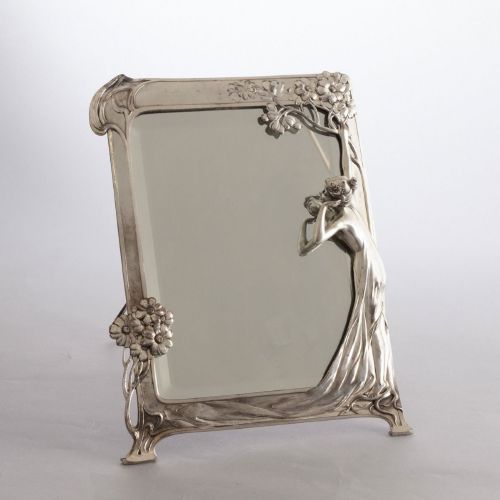
When you examine german art nouveau silver, you encounter domestic items, decorative objects, and personal jewellery created during the late nineteenth and early twentieth centuries. These pieces reflect the continental shift away from historicism toward stylised plant motifs, whiplash curves, and feminine figures.
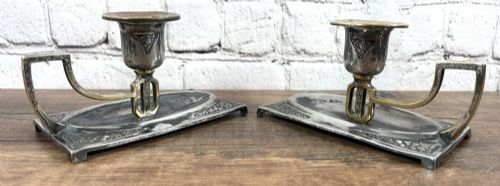
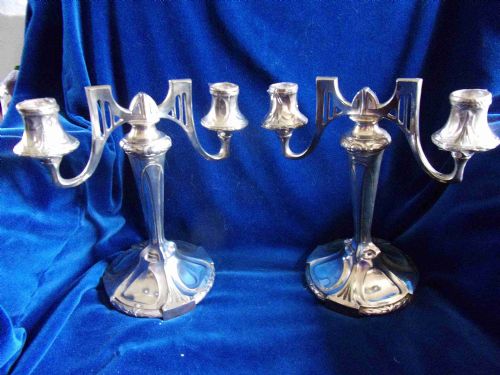
The objects on this page range from small tableware items like teaspoons, salt cellars, and pen trays to substantial centrepieces, candelabra, and figural decanters. Tableware and desk accessories in silver plate and silvered pewter appear most frequently alongside pendants and brooches set with enamel and stones.
Manufacturing and Materials
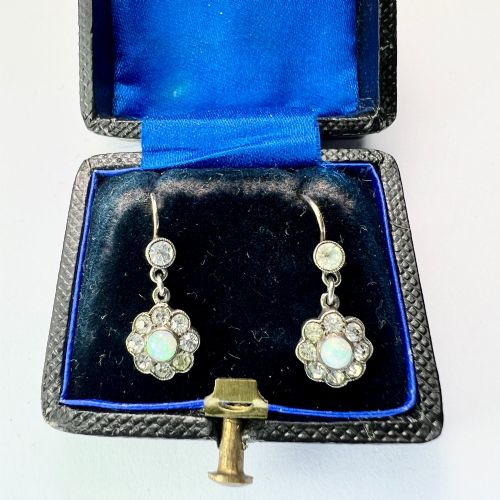
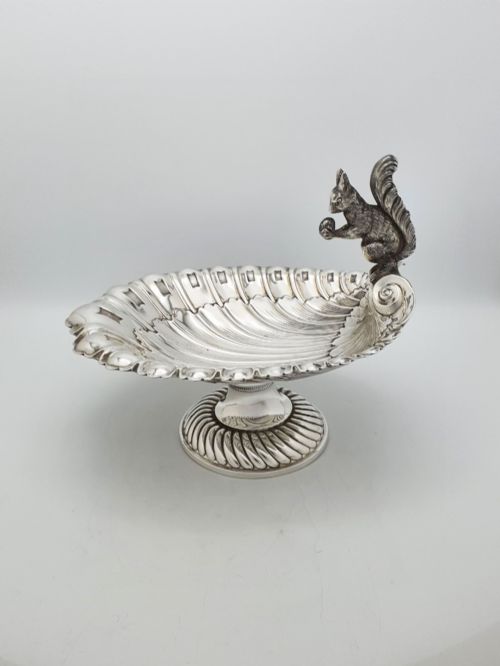
Silversmiths and metalworkers utilised solid silver, silver plate, silvered pewter, and Britannia metal, often combining them with iridescent glass liners, ceramic inserts, and polished cabochons of pearl, opal, and paste. Many works employ casting and plating techniques to achieve complex sculptural forms like maidens, squirrels, and swirling floral stems.
Enamel work represents a major technical feat in this category, particularly translucent plique-à-jour enamel which mimics stained glass by holding pigment without a backing metal. Goldsmiths also applied parcel gilding and silver gilt finishes to highlight intricate details on lockets, brooches, and pendants.
German Art Nouveau Silver Retail Price Guide 2026
Typical asking prices for german art nouveau silver among the pieces listed under this phrase on Sellingantiques today, from the lower quarter to the upper quarter. They describe what is for sale here now, not the wider market.
Squirrels and mermaids populate the metalwork, appearing intently perched upon nut dishes or forming the sweeping handles of pewter jugs.
Standards of Quality
Quality in these pieces depends upon the clarity of the cast, the intricacy of the hand-chased surface details, and the preservation of original finishes such as silver gilt or plique-à-jour enamel. Works produced by major firms demonstrate superior definition in figural elements like maiden handles and floral reliefs.
The involvement of documented designers and well-known workshops elevates a piece, as does the retention of fragile components like blown glass liners, original stones, or distinct maker stamps.
WMF·Theodor Fahrner·Levinger and Bissinger·Meyle and Mayer·Orivit·Osiris
The German Art Nouveau Silver Glossary
- Jugendstil
- The German variant of the international art nouveau movement, named after the Munich art magazine Die Jugend. It embraces dynamic, linear plant forms and abstract natural motifs.
- Plique-à-jour
- An enamelling technique where the enamel is fired in open cells, allowing light to shine through the transparent or translucent coloured glass.
- Silvered pewter
- A base metal alloy coated with a layer of silver, widely utilised by continental manufactories to achieve sculptural decorative objects without the weight of solid silver.
- Cabochon
- A gemstone shaped and polished with a smooth, rounded surface rather than faceted. These stones frequently accent clasps, frames, and jewellery mountings.
- Tazza
- An ornate pedestal cup or shallow bowl raised on a stem, commonly utilised for serving fruit or sweets in domestic settings.
German Art Nouveau Silver: Frequently Asked Questions
What is german art nouveau silver?
German art nouveau silver encompasses decorative objects, tableware, and jewellery produced in Germany around 1900 under the influence of the Jugendstil movement. These items incorporate flowing organic lines, floral motifs, and stylised animal or human figures.
Makers utilised solid silver, silver plate, and silvered pewter, often pairing the metal with glass, enamel, and semi-precious stones.
How were these items used?
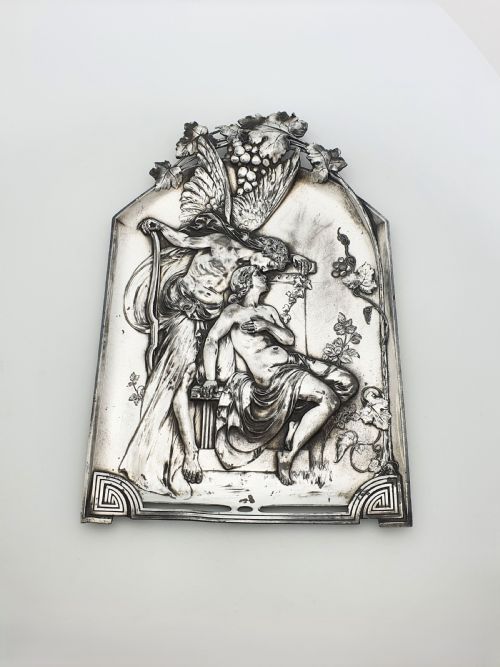
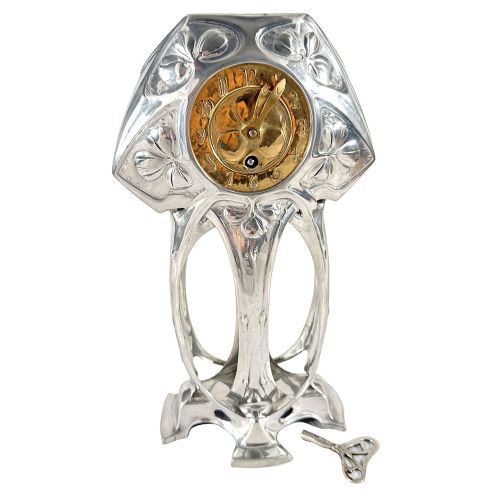
Many objects served functional domestic roles on dining tables and desks, including crumb trays, menu card holders, letter openers, and claret jugs. Others functioned purely as ornamental displays, such as figural candelabra, mantel clocks, and wall plaques.
Personal items like pendants, brooches, and hair combs were worn to display fashionable taste during the Edwardian and Victorian eras.
How do I care for silvered pewter?
Silvered pewter requires gentle cleaning with a soft cloth and mild soapy water, avoiding abrasive polishes that can wear away the thin silver coating. Proper handling preserves the delicate patina and prevents damage to inset glass or enamel.
Store pieces in a dry environment away from direct sunlight to protect vulnerable organic elements like pearls and paste stones.
How do I identify a Jugendstil piece?
Jugendstil items display characteristic whiplash lines, asymmetrical plant tendrils, and sinuous natural forms distinct from earlier historicist styles. Many pieces also bear maker marks, workshop stamps, or stamped numbers on the base or reverse.
The inclusion of specific materials like plique-à-jour enamel and iridescent glass further points toward the continental art nouveau aesthetic.