






Georgian Wine Decanter Accessories
Georgian wine decanter accessories are the silver funnels, labels, coasters, and holders that accompany period glassware at the dining table.
Georgian Wine Decanter Accessories
Georgian wine decanter accessories encompass silver wine funnels, decanter labels, coasters, and bottle stands designed to assist with serving and identifying bottled drinks.
The pieces on this page span the Georgian, Regency, and Victorian periods, including the year 1800 and the George III reign.
Buyers most frequently encounter sterling silver wine funnels and decanter labels, alongside wooden coasters, papier-mâché items, and cut glass toddy lifters.
How they were made
Makers shaped sterling silver and silver gilt through smithing and casting techniques to produce functional wine funnels, vine leaf labels, and coasters.
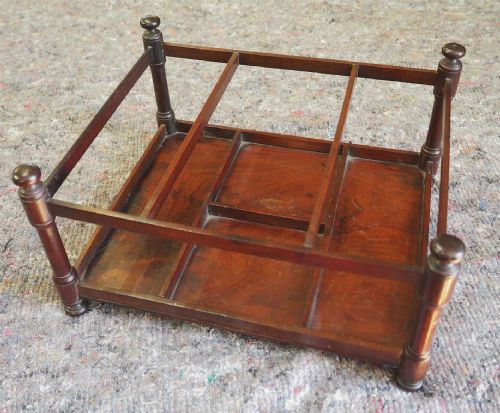
Woodworkers utilised mahogany and papier-mâché for coasters and decanter holders, often adding gilded decoration to the dark lacquered surfaces.
Glassworkers produced cut glass and flint glass items such as toddy lifters to transfer or measure liquids.
Listings feature items from the Georgian, Regency, and Victorian periods, executed in sterling silver, mahogany, cut glass, and papier-mâché.
What varies in quality
Quality rests on the gauge of the silver, the crispness of chased and engraved details on labels and funnels, and the preservation of original gilding.
In wooden and papier-mâché coasters, value depends on the depth of the mahogany grain and the intact condition of the gilded decoration.
The inclusion of hallmarks on silver pieces and the complexity of cut glass patterns separate standard examples from finer items.
Solomon Hougham
The Georgian Wine Decanter Accessories Glossary
- Decanter label
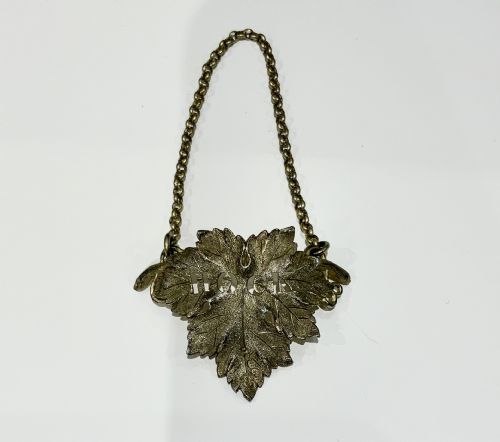
- A small piece of silver hung by a chain around the neck of a bottle to identify the contents such as Hock or Moselle. These tags prevent confusion during formal dining.
- Wine funnel
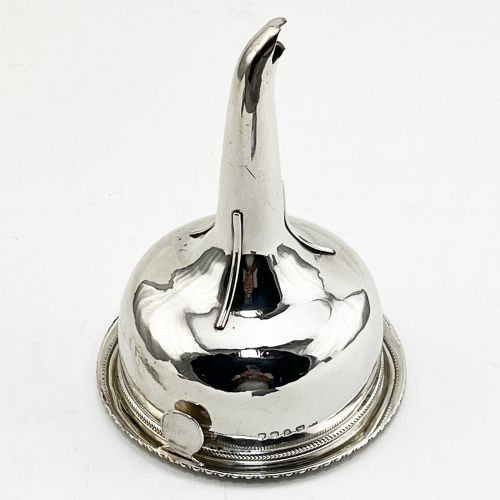
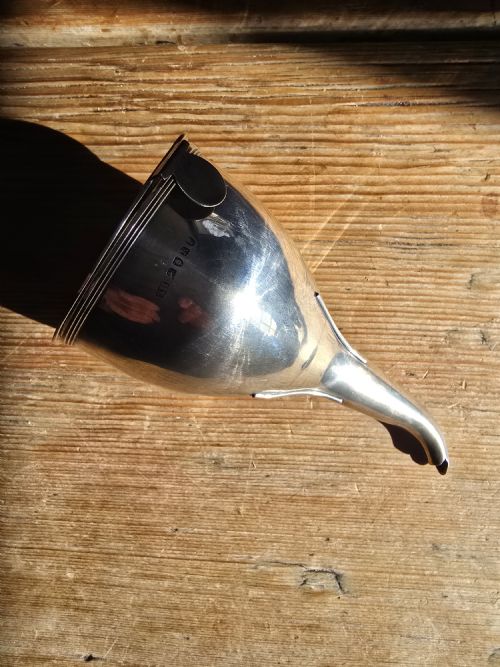
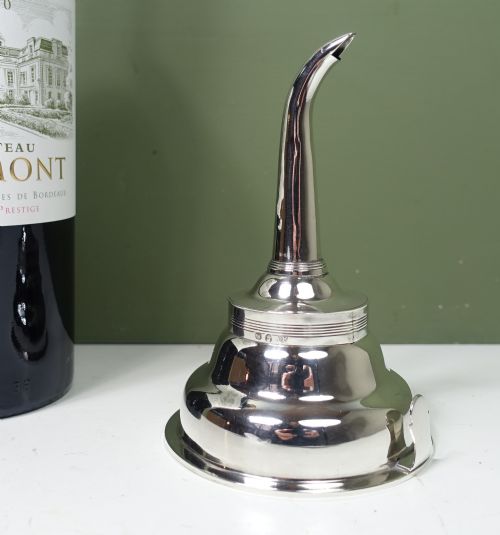
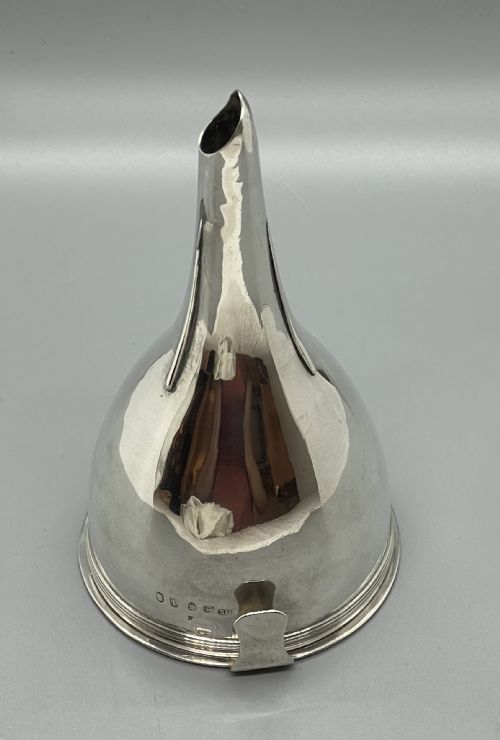
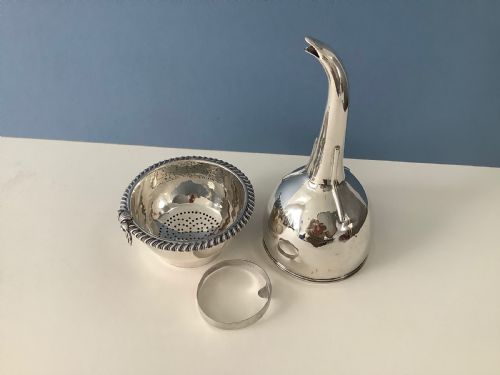
- A conical silver implement used to strain sediment from port or red wine as it passes into the decanter. Some feature a removable three-part construction.
- Toddy lifter
- A small glass vessel used to transfer hot punch or toddy from a bowl into a glass. The user places a thumb over the top hole to hold the liquid.
- Coaster
- A low tray or stand made from silver, mahogany, or papier-mâché placed beneath a bottle to protect the table surface. Pairs of these items often match.
- Silver gilt
- Silver covered with a thin layer of gold, giving the metal a rich yellow sheen. This technique appears on specific vine leaf decanter labels.
Georgian Wine Decanter Accessories: Frequently Asked Questions
What are georgian wine decanter accessories?
These items are the silver, glass, and wood table wares used alongside decanters during the late eighteenth and nineteenth centuries. They include labels to name the wine, funnels for pouring, and coasters to protect furniture.
Most pieces are made from sterling silver, mahogany, or cut glass. They reflect the dining customs of the Georgian and Regency periods.
How were silver wine funnels used?
A wine funnel sat in the neck of a decanter to strain sediment from older bottled wines as they were poured. Many included a removable strainer mesh inside the bowl.
Silversmiths constructed them in multiple parts to accommodate this internal mesh. London makers like Solomon Hougham produced notable examples around 1800.
How do you identify a decanter label?
Decanter labels are small silver tags suspended by chains around the bottlenecks of decanters. They feature engraved titles such as Hock or Moselle to indicate the contents.
Collectors often find them shaped as vine leaves or geometric scrolls in sterling silver. They match the sparkling appearance of cut glass decanters.
What materials make up the coasters?
Coasters appear in sterling silver with turned wooden bases, solid mahogany, or black papier-mâché with gilded decoration. Each material served to hold bottles steady and protect dining tables.
Papiermâché versions from around 1820 utilise dark lacquer and gold paint. Silver pairs often date to the George III era.
How do you live with these accessories?
These small pieces fit easily on sideboards, inside display cabinets, or serving their original function on dining tables. Silver items require occasional polishing to maintain their shine.
Wooden and papier-mâché coasters benefit from dry dusting and avoidance of moisture. They bring period detail to modern dining settings.