

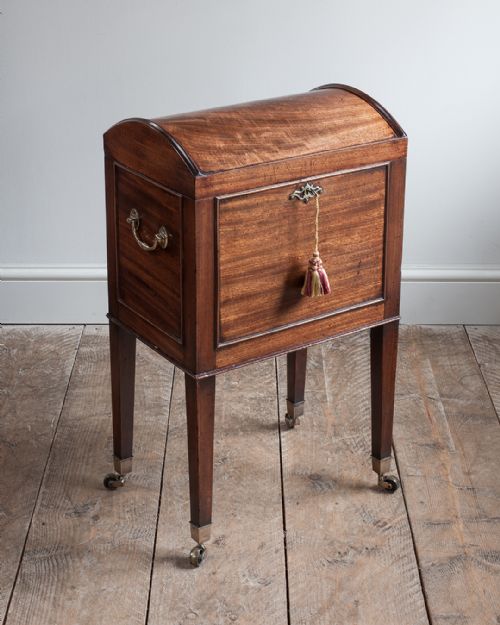


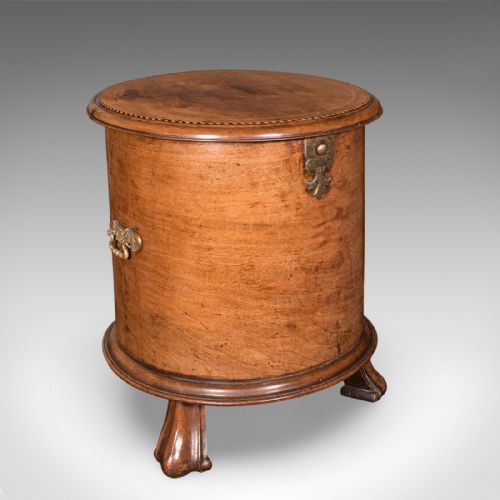


Georgian Wine Caddy
A georgian wine caddy is a handsome vessel designed to store and protect prized bottles during elegant dining.
Georgian Wine Caddy
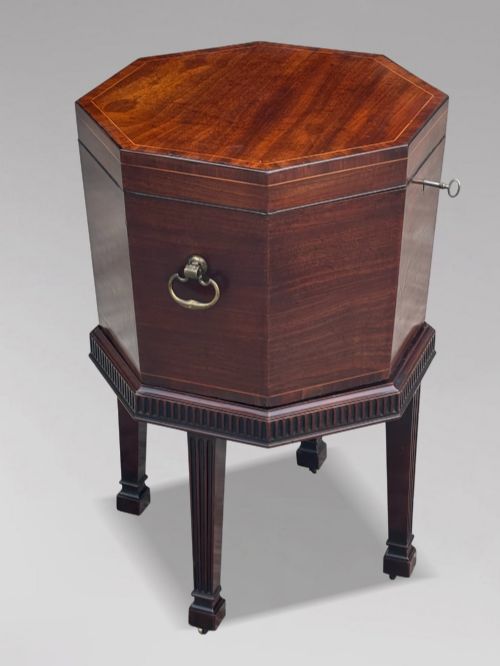
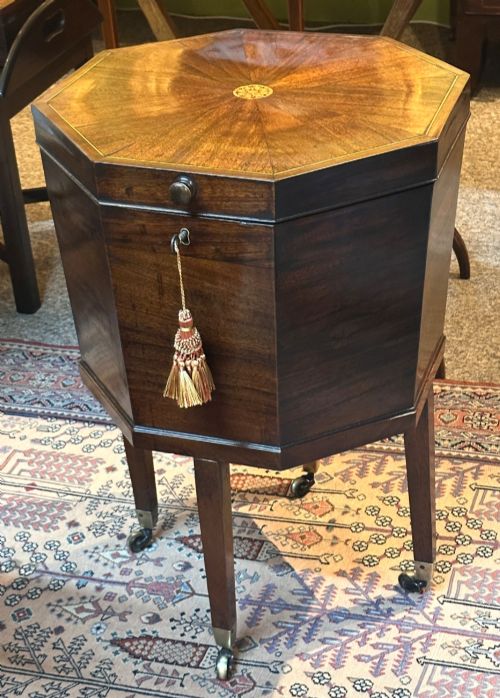
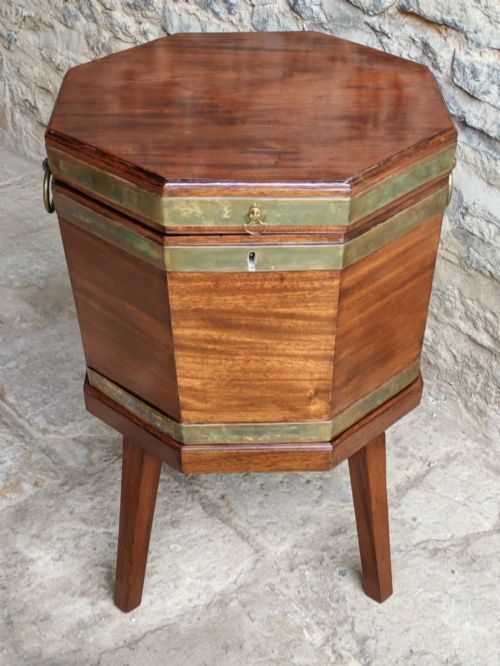
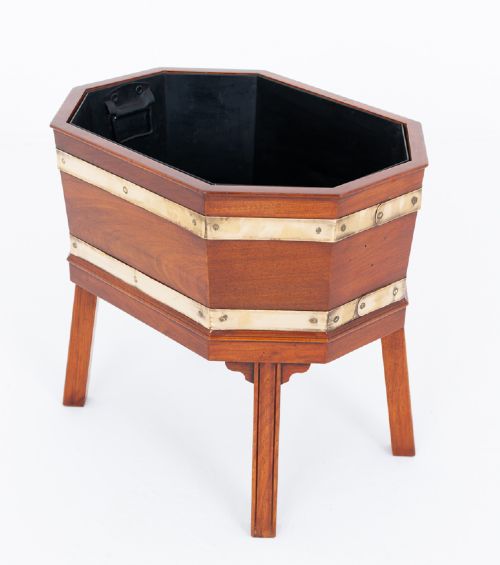
A georgian wine caddy and its related cellarettes or coolers appear primarily in mahogany, walnut, and satinwood across the eighteenth and nineteenth centuries. These pieces take various configurations, including octagonal boxes, sarcophagus shapes, and multi-section bottle carriers designed for the dining room.
Makers of the period produced both large floor-standing wine coolers and smaller tabletop caddies or bottle holders. The selection spans the George III era through the Regency period, with later revival examples also represented.
Form follows function in these drinking accessories, which were built to hold glass decanters and wine bottles securely. Interiors often feature divided compartments lined to cushion fragile glassware.
Materials and Construction
Cabinetmakers utilised dense timbers such as mahogany and walnut, frequently enhancing the surfaces with delicate wood inlay, veneer, and satinwood details. Structural integrity often relied on solid joinery combined with heavy brass banding or mounts to secure the wooden staves and panels.
Metalwork played a structural and decorative role, featuring prominently in brass bindings, carrying handles, and paw feet on sarcophagus forms. Interior divisions required precise carpentry to accommodate specific bottle sizes and decanter shapes.
Georgian Wine Caddy Retail Price Guide 2026
Typical asking prices for georgian wine caddy among the pieces listed under this phrase on Sellingantiques today, from the lower quarter to the upper quarter. They describe what is for sale here now, not the wider market.
Materials documented across the inventory include solid mahogany, walnut, satinwood, figured elm, and brass.
Evaluating Quality and Detail
The distinction between standard examples and superior pieces rests on the choice of timber figures, such as highly grained mahogany or figured elm, and the crispness of any inlay work. Finer items demonstrate sophisticated proportions, such as well-defined octagonal geometry or harmonious sarcophagus curves.
Hardware quality differentiates the makers, with substantial brass mounts and original handles indicating higher production standards. The complexity of internal bottle divisions and the preservation of the surface patina contribute significantly to an object's standing.
Gillows
The Georgian Wine Caddy Glossary
- Cellarette
- A lockable container or cabinet used to hold wine bottles and decanters near the dining table. These large vessels often stood on the floor or on short legs.
- Sarcophagus
- A monumental coffin-shaped box form popular for large wine coolers and cellarettes during the Regency period. The sloping lid and heavy proportions give these pieces a striking architectural presence.
- Inlay
- A decorative technique where contrasting woods or metals are inserted into recesses within the primary wood surface. This method creates geometric or floral patterns on the exterior of the box.
- Treen
- Small handmade wooden items produced through turning or carving. In the context of wine storage, this refers to small wooden bottle holders and carriers.
- Decanter stand
- A portable wooden carrier designed to hold multiple glass vessels securely during transit from the cellar to the dining room. These pieces usually feature dedicated handle arrangements.
Georgian Wine Caddy: Frequently Asked Questions
What is a georgian wine caddy?
A georgian wine caddy is a specialised wooden storage box or carrier built to hold bottles and decanters securely. These pieces were essential dining room accessories for keeping wine close at hand.
Craftsmen constructed them in various forms, from small tabletop bottle carriers to large floor-standing cellarettes. They reflect the fine cabinetmaking standards of the eighteenth and nineteenth centuries.
How were these pieces used?
Historically, servants kept these containers stocked with wine and decanters before bringing them into the dining parlour. The sturdy wooden walls and interior divisions protected fragile glass bottles from damage.
Many examples feature lockable lids to secure valuable vintages from household staff. Once emptied, the containers served to transport empty bottles away from the table.
How do I style a wine caddy at home?
A large cellarette makes an impressive freestanding statement piece in a dining room or living space. You can utilise the interior compartments to store modern collections or display decorative items.
Smaller caddies and bottle carriers sit well on sideboards, side tables, or mantels. Their rich wooden surfaces and brass details complement traditional and eclectic interiors alike.
How do I tell periods apart?
Eighteenth-century examples often display clean classical lines, such as George III octagonal shapes and restrained mahogany surfaces. The subsequent Regency period introduced heavier sarcophagus forms with Egyptian or classical revival motifs.
Later revival pieces from the twentieth century imitate these earlier styles but lack the specific patina and wear of genuine period items. Examining the secondary woods and construction methods helps confirm the age.