



Georgian Whatnot
A Georgian whatnot provides tiered open shelving for books and display, combining practical storage with light-scaled elegance.
Georgian Whatnot
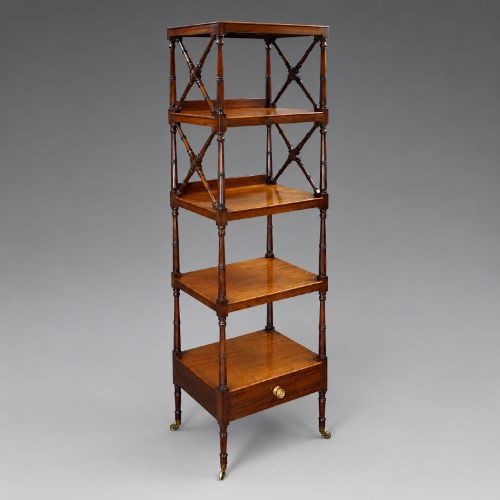
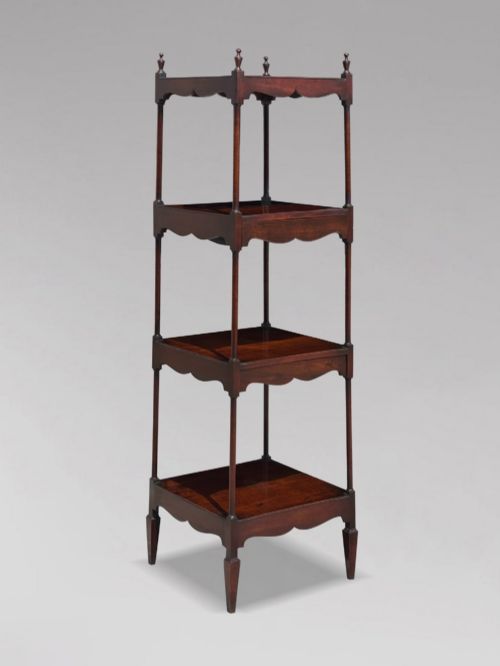
A georgian whatnot is an open-shelved tiered piece of furniture designed for displaying or storing small objects, books, and music sheets in principal rooms. These pieces emerged in the late eighteenth century and remained popular through the Regency and Victorian eras.
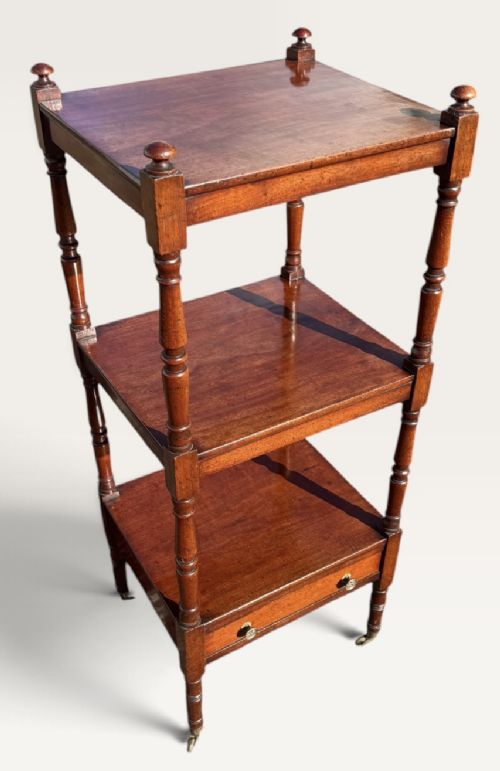
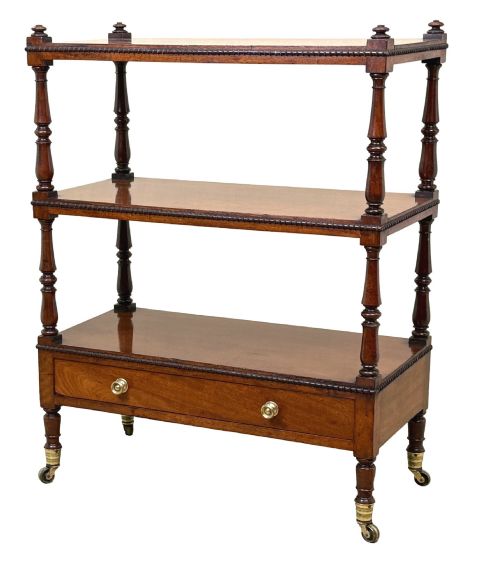
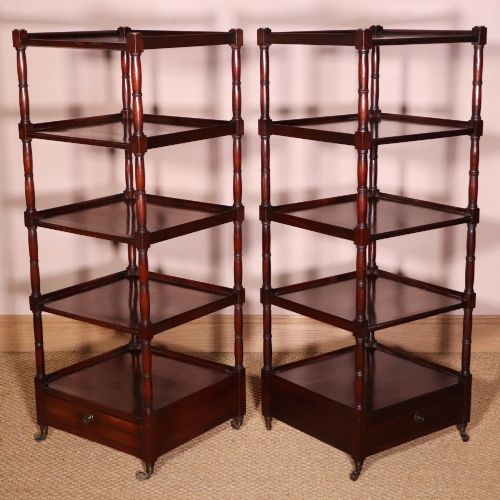
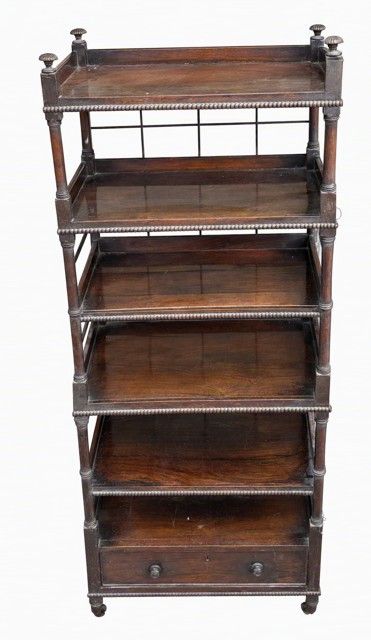
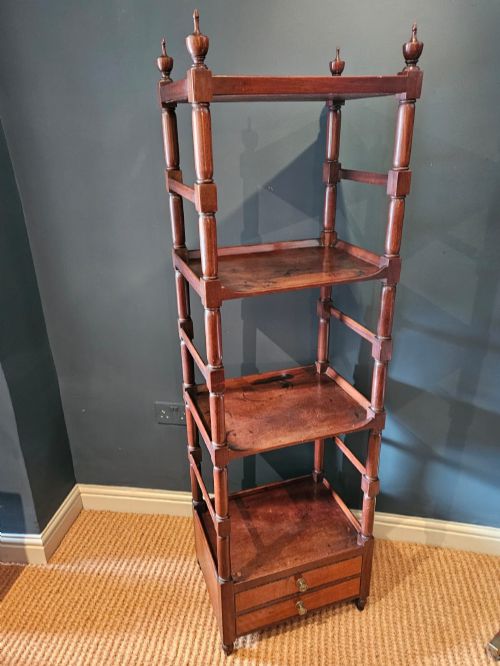
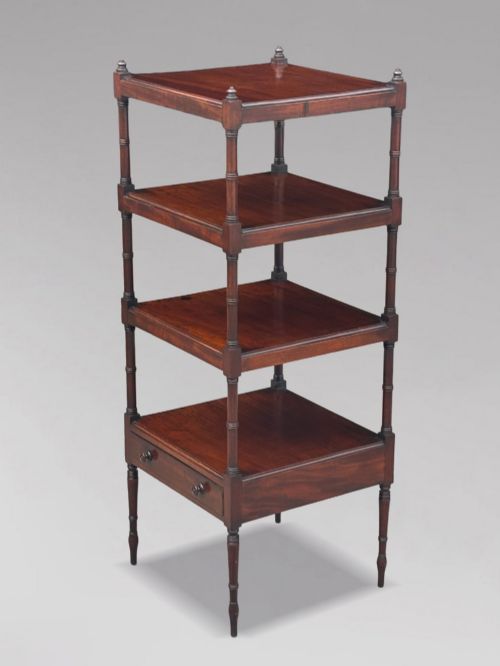
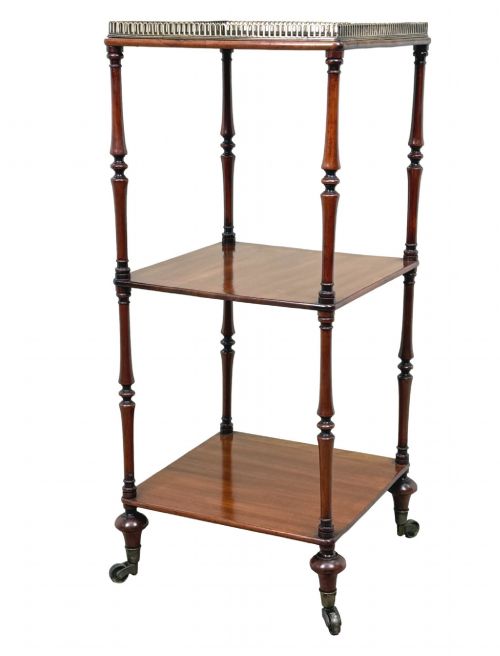
Most examples found here date from the Georgian, Regency, and George IV periods, constructed with multiple graduating tiers supported by slender upright posts. Forms range from simple three-tier open stands to complex pieces featuring integrated drawers, cupboards, and music stands.
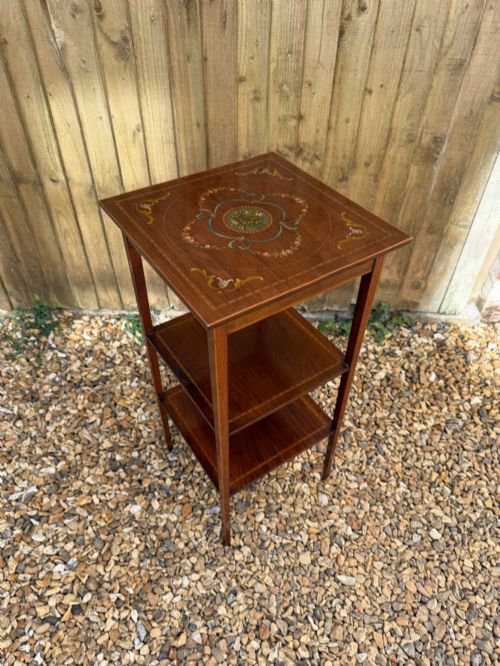
Buyers frequently encounter mahogany and rosewood variants, though occasional examples utilise birdseye maple, oak, or painted finishes. They function effectively as bedside stands, corner display units, or freestanding occasional furniture in sitting rooms.
Materials and construction
Cabinetmakers relied heavily on dense tropical hardwoods like mahogany and rosewood for their stability and fine grain, often incorporating delicate boxwood inlay for visual contrast. Turned or fluted upright supports sustain the horizontal shelves, sometimes terminating in small brass castors for mobility.
Joinery had to remain light yet rigid to support multiple tiers without heavy side panels, resulting in open structures that emphasise verticality. Secondary woods such as oak or pine were utilised for internal drawer linings where fitted compartments or cupboards were included.
Georgian Whatnot Retail Price Guide 2026
Typical asking prices for georgian whatnot among the pieces listed under this phrase on Sellingantiques today, from the lower quarter to the upper quarter. They describe what is for sale here now, not the wider market.
Listings for a georgian whatnot frequently feature mahogany and rosewood construction across Georgian, Regency, and Victorian periods.
What determines quality
Quality rests upon the crispness of the turning on the upright supports, the selection of timber with rich grain patterns, and the overall proportion of the tiers. Superior pieces exhibit refined details such as fine cockbeading on drawers, elegant tapering columns, and original brass hardware.
Maker attribution elevates certain examples, particularly those showing the precise craftsmanship associated with workshops like Gillows. The integrity of the timber joints and the retention of a warm, natural surface finish distinguish finer specimens from later or simpler utility pieces.
Gillows
The Georgian Whatnot Glossary
- Etagere
- A French term for a piece of furniture with open shelves for displaying ornaments or small objects. It is frequently used interchangeably with whatnot in historical listings.
- Canterbury
- A low, tiered stand fitted with divisions, originally designed for holding sheet music or books. Certain variations combine these partitions with standard whatnot shelving.
- Dumb waiter
- A tiered serving stand, often revolving, used in dining rooms for holding dishes or utensils. Some multi-tiered examples share structural similarities with open display whatnots.
- Boxwood inlay
- Narrow strips of pale boxwood inserted into contrasting dark woods to create decorative borders. This technique highlights the edges of shelves and tabletops on finer Georgian pieces.
- Corner whatnot
- A specialised variant engineered with triangular shelves to fit snugly into room corners. These maximise floor space while offering the same tiered display utility.
Georgian Whatnot: Frequently Asked Questions
What is a georgian whatnot used for?
These tiered pieces were originally designed for holding books, porcelain, silver, or music sheets in parlours and drawing rooms. Their open shelves allowed owners to display cherished collections while keeping them easily accessible.
Today, they serve equally well as bedside stands, lamp tables, or display shelving in contemporary living spaces. Their compact footprint makes them versatile additions to smaller rooms.
How do I distinguish a Regency piece?
Regency examples typically feature cleaner architectural lines, sabre legs, or ring-turned columns influenced by classical antiquity. Cabinetmakers during this period favoured dark rosewood and figured mahogany, sometimes accented with brass inlay or gilt mounts.
By contrast, earlier George III versions often display more restrained carving or simpler bracket feet. Later Victorian interpretations frequently introduce heavier proportions or revival detailing.
Are all whatnots fitted with cupboards?
Most traditional examples feature entirely open shelving supported by vertical posts on each corner. However, certain variations incorporate a small enclosed cabinet section or a single drawer beneath the lower tier.
These closed compartments provided secure storage for smaller valuables or loose papers while maintaining the open display tiers above. Such hybrid forms are particularly sought after by collectors.
How should I care for timber surfaces?
Protect the antique wood by keeping these stands away from direct sunlight and strong heat sources, which can dry out old timber and cause splitting. Regular dusting with a soft, dry cloth maintains the finish without needing harsh polishes.
Applying a traditional beeswax occasionally helps nourish the grain and preserve the rich patina developed over centuries. Avoid placing damp items directly onto the unsealed shelves.