




Georgian Walnut End Table
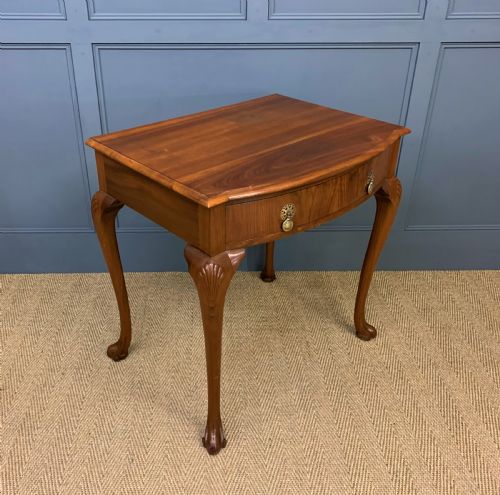
A georgian walnut end table brings rich timber grain and classic proportion into a room, offering a sturdy surface for daily use.
Georgian Walnut End Table
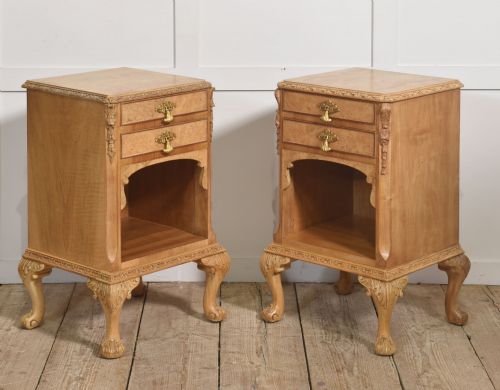
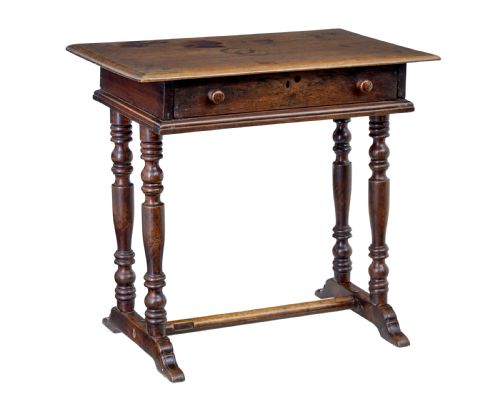
A georgian walnut end table covers a range of compact surfaces including side tables, occasional pieces, lamp tables, and bedside cabinets. These items appear in period forms from the eighteenth century alongside later revival interpretations produced in the early twentieth century.
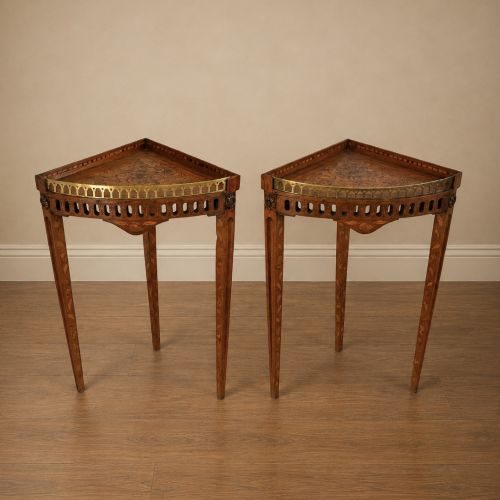
The selection includes specific regional variations such as provincial tables and corner units, often fitted with details like brass galleries or dropleaf mechanisms. Buyers encounter both authentic eighteenth-century examples and twentieth-century revival pieces modelled on Queen Anne and Georgian styles.
Makers utilised timber carefully, producing forms that served diverse functions around the home from bedside storage to parlor lighting stands.
How they were made
Joiners built these tables using solid wood frames combined with figured walnut veneer, burr walnut veneer, and satinwood stringing. Surfaces often highlight the decorative qualities of the timber through matched grain patterns and marquetry inlay.
Metal hardware played a functional and decorative role, featuring brass galleries mounted to table tops. Secondary woods and traditional joinery supported the primary walnut structures across both eighteenth-century workshops and twentieth-century revival makers.
Georgian Walnut End Table Retail Price Guide 2026
Typical asking prices for georgian walnut end table among the pieces listed under this phrase on Sellingantiques today, from the lower quarter to the upper quarter. They describe what is for sale here now, not the wider market.
Some corner tables wear tiny brass galleries as if guarding against tumbling teacups.
What varies in quality
The distinction between ordinary and superior examples lies in the selection of the timber veneer and the crispness of any inlaid marquetry. Finer pieces display carefully chosen burr or figured walnut that wraps harmoniously across the top and sides.
Construction methods and the retention of original brass hardware heavily influence the character of each piece. Tables that maintain their authentic structural integrity and period materials present a more cohesive aesthetic than later alterations.
The Georgian Walnut End Table Glossary
- Burr walnut
- A wood figure obtained from the growth excrescences of a walnut tree, highly prized for its swirling, organic patterns. Cabinet makers utilised this veneer on prominent surfaces to create rich visual texture.
- Marquetry
- The art of applying pieces of veneer to a structure to form decorative patterns and pictures. Craftsmen used contrasting timbers like satinwood to achieve distinct tonal variation.
- Dropleaf
- A table top design featuring hinged flaps that fold down to save space or lift up to extend the surface area. This mechanism allowed furniture to adapt flexibly to room layouts.
- Brass gallery
- A decorative metal railing fitted around the perimeter of a table top to keep items from sliding off. These fixtures appear frequently on lamp and corner tables.
Georgian Walnut End Table: Frequently Asked Questions
What is a georgian walnut end table used for?
These tables function as versatile surfaces for lamps, drinks, or books beside seating furniture and beds. Their compact proportions make them suitable for smaller spaces within a room.
Historically, specific variants served as bedside cabinets or corner stands, adapting to the layout of period interiors while providing accessible storage or display space.
How do I date a walnut table?
Dating relies on examining construction techniques, joinery methods, and the specific characteristics of the wood veneers. Eighteenth-century pieces exhibit hand-cut joints and distinct patination acquired through extended use.
Revival pieces from the early twentieth century often display machine precision in their secondary framing while imitating earlier Queen Anne or Georgian styles.
How do I care for antique walnut furniture?
Maintenance involves keeping the timber away from direct heat sources and strong sunlight to prevent the veneer from drying out or fading. Regular dusting with a soft, dry cloth preserves the finish.
Periodic application of appropriate wax polish nourishes the walnut grain and maintains the natural lustre of the surface without building up excessive residue.
What is the difference between side and lamp tables?
Side tables generally offer a broader surface area intended for general utility beside chairs or along walls. Lamp tables are typically smaller and built specifically to hold lighting fixtures.
Many lamp tables feature protective brass galleries around the top edge, a detail less common on standard side tables.