
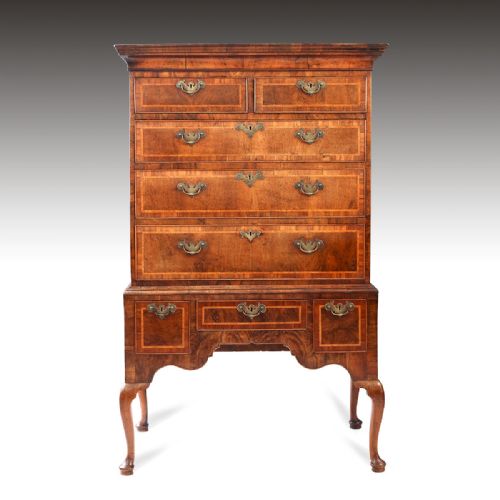
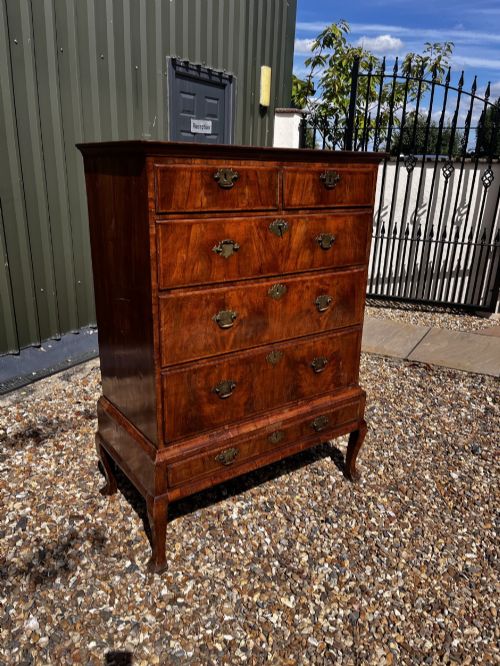
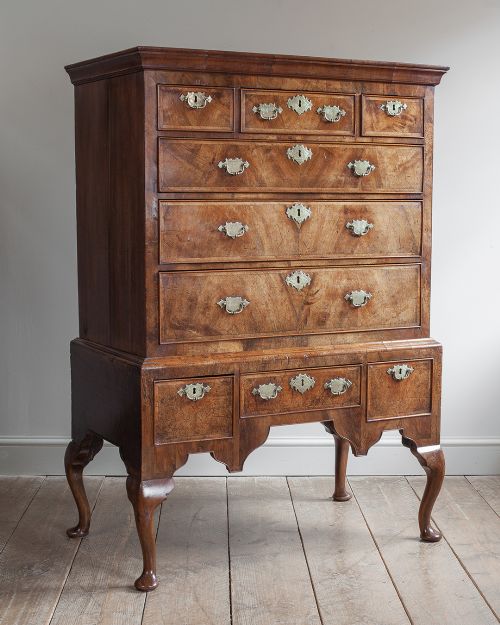
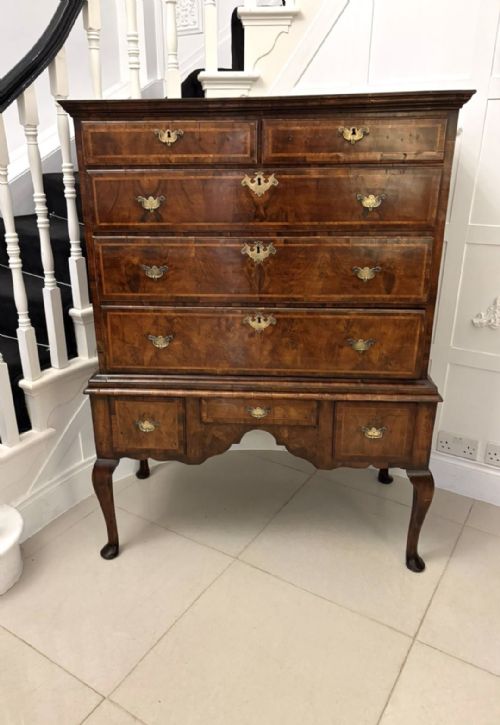


Georgian Walnut Drawers Stand
Georgian walnut drawers stand pieces are sophisticated early furniture forms combining upper storage chests with slender supporting bases, prized for their rich figured timbers and historic character.
Georgian Walnut Drawers Stand
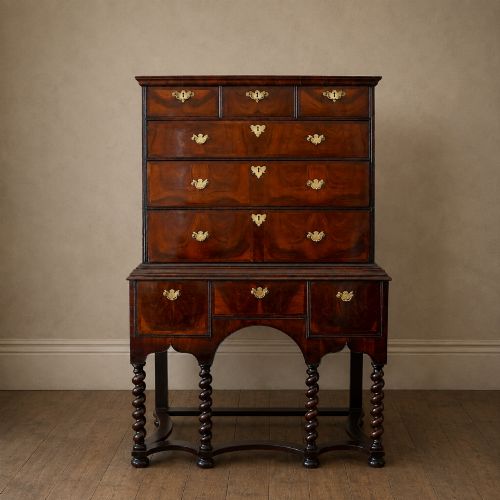
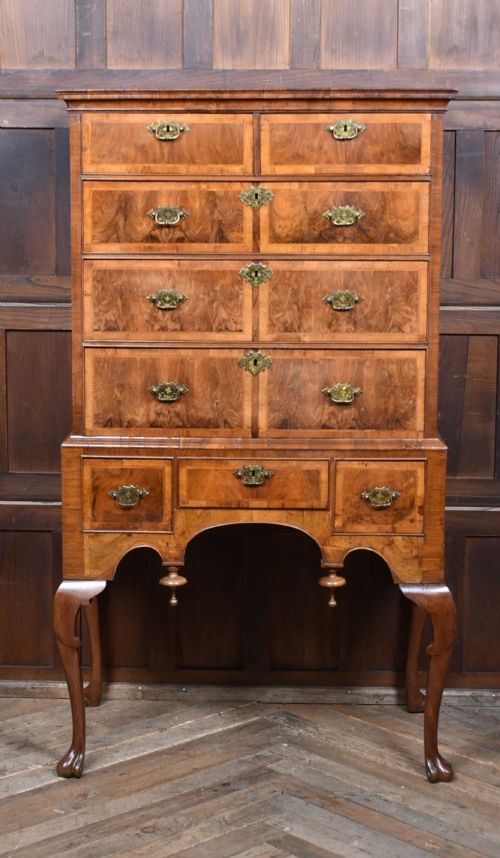
When you search for a georgian walnut drawers stand, you look at a distinctive two-part furniture form consisting of a chest of drawers raised upon a low stand or table base. These pieces primarily date from the eighteenth century, spanning the reigns of Queen Anne and the early Georges, though revival interpretations from later periods also appear.
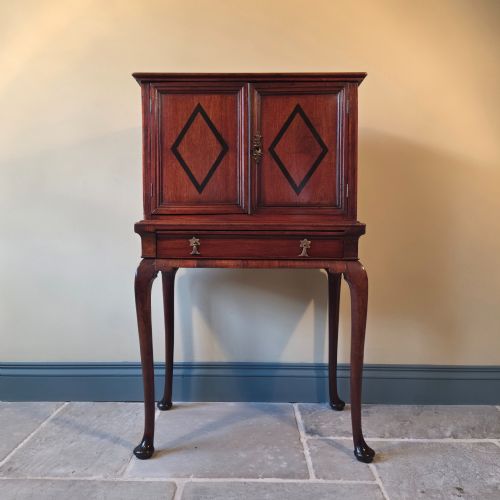
The format typically pairs a top section containing multiple graduated drawers with a supporting base featuring short legs, often terminating in cabriole shapes. While the core form is the chest on stand, related variants such as cabinets on stands and toilet mirrors share similar architectural traits and materials.
Most examples found on this page belong to the eighteenth century, displaying the characteristic proportions and timber selections of the period. Alongside authentic pieces, later revival versions from the early twentieth century reflect continued appreciation for this historic aesthetic.
Materials and Construction Techniques
Cabinet makers utilised walnut timber, frequently employing walnut veneer and burr walnut across the visible surfaces to create dramatic, highly figured grain patterns. Solid oak and pine often served as secondary woods for internal drawer linings and structural framing.
Surface ornamentation relied on decorative techniques such as oyster veneering, where small branch cross-sections formed intricate geometric patterns, complemented by subtle stringing lines in boxwood or ebony. Brass handles and escutcheons provided functional contrast against the dark timber.
The lower stands typically featured cabriole legs shaped from solid walnut, sometimes united by stretchers for stability. Joinery methods relied on hand-cut dovetails for the drawers and pegged mortise and tenon joints for the stands.
Early cabinet makers occasionally hid secret compartments inside drawer stands, giving owners a private place to stash secret love letters.
Distinctions in Quality and Craftsmanship
The visual impact of a piece depends heavily on the selection and matching of the veneer timbers, with carefully centred burr walnut figures marking out superior examples. Symmetrical grain alignment across drawer fronts demonstrates the skill of the original cabinet maker.
Proportion and structural harmony separate the finest items from more utilitarian pieces, particularly in the grace of the cabriole legs and the transition between upper chest and lower stand. The crispness of hand-cut mouldings and the retention of original brass hardware contribute significantly to overall character.
The Georgian Walnut Drawers Stand Glossary
- Chest on stand
- A two-part furniture form featuring an upper chest of drawers mounted upon a separate low supporting table base. This elevated design kept clothing away from cold, damp floors.
- Walnut veneer
- Thin slices of decorative walnut timber applied over a secondary wood foundation. This technique allowed cabinet makers to display striking grain patterns without using solid luxury wood throughout.
- Burr walnut
- Timber taken from a tree growth or burl, yielding swirling, knotty grain patterns. It was highly prized for decorative drawer fronts on formal furniture.
- Cabriole leg
- A furniture leg that curves outward in a convex arc and then bends inward in a concave arc, typically ending in a pad or hoof foot. It became a defining feature of early eighteenth-century design.
- Oyster veneering
- The practice of cutting small branches obliquely to create circular, oyster-like cross-section patterns arranged across a surface. This technique was popular during the late seventeenth and early eighteenth centuries.
Georgian Walnut Drawers Stand: Frequently Asked Questions
What is a walnut drawers stand used for?
These pieces functioned historically as storage furniture for valuables, documents, or personal linens within domestic bedchambers and drawing rooms. The elevated stand design made accessing the lower drawers more convenient while keeping contents clear of floor drafts.
Today, they serve as focal display pieces in hallways or living spaces, offering practical surface space and concealed storage within a compact footprint.
How do I distinguish eighteenth-century pieces from later revivals?
Early eighteenth-century pieces display hand-cut dovetails, older secondary timbers such as oak, and natural wear patterns accumulated over centuries of use. The construction methods, patination of the wood, and specific proportions of the stand offer key clues to age.
Revival pieces from the early twentieth century often utilise more uniform internal woods and machine-cut elements while attempting to replicate earlier Queen Anne or Georgian styles.
How do I care for antique walnut furniture?
Keep walnut furniture away from direct sunlight and strong heat sources to prevent the timber and delicate veneers from drying out or splitting. Maintaining stable room humidity preserves both the wood and the historic polish.
Apply traditional bees-wax sparingly and buff gently with a soft cloth to nourish the surface and maintain the natural lustre without building up heavy chemical residues.
What distinguishes a chest on stand from a tallboy?
A chest on stand pairs a relatively shallow upper chest with a distinct, open-legged table base underneath. This configuration results in a lower overall height and a lighter visual appearance.
In contrast, a tallboy usually consists of a larger chest of drawers stacked directly upon a second, deeper chest of drawers, creating a much taller and heavier storage unit.