
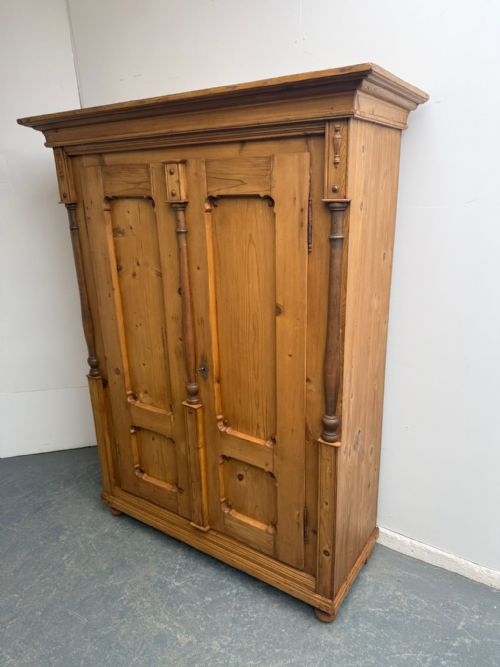


Georgian Two Piece Cupboard
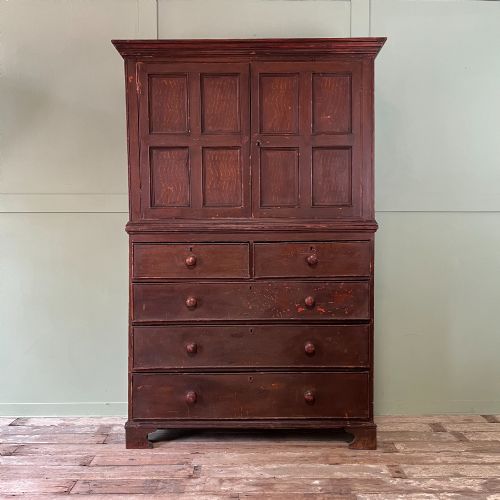
A georgian two piece cupboard offers split-level storage built with sturdy regional craftsmanship, combining upper display or shelving with a deep lower chest base.
Georgian Two Piece Cupboard
A georgian two piece cupboard divides into an upper cabinet and a lower base section to ease transport through tight spaces. These pieces span standard Georgian, George III, and later 19th Century revivals, alongside Irish vernacular and English country interpretations.
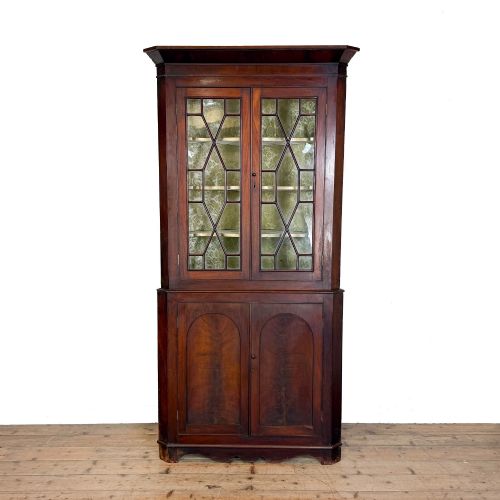
The form appears as corner cabinets, linen presses, and bookcase on chest configurations. Most examples encountered here utilise pine or mahogany, often built in two distinct structural halves.
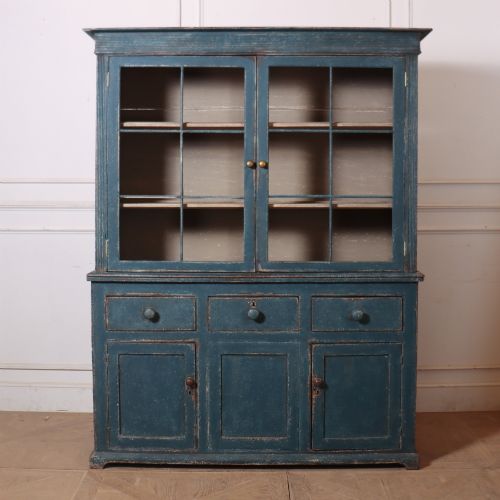
Regional workshops produced both painted pine surfaces and figured mahogany veneers to suit grand townhouses or modest rural kitchens. The split construction remains the defining characteristic across all listed variants.
How they were made
Makers constructed these carcasses using solid pine or mahogany, frequently applying flame mahogany veneer to primary surfaces for visual depth. Brass hardware, iron fittings, and glass panes complete the structural composition.
Joinery methods included pegged mortise and tenon frames alongside dovetailed drawer construction within the lower chest bases. Surfaces were finished with wax, traditional paint layers, or left unpainted for subsequent treatment.
Current listings feature pine, mahogany, and flame mahogany veneer, spanning the Georgian period, the 19th Century, and 1920s revivals.
What varies in quality
The sophistication of the timber selection separates standard utility pieces from high-status examples. Cabinets featuring figured flame mahogany veneer and well-proportioned astragal glazing demand closer attention than plain painted pine.
Patina and surface preservation dictate the visual strength of the piece. Faded, untouched finishes and crisp architectural mouldings indicate superior original craftsmanship.
The Georgian Two Piece Cupboard Glossary
- Astragal glazed
- Framework of slender wooden bars holding small panes of glass within a cabinet door. This method creates a lighter visual appearance for upper display sections.
- Linen press
- A tall storage piece featuring upper sliding trays or shelves enclosed by doors, positioned above a chest of drawers base. They were designed specifically to store household linens flat.
- Flame mahogany veneer
- Thin slices of mahogany cut from timber fork junctions to produce a fiery, rippling grain pattern. Cabinetmakers laid these veneers over secondary woods to create decorative facades.
- Blind door
- A solid wooden door lacking glass panels or mirrors. These doors conceal interior shelving or hanging space entirely.
- Bookcase on chest
- A two-part form uniting an upper bookcase cabinet with a lower chest of drawers. The lower section provides heavy structural support and deep drawer storage.
Georgian Two Piece Cupboard: Frequently Asked Questions
What is the difference between a press and a wardrobe?
A linen press traditionally contains internal sliding trays or shelves behind the upper doors for folded textiles. Wardrobes focus primarily on vertical hanging space for garments.
Many older two piece designs utilise the upper chamber for shelves while the lower chest offers deep drawer capacity.
How should I care for waxed mahogany surfaces?
Apply a natural beeswax paste sparingly with a soft cloth and buff gently along the grain. Avoid silicone sprays and keep the timber away from direct heat sources.
Regular polishing nourishes the grain and maintains the depth of faded patination over decades of domestic use.
Can I paint a pine cupboard?
Many regional pieces were originally finished with paint rather than clear wax. Preparing the surface with a suitable primer allows traditional milk paint or eggshell finishes to adhere correctly.
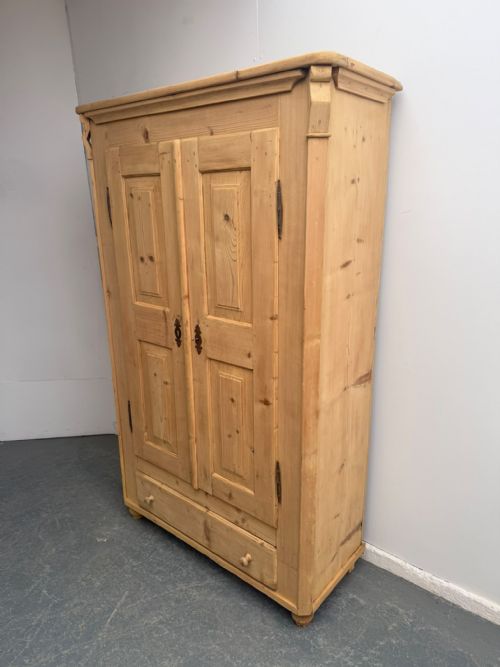
Unfinished pine versions explicitly invite custom painting or waxing depending on your interior space.