



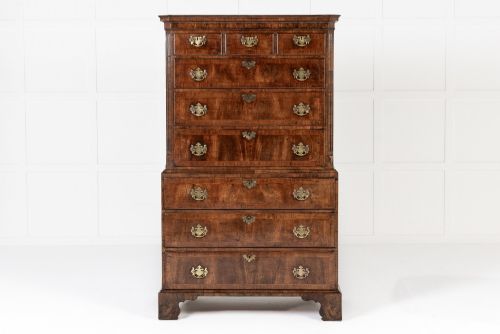

Georgian Two Part Chest
A georgian two part chest is a tall, stacked storage cabinet built in sections for transport, offering serious presence and historic utility.
Georgian Two Part Chest
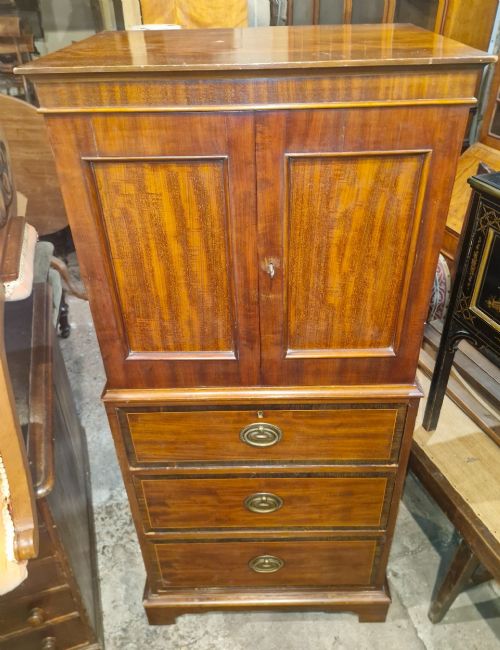
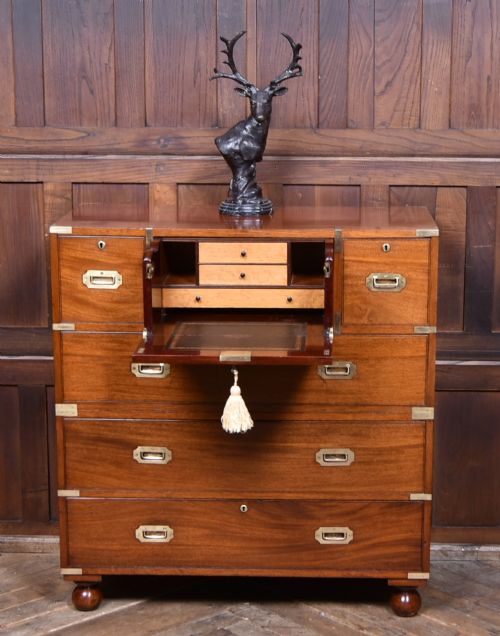
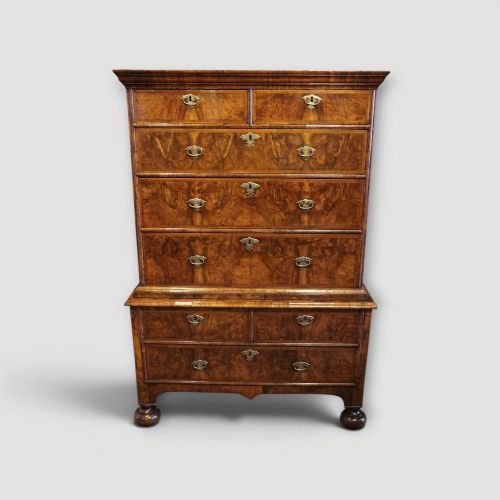
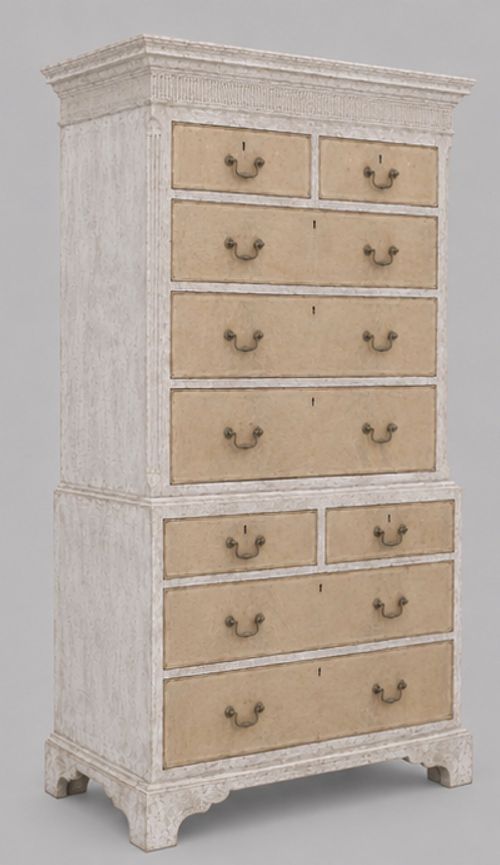
A georgian two part chest brings together several forms of stacked cabinetry, most commonly seen here as tallboys, chest-on-chests, and bookcase combinations. These pieces divide horizontally into an upper and lower section, a practical arrangement designed originally for moving large furniture through tight doorways and up narrow staircases.
The selections span from the early eighteenth century through the Victorian era, encompassing walnut, oak, and mahogany examples built in styles ranging from Queen Anne to George III and Regency. Buyers frequently encounter tallboy chests featuring multiple smaller drawers over larger ones, sometimes topped with glazed bookcase sections or finished with painted surfaces.
Originating in domestic bedchambers and libraries, these items served as primary wardrobes and linen stores before modern fitted furniture took over. Their two-part construction remains their defining characteristic, separating them from single-piece chests of drawers.
Materials and construction
Cabinetmakers constructed these sectional pieces primarily using dense hardwoods such as mahogany, walnut, and oak, often incorporating secondary timbers like pine and iron for internal drawer linings and structural support. Selected veneers were laid over solid primary woods to create figured grain patterns on the drawer fronts.
Brass hardware, including swing handles and key escutcheons, functioned as both structural pulls and decorative accents across the drawer tiers. Joinery relied on precise dovetail joints for the drawer construction and sturdy carcase frames to support the weight of the stacked upper section.
Georgian Two Part Chest Retail Price Guide 2026
Typical asking prices for georgian two part chest among the pieces listed under this phrase on Sellingantiques today, from the lower quarter to the upper quarter. They describe what is for sale here now, not the wider market.
Listings feature mahogany, oak, and walnut across the eighteenth and nineteenth centuries.
Assessing quality and finish
The degree of refinement in timber selection and cabinetmaking determines the standing of an individual piece, visible in the matching of wood grain across consecutive drawer fronts. Superior examples exhibit crisp carving on cornices and canted corners, alongside carefully fitted internal drawers and original brass furniture.
Proportions and surface patination further distinguish the construction, as skilled makers achieved harmonious height-to-width ratios and deep, lustrous finishes through traditional polishing methods. Alterations to feet, cornices, or handles alter the integrity of the piece from its original state.
The Georgian Two Part Chest Glossary
- Chest-on-chest
- A tall storage unit formed of two separate cabinet sections stacked vertically, where the upper chest is typically narrower than the lower base.
- Tallboy
- A traditional English term for a tall chest of drawers, frequently synonymous with a chest-on-chest or a chest mounted on a tall stand.
- Dovetail
- A joint formed by interlocking wedge-shaped fingers, commonly used in period drawer construction for superior tensile strength.
- Escutcheon
- A protective brass plate surrounding a keyhole, designed to prevent the surrounding wood from wearing down through repeated use.
- Cornice
- The ornamental moulding running around the top edge of a cabinet or tallboy, often featuring dentil or dentil-like carved details.
Georgian Two Part Chest: Frequently Asked Questions
Why were these chests made in two parts?
Dividing the cabinet horizontally allowed carpenters to transport heavy, tall furniture through narrow historic doorways and stairwells without damaging the carcase.
Once inside the room, the upper section simply stacked upon the lower base, held in place by its own substantial weight and traditional mouldings.
How do I tell an oak piece from a mahogany one?
Oak furniture tends to display a prominent, visible grain with characteristic medullary rays, often appearing lighter in tone and robust in build. Mahogany offers a smoother, red-brown appearance that readily accepts deep polishing and fine veneer work.
Where should I place a tallboy in my home?
These vertical storage units suit bedrooms, hallways, or living spaces where floor space is limited but vertical height is available. Because they stand tall, securing them to a wall using appropriate fixings is standard practice for safety.
What is the difference between a tallboy and a standard chest?
A standard chest of drawers sits low as a single unit, whereas a tallboy stacks storage higher by combining two sections or placing drawers upon a stand.
This vertical format provides significantly more drawer capacity while occupying a smaller footprint on the floor.