
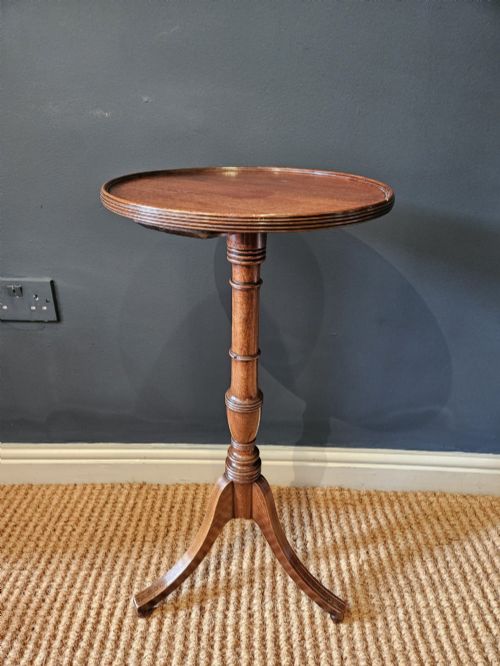
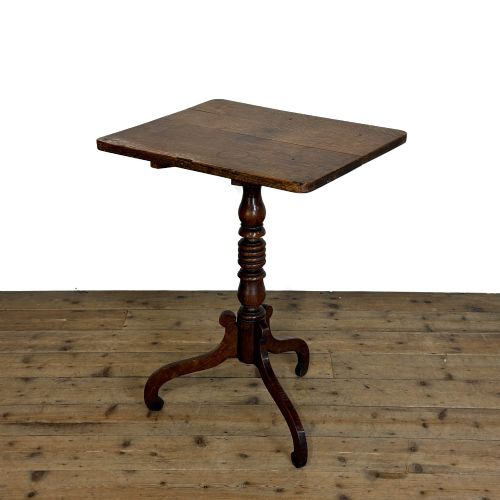
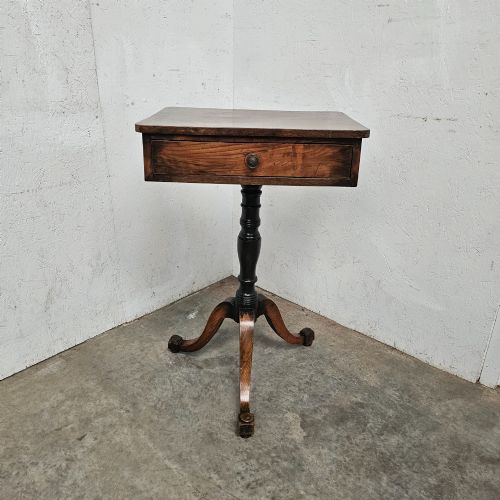
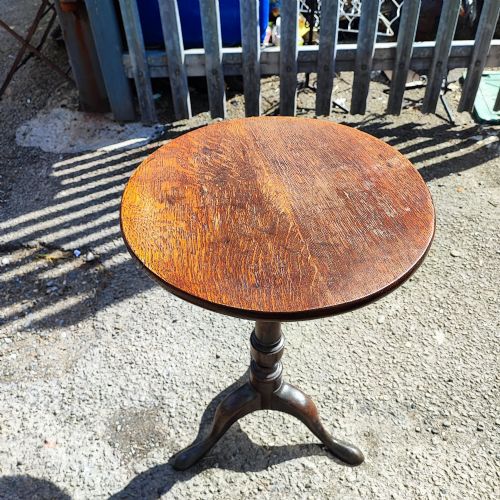
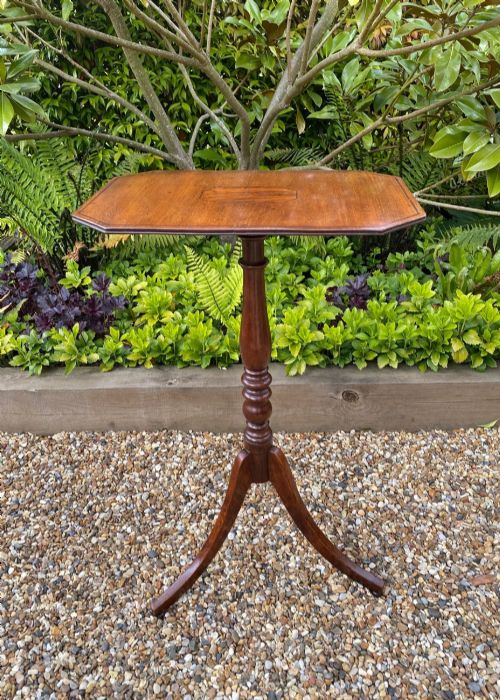
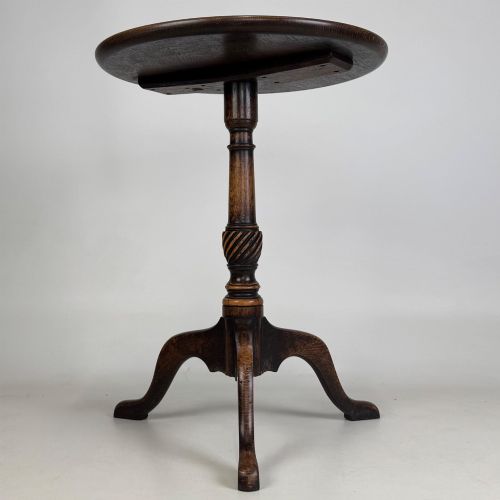
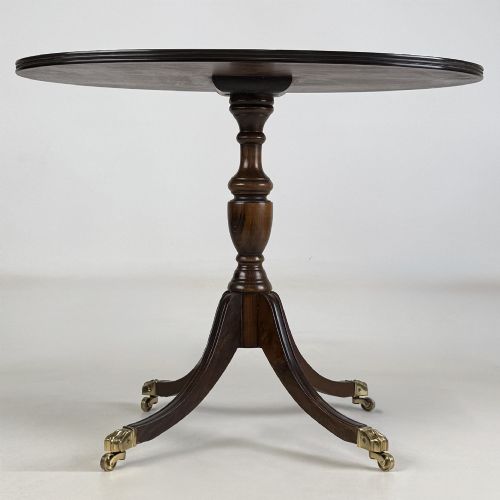
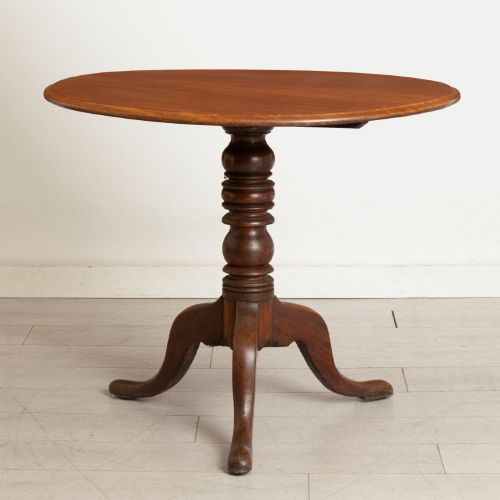
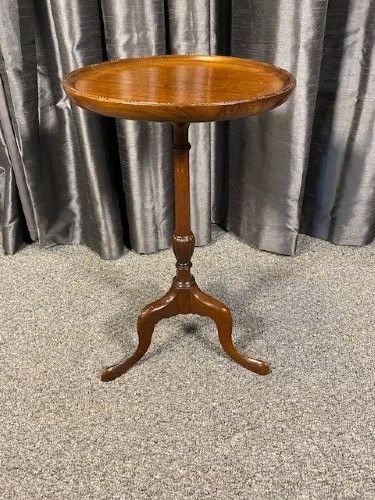
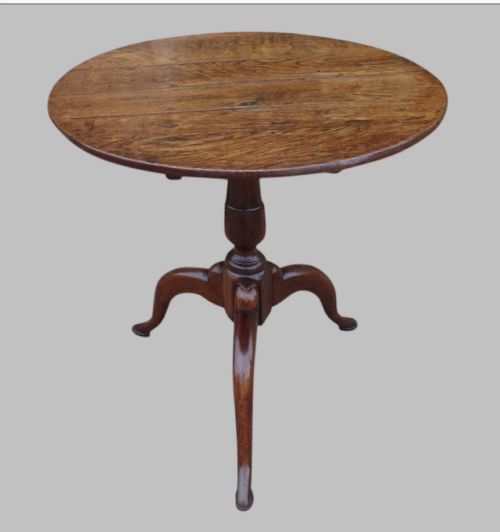
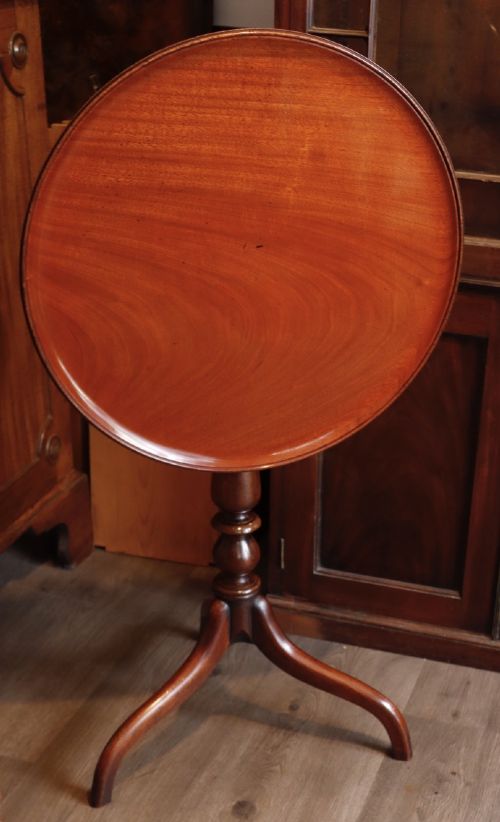
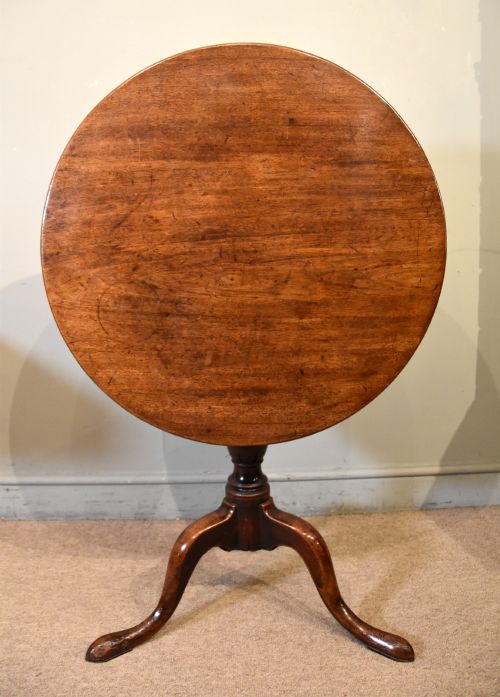
Georgian Turned Tripod Table
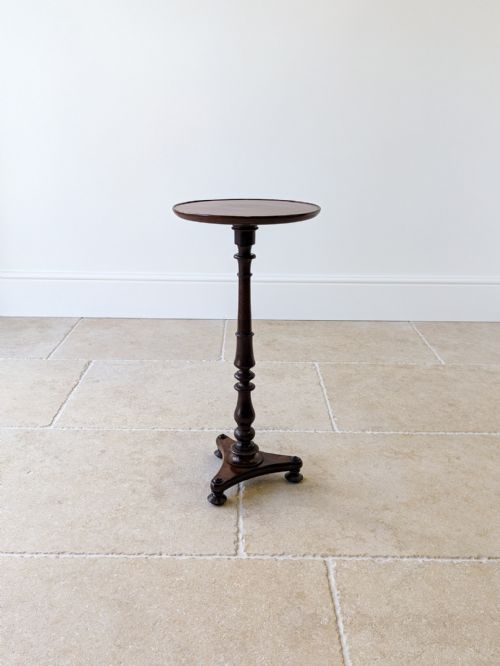
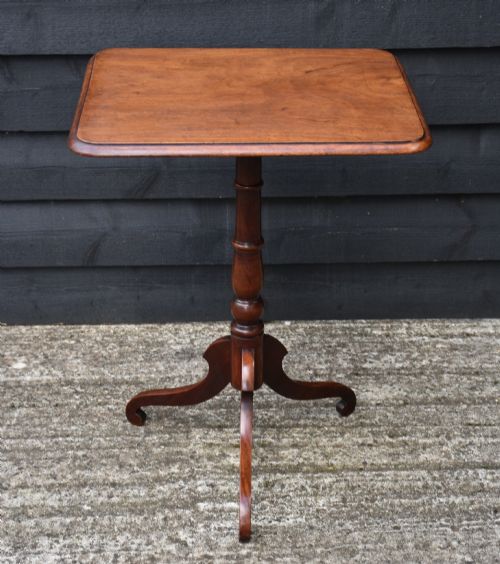
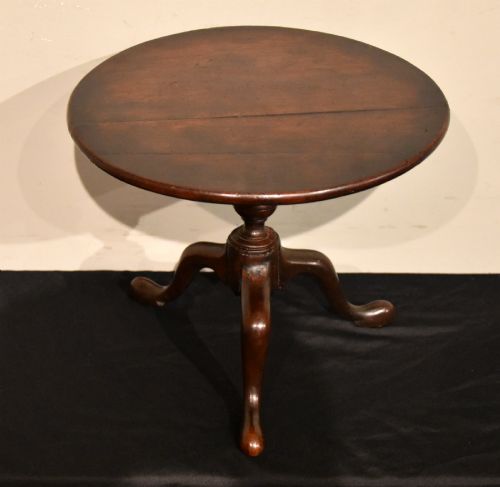
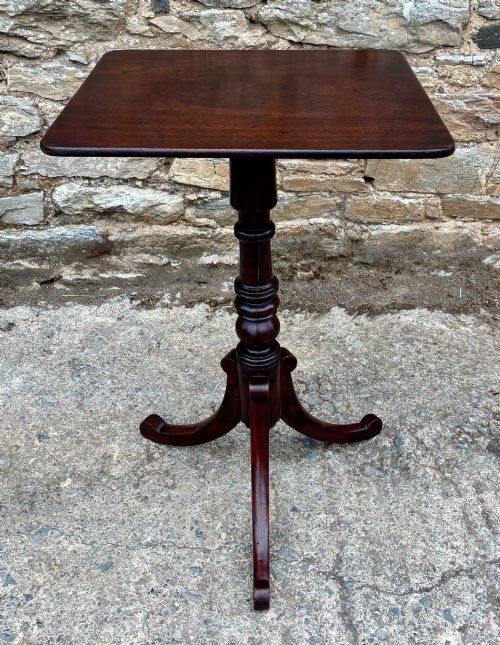
A georgian turned tripod table brings proportion and flexibility to a room, resting on three slender legs beneath a central pedestal.
Georgian Turned Tripod Table
A georgian turned tripod table is an agile piece of small furniture designed for occasional use as a wine table, candle stand or small dining surface. The form centres on a single turned pillar supported by three outward-curving legs that provide stability without heavy framing.
You will most frequently meet pieces fashioned from mahogany and oak, dating from the eighteenth and nineteenth centuries. These range from plain country versions with solid elm or oak tops to finer urban examples in figured mahogany with tilting mechanisms.
The assortment spans vernacular country pieces alongside formal George III and Regency designs. Many feature circular or tilt-top boards intended to save space when pushed against a wall between uses.
How they were made
Cabinetmakers and country joiners turned the central pedestals on lathes, shaping vase or column profiles from hardwoods such as mahogany, oak, fruitwood and beech. The legs were typically joined to the shaft using dovetail or tenon joints secured by wooden pins.
Table tops were prepared from single boards of timber or joined planks, sometimes fitted with a birdcage mechanism that allowed the surface to rotate and tilt. Secondary timbers like deal or pine occasionally appear in internal framing blocks.
Surface finishing relied on hand-applied wax or polish to bring out the natural grain of woods like cherry, yew and burr oak. Details such as boxwood stringing or subtle penwork decoration appear on select regional and later revival pieces.
A cheeky three-legged table stays level on crooked floors where four legs would wobble.
What varies in quality
Quality rests primarily in the selection of timber and the crispness of the turning on the central pillar. Heavy, well-figured mahogany or richly patinated country oak commands attention through deep colour and honest wear.
The harmony of proportion between the height of the column and the spread of the tripod legs determines the visual balance of the piece. Superior examples possess tight, original joinery in the block and spider mechanism beneath the top.
The Georgian Turned Tripod Table Glossary
- Tilt-top
- A hinged table top that rotates and tips into a vertical position for storage when not in use. This clever mechanism allowed smaller rooms to remain uncluttered.
- Birdcage
- A timber framework beneath the table top that permits the surface to both rotate and tilt. It uses small vertical spindles resembling a cage.
- Cricket table
- A small three-legged round table typically associated with vernacular eighteenth-century oak furniture. The three legs ensure stability on uneven floors.
- Dumb waiter
- A tiered pedestal table with multiple revolving trays used for serving food and drink without servants present. These stand taller than standard wine tables.
- Penwork
- Surface decoration created using ink applied with a pen to form geometric or floral motifs on the wood. This technique appears on decorative occasional tables.
Georgian Turned Tripod Table: Frequently Asked Questions
What were tripod tables used for?
These portable surfaces served multiple domestic roles, primarily holding wine bottles, drinking glasses or candle lamps beside seating. Their light weight allowed servants or residents to move them easily around the parlour.
During the evening, they provided a convenient resting place for books, needlework or tea service. Many examples were designed specifically to be cleared away and tilted against the wall when floor space was needed.
How do I identify a Georgian piece?
Look for hand-turned pillars showing tool marks and construction methods using pegged tenons or traditional dovetails rather than modern screws. Eighteenth-century timber naturally displays deep patination and minor shrinkage cracks accumulated over centuries of use.
Secondary woods and hardware, such as brass catches on tilt mechanisms, also offer clues to the period of manufacture. Regional country pieces often utilise native timbers like elm and fruitwood alongside oak.
What is a birdcage action?
A birdcage is an ingenious wooden assembly placed directly beneath the table top that connects the surface to the central column. It consists of two small horizontal discs joined by tiny vertical spindles.
This mechanism lets the top spin horizontally and also tip vertically so the table flat can rest against a wall. Finding an intact, original birdcage action adds significant interest to an antique pedestal table.
Are these tables sturdy?
The three-legged tripod design inherently resists wobbling on uneven historic floorboards because all three feet maintain constant contact with the ground. The spread of the legs provides reliable balance despite the slender central column.
Heavy downward pressure near the absolute edge of a tilted or swing top can test the pivot joint, so users should handle the tilting mechanism with care. Daily placement against a wall protects the mechanism from accidental bumps.