



Georgian Travelling Trunk
A georgian travelling trunk is a robust vessel designed for the road, offering a tangible link to the practical journeys of past centuries.
Georgian Travelling Trunk
When you search for a georgian travelling trunk, you are looking at substantial storage pieces built to withstand the rigours of coaching, shipping and carriage travel across the eighteenth and nineteenth centuries. These sturdy chests appear in varied forms, from domed top examples to flat travelling cases designed to stack securely in transit.
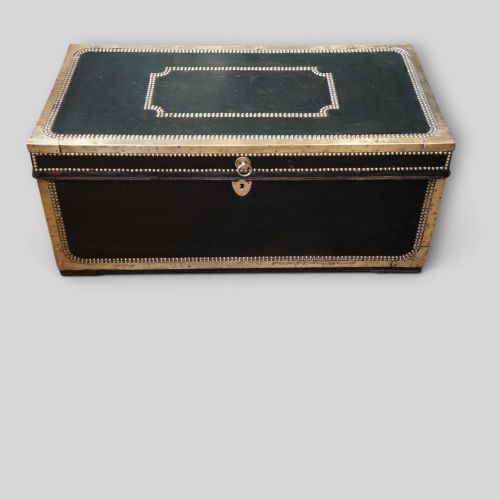
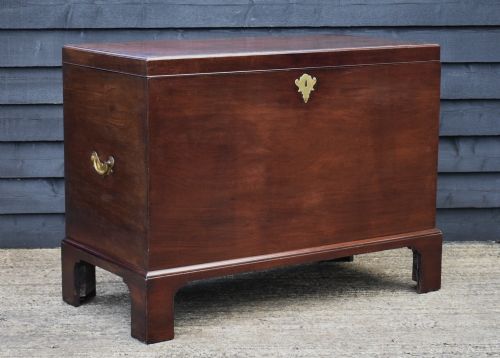
The pieces on this page span the Georgian, Regency and Victorian periods, with materials ranging from robust oak and mahogany to polished elm. You will encounter green painted finishes alongside studded leather and hide coverings, reflecting the practical demands placed on luggage before the age of modern rail and motor transport.
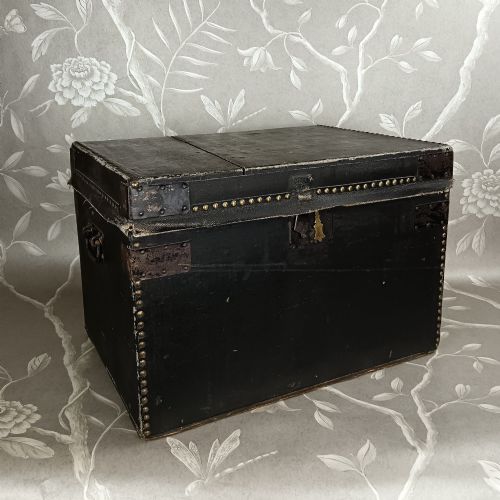
Many survivors retain their original brass mounts, heavy iron bands and maker labels, which point directly to their origins in London, Bristol or regional workshops. Whether small enough for a coach or large enough for global shipping, each georgian travelling trunk carries the visible marks of its utilitarian history.
Materials and construction
Makers built the foundational carcase of a georgian travelling trunk using native timbers such as oak, mahogany, elm or pine, selected for structural strength. These wooden bodies were reinforced to endure heavy handling and shifting loads during transit.
Exterior surfaces were frequently wrapped in leather, hide or pony skin, secured with dense rows of brass studs and bound with iron straps for added durability. Brass handles, corner brackets and locks completed the construction, protecting vulnerable edges from the impacts of coaching and shipping.
Listings feature oak, mahogany, elm, brass, leather, hide and iron across Georgian, Regency and Victorian periods.
Judging quality in travel chests
Quality in a georgian travelling trunk rests on the integrity of its core construction and the quality of its exterior mounts. Pieces featuring substantial framing, well-fitted lids and intact original hardware stand apart from simpler utility boxes.
The choice of covering material and the precision of the brass studwork also indicate the original tier of the piece. Fine surviving maker labels, legible stamps and original interior linings elevate an example beyond standard transport chests.
Samuel Pratt·Wm. Insall of Bristol·Chapple & Sons·Seabrook of St.Pauls·Furnell & Bagnal
The Georgian Travelling Trunk Glossary
- Campaign case
- A portable chest or trunk built for military officers or travellers on the move, typically featuring recessed brass handles and reinforced corners.
- Coaching trunk
- A sturdy chest specifically proportioned to strap to the roof or boot of a stagecoach during long-distance road journeys.
- Domed top
- A curved lid construction designed to shed rainwater effectively when luggage was exposed to the elements on carriage roofs.
- Hide
- Untanned or heavy tanned animal skin used as a tough, weather-resistant exterior covering for travel trunks.
- Studded
- Decorated or reinforced with rows of metal tacks or brass nails that secure leather coverings to the wooden carcase.
Georgian Travelling Trunk: Frequently Asked Questions
What were georgian travelling trunks used for?
These trunks served as secure luggage for wealthy travellers, military officers and diplomats journeying by coach, ship or horseback across Britain and beyond.
They protected clothing, documents and personal valuables from dust, moisture and the heavy impacts associated with eighteenth and nineteenth century transport.
How do I care for a leather trunk?
Keep leather and hide surfaces away from direct sunlight and damp environments to prevent the material from drying out or developing mould.
Dust gently with a dry cloth and allow the natural patina of the aged leather and brass mounts to remain undisturbed.
Can I use these trunks for modern storage?
These sturdy chests offer practical storage solutions for blankets, seasonal clothing or books in contemporary living spaces.
Their substantial construction and flat tops also allow them to function effectively as occasional coffee tables or display surfaces.
How do I date a travelling trunk?
Dating relies on examining construction techniques, timber choices, lock mechanisms and the style of brass hardware alongside any maker stamps.
Earlier eighteenth-century examples often display simpler iron bindings, while Regency and later pieces frequently incorporate refined brass studwork and painted finishes.