


Georgian Timber Side Chair
A georgian timber side chair brings functional seating from earlier centuries into modern rooms with honest construction and enduring wood grain.
Georgian Timber Side Chair
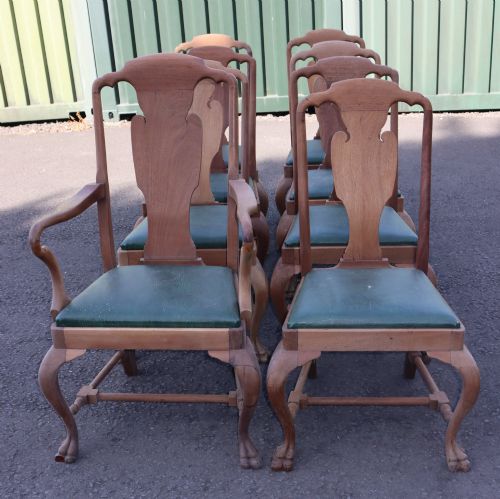
A georgian timber side chair encompasses practical seating forms originating across the eighteenth and nineteenth centuries, including hall chairs, dining chairs, and occasional bedroom pieces. These sturdy seats served various domestic functions in period interiors, constructed without arms to fit easily against walls or around dining tables.
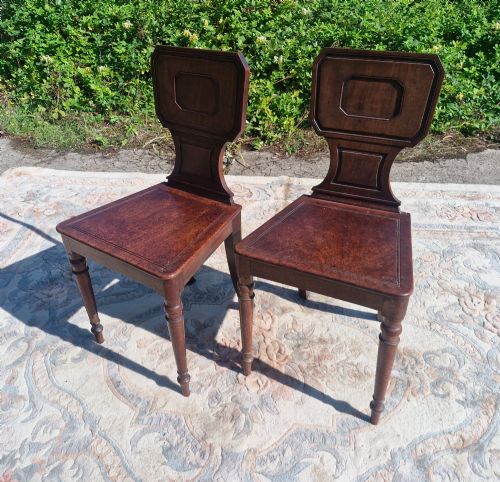
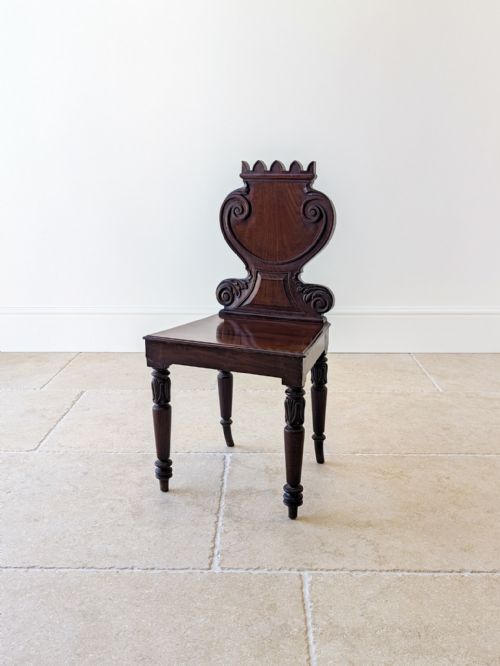
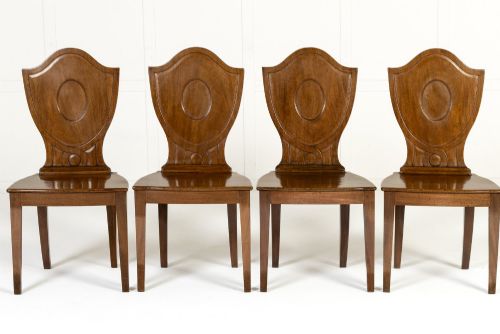
The version most commonly encountered on this page is the mahogany hall chair, often dating from the Regency or George III periods. These examples frequently feature solid wooden seats, carved shield backs, or painted armorial details intended to display family lineage in entrance halls.
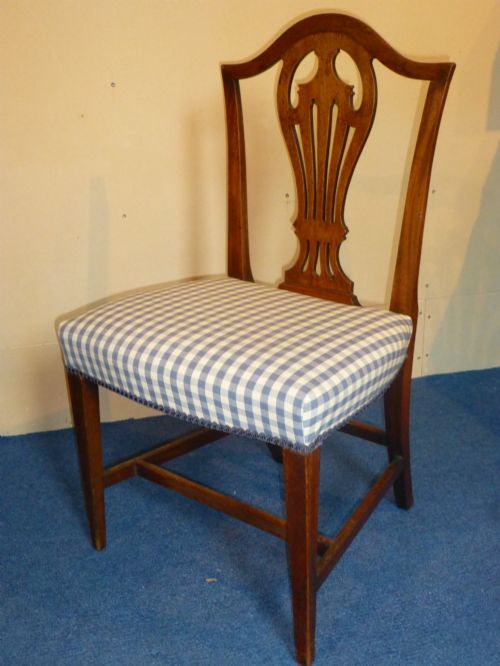
Makers utilised regional timbers such as walnut, oak, fruitwood, and solid birch alongside mahogany. Pieces span single items, pairs, and matched sets ranging from four to twelve chairs, reflecting how households originally furnished their dining and reception spaces.
Materials and construction
Cabinetmakers constructed these frames primarily using dense hardwoods like mahogany, walnut, and oak, occasionally turning to fruitwood and solid birch for regional pieces. Timber selection dictated the strength of the joints and the crispness of any carved ornamentation on the back splats.
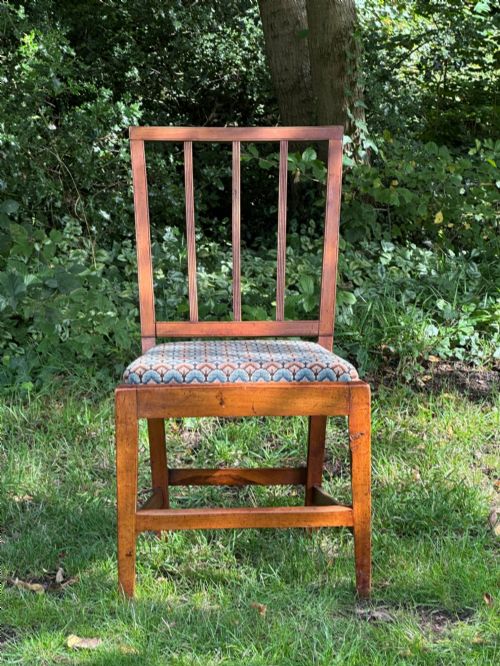
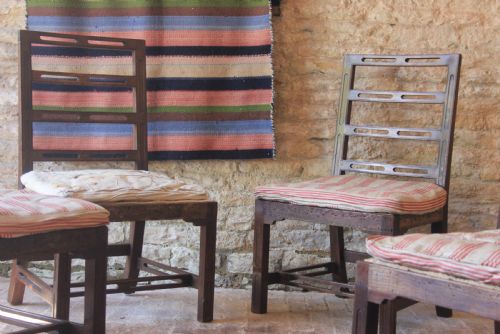
Joinery relied on traditional pegging and mortise and tenon techniques to ensure stability under daily use. Seats were either shaped directly from solid wood or constructed with frames to support fabric, rush, or painted wooden surfaces.
Some hall chairs feature carved Prince of Wales feathers ready to greet eighteenth-century guests.
Distinctions in craftsmanship
Quality rests in the depth and execution of carved details, such as crisp shell motifs, fan backs, or painted armorial crests upon the wooden panels. Superior examples display thoughtful proportions and careful selection of figured timber grain across prominent surfaces.
The integrity of the original timber frame and the survival of untouched wood surfaces distinguish finer survivals. Matched sets with uniform patina and minimal structural replacement command greater appreciation than assembled groupings.
Gillows·Marsh, Jones and Cribb·Wheeler
The Georgian Timber Side Chair Glossary
- Hall chair
- A rigid wooden seat placed in an entrance hall, typically featuring a solid timber seat and an elaborately carved back panel displaying family crests or painted armorials. These pieces were designed for brief seating rather than prolonged comfort.
- Shield back
- A chair back shaped in the outline of a heraldic shield, popular during the eighteenth century. This design often incorporated carved drapery, Prince of Wales feathers, or pierced splats.
- Faux bamboo
- A decorative treatment where wood is carved or painted to imitate natural bamboo stalks. This style gained popularity during the Regency period under Asian design influences.
- Armorial
- A painted or engraved heraldic family crest displayed on furniture. Such details denote the specific lineage or estate for which the seating was originally commissioned.
- Fruitwood
- Timber harvested from fruit-bearing trees such as pear, apple, or cherry, used by regional cabinetmakers. It yields a warm tone and fine grain suitable for detailed turning.
Georgian Timber Side Chair: Frequently Asked Questions
What is a georgian timber side chair used for?
These chairs served multiple domestic purposes in historic houses, functioning as supplementary seating in dining rooms, bedrooms, and grand entrance halls.
Today, they work well as decorative accent pieces in modern hallways or paired with antique desks and dining tables.
How do I identify a Regency period chair?
Regency pieces often display classical revival motifs, painted faux bamboo details, or bold mahogany grains influenced by early nineteenth-century design.
Look for architectural lines, sculptural hall chair backs, and specific regional construction methods recorded in the listing details.
Are these chairs comfortable for daily seating?
Period side chairs were typically constructed with solid wooden seats or firm rush pads intended for upright posture rather than lounging.
Their primary appeal lies in their sculptural wooden frames and historical presence rather than cushioned relaxation.
How are sets of chairs matched together?
Many listings offer matched sets that combine pieces sharing identical materials, wood tones, and back designs from the same era.
Evaluating the grain consistency across mahogany, walnut, or fruitwood helps determine whether chairs originated as a unified set or were gathered later.