



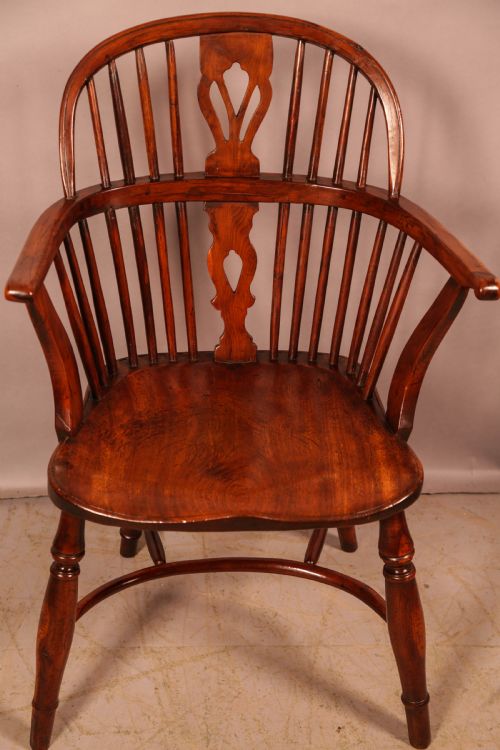

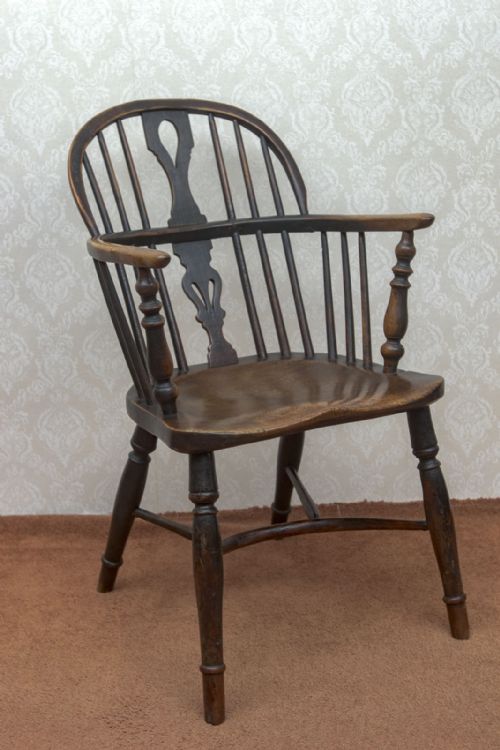


Georgian Style Windsor Armchair
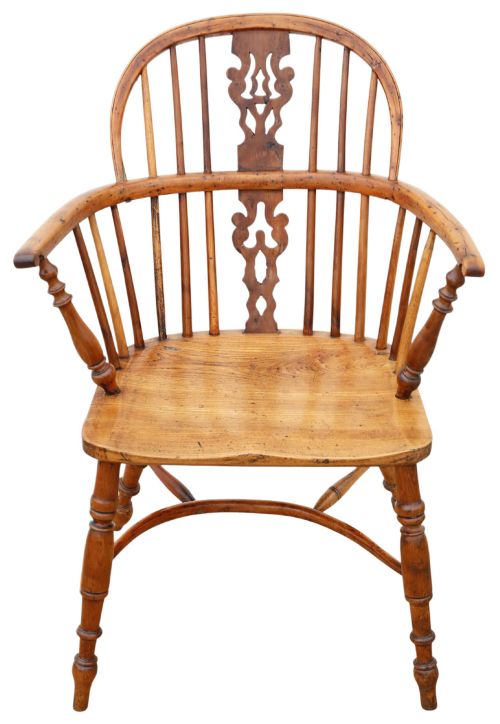
A georgian style windsor armchair offers solid country seating, built from sturdy timbers like elm and yew with a comfortable bow back.
Georgian Style Windsor Armchair
A georgian style windsor armchair is a traditional form of seating rooted in English country vernacular design. These timber armchairs typically feature a sturdy wooden seat with legs and back spindles wedged directly into the thick base.
Most examples found here date from the nineteenth century, alongside pieces originating in the eighteenth century, the regency era, and the victorian period. Makers constructed these chairs primarily for everyday use in domestic interiors and country homes.
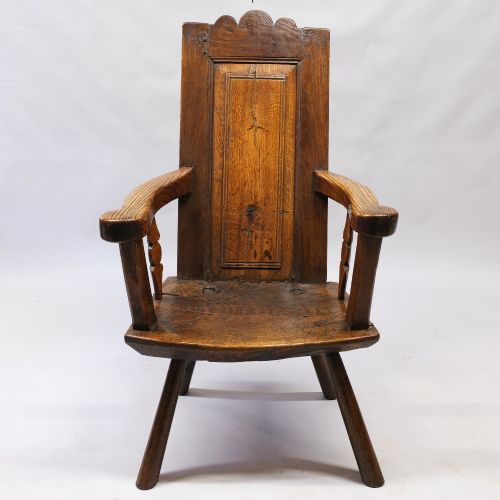
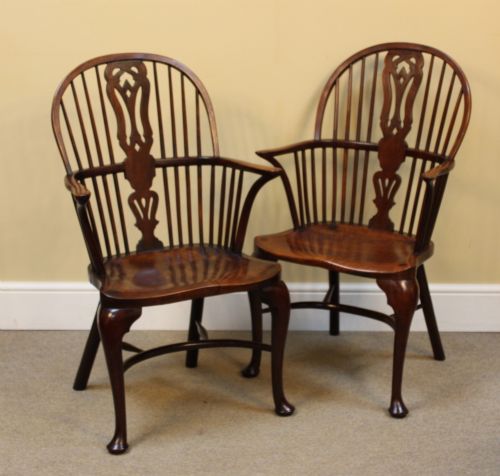
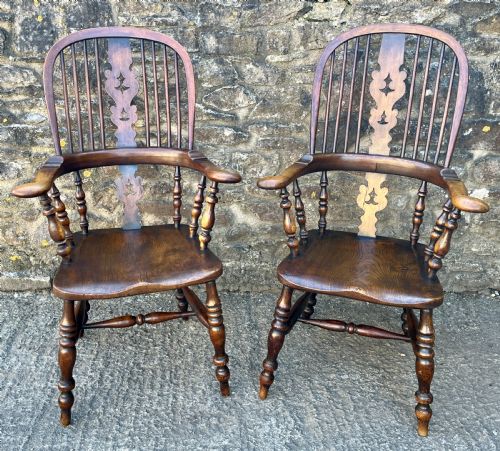
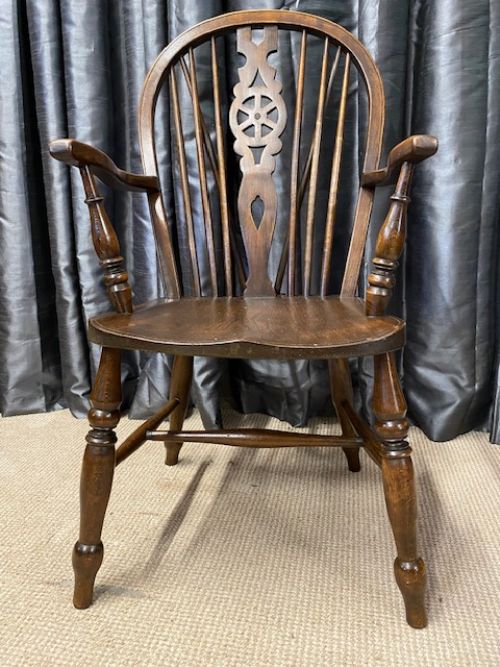
The selection includes standard adult armchairs, carver elbow chairs, low-back models, and smaller childs chairs. Regional variations span from broad arm versions to wheel back designs.
How they were made
Cabinet makers and bodgers shaped these chairs using a combination of native timbers, predominantly elm, yew, ash, oak, beech, and yew wood. Elm provided a strong, split-resistant seat, while ash and beech formed flexible spindles and legs.
Makers turned spindles and legs on a pole lathe and bent green timber for the curved backs using steam. Component parts were then joined together using traditional wedged mortise and tenon joints.
Listings feature eighteenth-century and nineteenth-century pieces alongside regency and victorian examples, constructed from elm, yew, ash, oak, and beech.
What varies in quality
The choice of timber heavily dictates the character of a chair, with figured yew wood and well-grained elm commanding particular appreciation among buyers. Grain patterns, timber matching in the seat, and the graceful taper of the turned spindles separate standard examples from finer pieces.
Structural integrity and the retention of original surface patination distinguish superior specimens. Chairs exhibiting balanced proportions and crisp turning on the arm supports and legs demonstrate greater skill from the maker.
Benjamin Gilling·Worksop Made
The Georgian Style Windsor Armchair Glossary
- Windsor chair
- A wooden armchair constructed with a solid plank seat into which the undercarriage legs and upper back spindles are independently tenoned. This method creates a sturdy, rigid frame without relying on a bulky central frame.
- Carver elbow chair
- An armchair designed with generous armrests, often used at the head of a dining table or as a desk chair. These pieces match the style of simpler dining chairs in a set.
- Low back
- A chair design where the upper bow finishes at a lower height, supporting the mid-back rather than the shoulders. This form allows for easier movement of the arms.
- Broad arm
- An armchair featuring wide, flat paddle-like armrests shaped from a single piece of timber. These extensions offer a practical resting surface for the hands.
- Wheel back
- A chair back incorporating a pierced central wooden splat carved in the shape of a spoked wheel. This decorative motif became popular during the nineteenth century.
Georgian Style Windsor Armchair: Frequently Asked Questions
How do I identify a true period windsor?
Examine the construction methods visible underneath the seat, where wedged spindle tops and adzed tool marks indicate traditional hand tool work. Timber shrinkage and natural wear around the foot rails also point towards genuine age.
Compare the species of wood used in different parts of the chair, as makers selected specific timbers for seats, legs, and bentwood backs based on their functional properties.
Were these chairs used at dining tables?
Country homes utilised these sturdy armchairs primarily in parlours, kitchens, and around hearths rather than formal dining rooms. Carver elbow-chairs often served as seating for the head of the household.
Lower-back and childs variants accommodated domestic settings where space was restricted or seating requirements were smaller.
What is the difference between elm and yew wood?
Elm offers a tough, interlocking grain that prevents splitting, making it the preferred timber for solid plank seats. Yew wood displays rich figuring and warm colouration, utilised for decorative bows and spindles.
Chairs combining yew wood and elm often indicate a higher grade of manufacture and visual appeal.
How should I care for an antique wooden armchair?
Maintain a stable room environment away from direct heat sources and sudden temperature shifts to prevent timber shrinkage and cracking. Apply traditional beeswax occasionally to nourish the dry wood surface.
Avoid harsh modern cleaning sprays that can strip the historic polish and patination built up over centuries of use.