
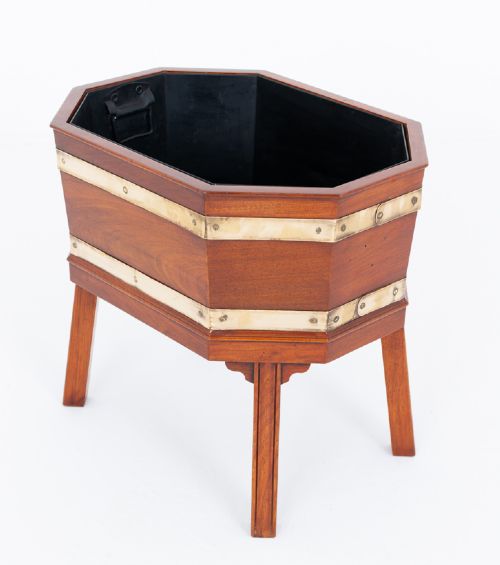
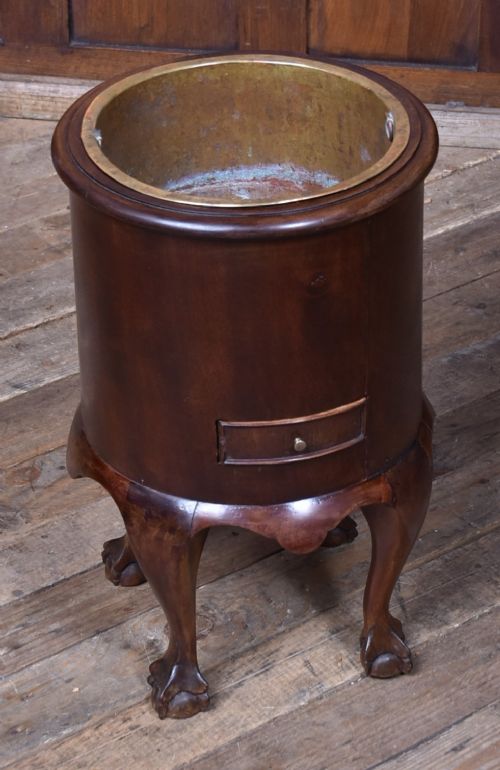


Georgian Style Mahogany Cellarette
These georgian style mahogany cellarette pieces are fitted timber vessels designed to keep wine bottles cool, bringing classic proportion and warm timber grain to a dining room.
Georgian Style Mahogany Cellarette
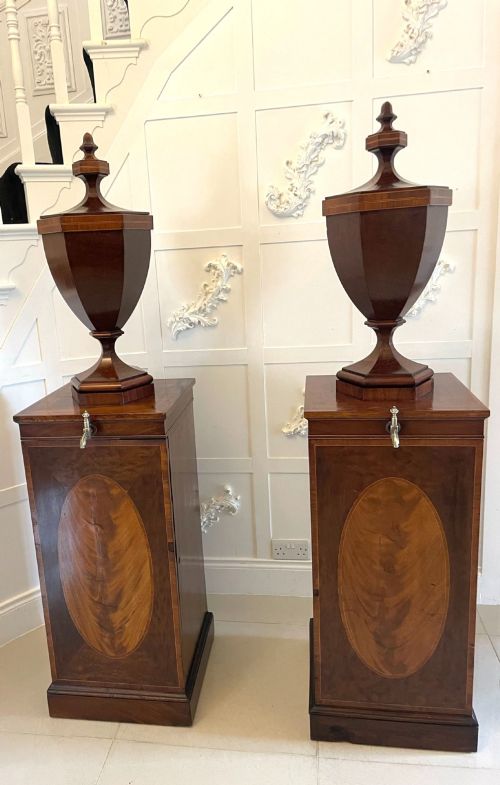
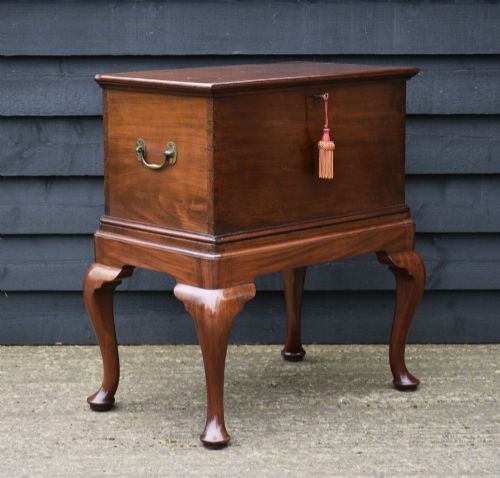
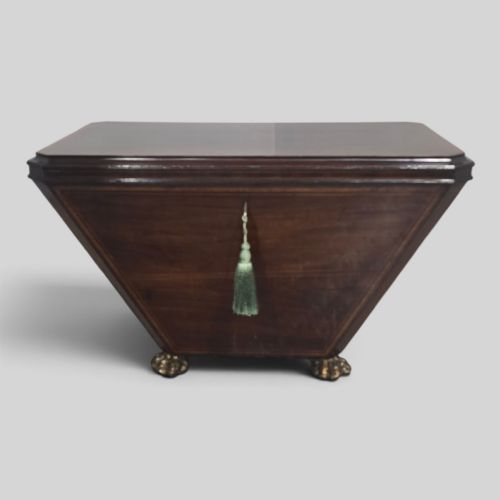
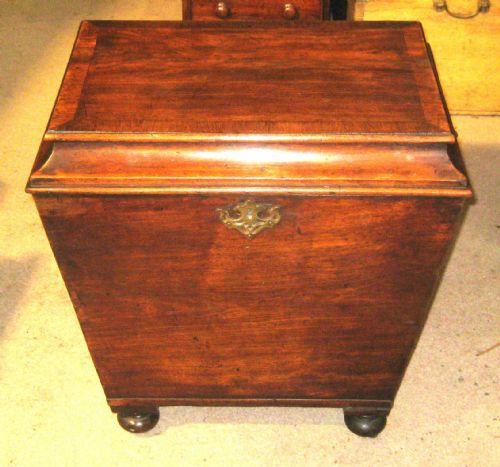
A georgian style mahogany cellarette is a storage vessel traditionally used for holding wine bottles near the dining table. The listings here include sarcophagus forms, wine coolers, brass bound tubs, and pedestals with urns.
You will encounter pieces originating from the eighteenth and nineteenth centuries, alongside later revival interpretations from the early twentieth century. These containers often rest on stands or feature integrated lead or zinc linings.
How they were made
The primary timber across these examples is mahogany, frequently enriched with boxwood and satinwood inlay to create decorative contrasts on the panels. Metal components such as brass bands, steel fittings, and zinc linings provide structural reinforcement and functional containment.
Cabinet makers utilised joinery techniques suited to heavy timber construction, shaping curved surfaces and fitting internal dividers for bottles. Surface finishes were polished to highlight the natural grain and colour of the mahogany.
The selection includes formal George III Neoclassical pieces alongside later Edwardian and 1920s revival interpretations.
What varies in quality
Quality separates simple timber boxes from masterworks through the precision of the boxwood and satinwood inlay and the crispness of carved details. The choice of figured mahogany timbers and the retention of original brass mounts also elevate a piece.
The presence of period linings, such as zinc or metal inserts, and the structural integrity of the base or stand influence the standing of an individual cellarette. Later revival copies show differing degrees of fidelity to original eighteenth century proportions.
Edwards and Roberts·Samual Norman
The Georgian Style Mahogany Cellarette Glossary
- Cellarette
- A lockable container used to hold bottles of wine beneath the dining room sideboard. They often include internal divisions and metal liners.
- Sarcophagus
- A coffin shape with a sloping lid, popular for nineteenth century wine coolers. This form mimics ancient stone tombs.
- Inlay
- A technique where contrasting woods like boxwood or satinwood are inserted into the mahogany surface to form patterns. It adds visual depth to the panels.
- Brass Bound
- Secured with heavy metal bands of brass around the exterior. This construction method mimics coopered staves used on wooden barrels.
- Pedestal
- A structural support column placed beneath an urn or cooler. These elevate the main vessel off the floor.
Georgian Style Mahogany Cellarette: Frequently Asked Questions
What was a cellarette used for?
A cellarette stored wine bottles close to the dining table before formal cellars or sideboards held them. Servants would draw bottles from the container during meals.
Inside the timber box, lead or zinc linings held ice and water to chill the wine. Some examples included internal racks to keep individual bottles separated.
How do I date a cellarette?
Dating relies on timber selection, construction methods, and stylistic cues like inlay work or brass mountings. Eighteenth century versions show hand-cut joinery and subtle carving.
Later revival pieces from the twentieth century often use machine-cut elements or standard brass fittings. Comparing the secondary timbers inside helps confirm the period.
Where should I place a cellarette?
These pieces sit well beside a dining table, sideboard, or buffet as traditional storage. Their fitted interiors and hinged lids suit holding modern items.
Some variations function as planters or jardinières for indoor greenery. Keeping them away from direct heat sources protects the mahogany and inlay.
Are all cellarettes lined with metal?
Not every example retains its original metal container, as liners were often removed or replaced over time. Some surviving pieces feature zinc or steel inserts.
Revival versions and planters may lack the original water-tight lining entirely. Check the interior compartment to understand its current state.