


Edwardian Mahogany Wine Cooler
These Edwardian mahogany wine cooler pieces combine period practicality with refined timber, offering timeless appeal for holding bottles or displaying plants.
Edwardian Mahogany Wine Cooler
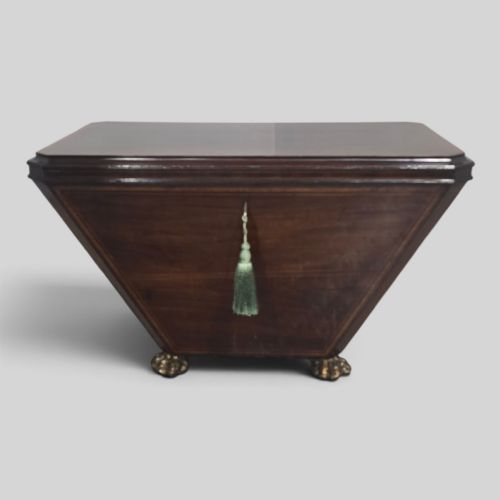
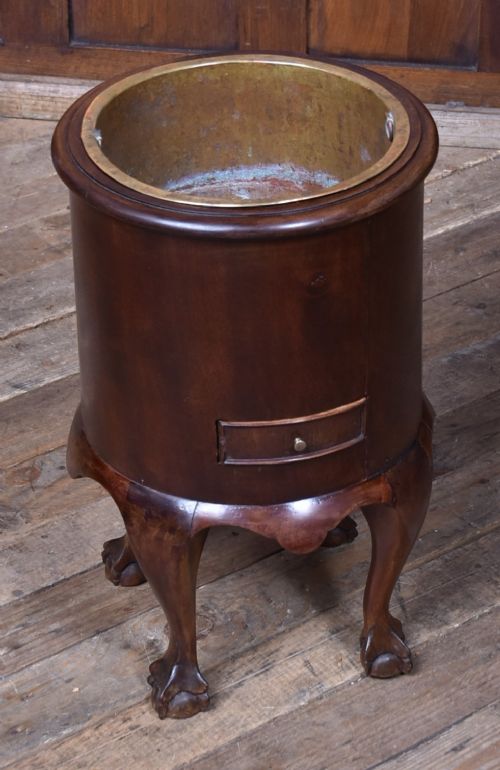
An edwardian mahogany wine cooler represents a refined continuation of earlier dining room furnishings, designed to hold bottles and ice for guests. These items draw upon Georgian and Regency influences while maintaining the lighter proportions characteristic of the Edwardian era. You will encounter pieces taking the form of traditional cellarettes, oval buckets, and jardinieres housed within wooden stands.
The selection here encompasses varied iterations, ranging from straightforward brass bound containers to elaborately inlaid boxes. Alongside traditional Edwardian pieces, the listings include examples spanning the Georgian, Victorian, and early twentieth century periods. Makers such as Edwards and Roberts and Freemans of Norwich occasionally appear, demonstrating the high standard of cabinet work available.
Materials and construction methods
Solid mahogany and rich wood veneers form the primary structure of these pieces, often highlighted by contrasting satinwood and boxwood inlay. Cabinet makers utilised precise joinery to construct staved wooden bodies capable of holding heavy contents without distortion. The addition of brass banding, handles, and occasional lead linings provided both structural reinforcement and functional waterproofing.
Surface preparation involved careful polishing to reveal the natural grain and deep red brown tone of the mahogany. Inlaid sections required intricate hand cutting of lighter timbers to create delicate banding and classical motifs across the exterior surfaces. These traditional techniques ensured durability while satisfying the aesthetic demands of formal dining rooms.
Listings feature items incorporating mahogany, brass, satinwood, and boxwood inlay across the Edwardian, Victorian, and Georgian periods.
Distinguishing quality and craftsmanship
Superior examples demonstrate exceptional timber selection, utilising finely figured mahogany and crisp, accurately fitted boxwood or satinwood inlay. The integration of solid brass mounts, handles, and liners indicates a higher grade of production intended for affluent households. Poorer quality often reveals simpler construction, plain timber without grain variation, or replacement hardware that disrupts the original harmony.
The refinement of the cabinet work itself separates everyday utility items from master workshop output. Clean joints, balanced proportions, and well executed decorative details reflect the skill of the original maker. Pieces that retain their original lead linings and internal configurations command greater interest from discerning buyers.
Edwards and Roberts·Freemans of Norwich
The Edwardian Mahogany Wine Cooler Glossary
- Cellarette
- A lockable container used for storing wine and spirits within the dining room. These boxes were frequently lined with lead to hold ice and water.
- Jardiniere
- An ornamental stand or container designed to hold potted plants or flowers. They often share similar forms and materials with traditional wine coolers.
- Satinwood inlay
- A decorative technique employing contrasting pale yellow timber to create geometric borders or motifs on dark mahogany surfaces.
- Brass bound
- A method of securing wooden staves using metal bands for strength and decoration. This treatment was standard on heavy serving vessels.
- Sarcophagus
- A monumental classical container shape featuring a domed lid and tapered sides, popular during the Regency revival period.
Edwardian Mahogany Wine Cooler: Frequently Asked Questions
What is an edwardian mahogany wine cooler?
An edwardian mahogany wine cooler is a timber container originally built to hold bottles and ice during formal dining. They often feature brass bands and delicate inlay work.
Many examples take the form of tabletop boxes or freestanding stands. Over time, their uses have expanded to include plant display and general storage.
How were these coolers originally used?
These vessels sat beside the dining table, filled with ice and water to chill wine before serving. Servants retrieved bottles directly from the container during meals.
Lead linings ensured the wood remained protected from moisture and melting ice. Later adaptations saw similar forms utilised as planters or jardiniere stands.
How do I care for mahogany furniture?
Keep wooden pieces away from direct sunlight and heat sources to prevent the timber from drying out. Regular dusting with a soft cloth maintains the natural lustre.
Apply a quality beeswax periodically to nourish the surface and protect the finish. Avoid placing wet pots directly onto unlined wooden sections.
How can I date an antique cooler?
Examine the construction methods, timber types, and decorative styles to determine the likely period of manufacture. Edwardian pieces often display lighter proportions and refined satinwood inlay.
Hardware styles, such as brass handles and lion mask mounts, provide further clues to the decade of origin. Maker stamps, where present, offer definitive attribution.