


Georgian Style Chiffonier
A georgian style chiffonier brings low cabinet storage and display together in timber, offering a compact footprint suited to modern rooms.
Georgian Style Chiffonier
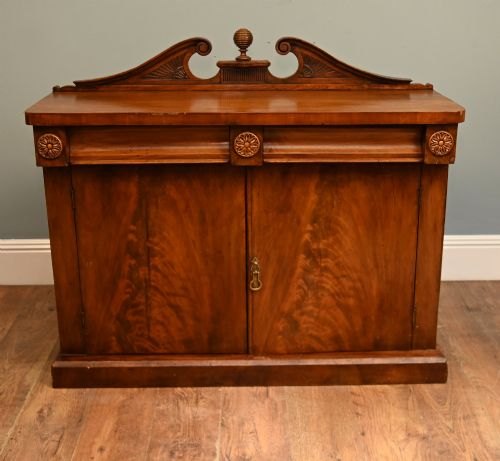
A georgian style chiffonier combines enclosed storage with open or glazed shelving above, taking up less wall space than a traditional sideboard. The pieces seen here span the 18th century, Regency, William IV, and Victorian periods, alongside later revival examples.
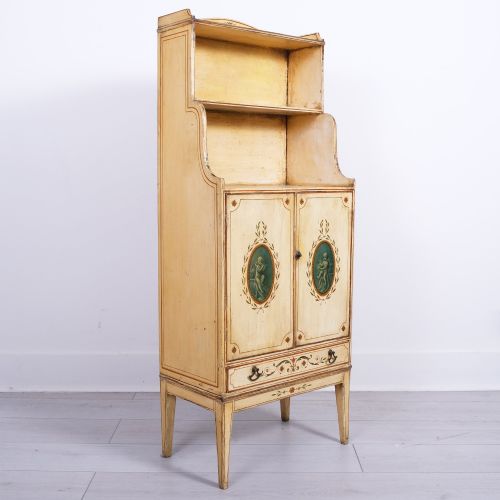
Forms range from waterfall bookcases and side cabinets to chiffonier bases and credenzas. Mahogany, flame mahogany veneer, rosewood, and painted wood provide the primary structures, often accented with brass details.
How they were made
Cabinetmakers utilised solid timbers alongside flame mahogany veneer to create figured grain patterns across flat surfaces. Carved elements and turned supports shape the structural profile of these side cabinets.
Brass fittings, fabric linings, and marble tops appear on select pieces, demonstrating the range of specialist materials employed by period makers.
The listings span the 18th century through to the 1920s, utilising mahogany, rosewood, marble, and fabric.
What varies in quality
The choice of timber grain determines the visual impact, with matched flame veneers and dense rosewood sitting above simpler painted wood or standard timber builds. Crispness in carved details and the weight of brass mounts distinguish workshop output.
Proportion and scale dictate desirability, particularly in smaller cabinets or secretaire desks where interior fittings must align with exterior dimensions without crowding the design.
Gillows
The Georgian Style Chiffonier Glossary
- Chiffonier
- A low sideboard or cabinet, typically featuring a shelf or superstructure above enclosed lower doors. It developed during the Regency period as a versatile room piece.
- Flame Mahogany Veneer
- A thin slice of mahogany cut from the branch junction to produce a distinctive flickering flame pattern. It decorates the primary doors and drawer fronts of better cabinets.
- Secretaire
- A desk disguised as a drawer or cabinet door that drops down to reveal writing surfaces and pigeonholes. It adds a dual function to the standard chiffonier form.
- Waterfall Bookcase
- A set of open shelves diminishing in depth from bottom to top, often integrated into the upper section of a chiffonier or side cabinet.
- Breakfront
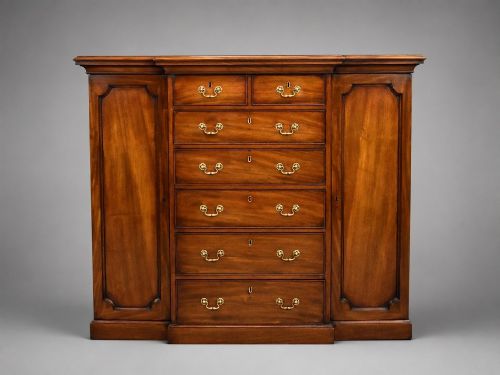
- A cabinet front where the central section projects forward from the flanking wings. This architectural arrangement creates depth and shadow across the facade.
Georgian Style Chiffonier: Frequently Asked Questions
What is a chiffonier?
A chiffonier is a low cabinet designed for storage and display, usually featuring doors below and shelving above. It evolved to serve dining rooms and parlours where space was at a premium.
Unlike a large sideboard, the chiffonier offers a more compact footprint while maintaining surface space for lamps or decorative objects.
How do I spot Regency style?
Regency style pieces often feature classical motifs, dark timbers like rosewood or mahogany, and brass inlays or grilles. Proportions tend to be neat and architectural.
Maker influence from this era emphasises clean lines alongside refined carving rather than heavy ornamentation.
Where should I place a chiffonier?
These cabinets suit dining rooms, living spaces, or hallways where low storage is required without blocking light or windows. Their shallow depth allows them to sit comfortably against walls in narrower rooms.
The upper shelves or bookcase sections provide space for displaying books or ceramics at eye level.
What woods were used?
Mahogany is the dominant timber across these pieces, appearing both solid and as flame mahogany veneer. Rosewood and satinwood also feature in specific Regency and Sheraton period examples.
Painted wood variations provide alternative finishes depending on the date and regional workshop tradition.