

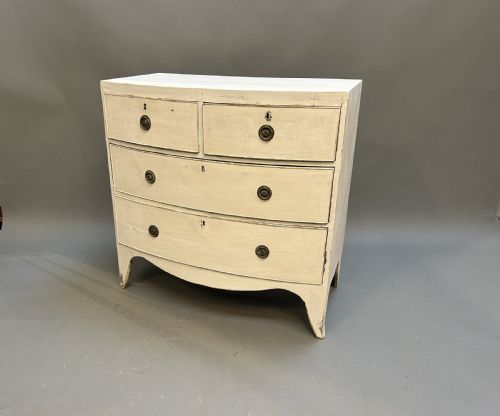


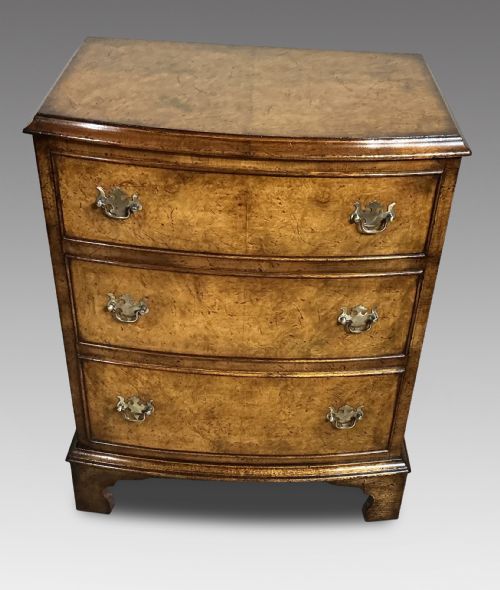
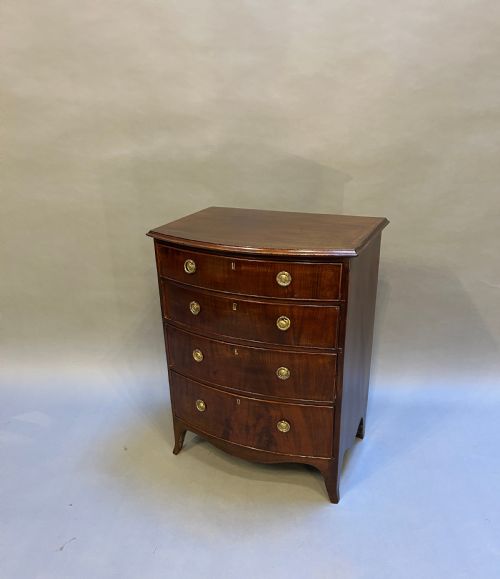
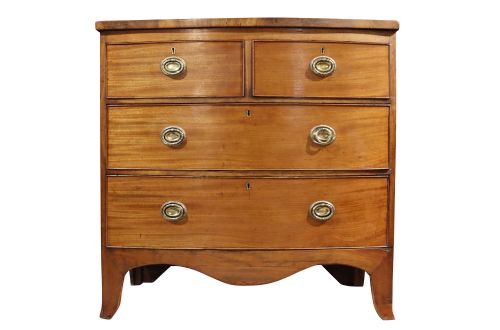

Georgian Style Bowfront Chest
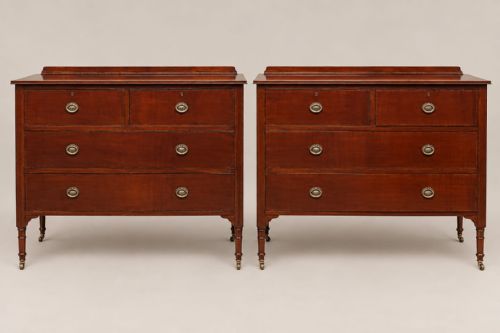
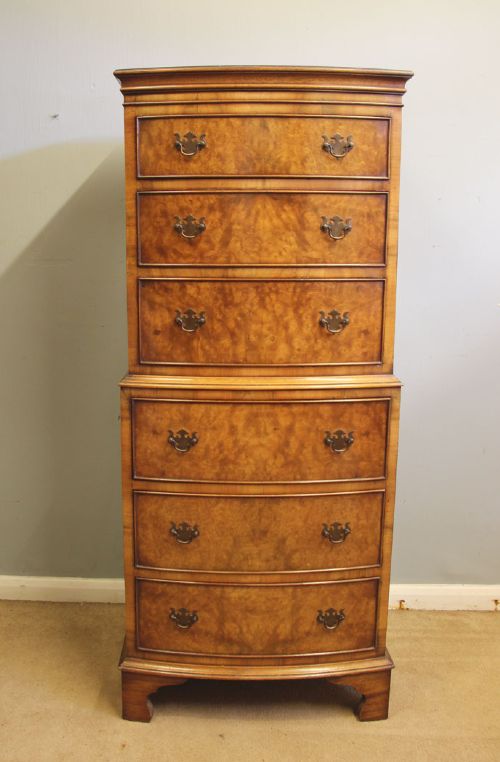
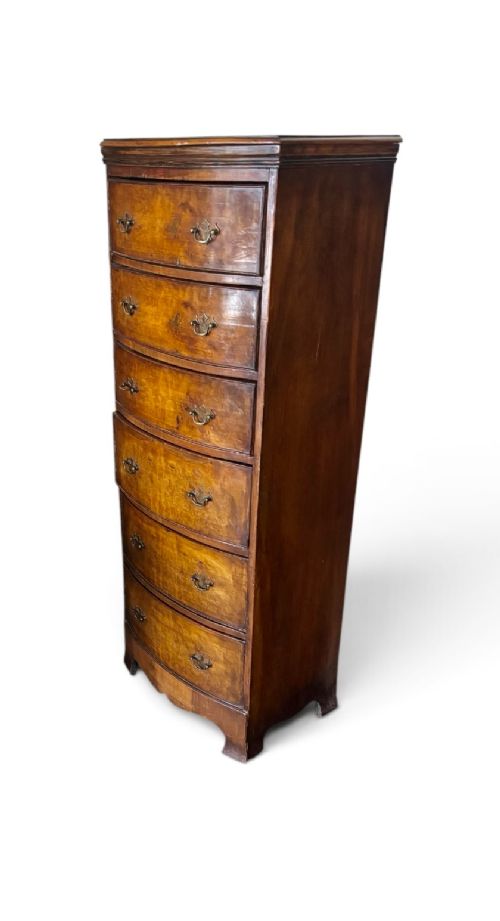
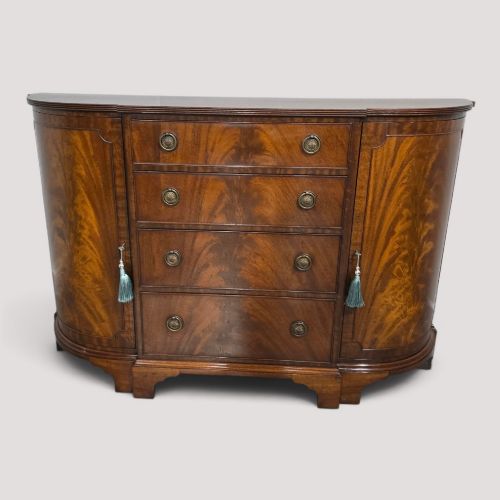
A georgian style bowfront chest offers curved drawer fronts and compact storage, bringing classic proportions and figured timber into a room.
Georgian Style Bowfront Chest
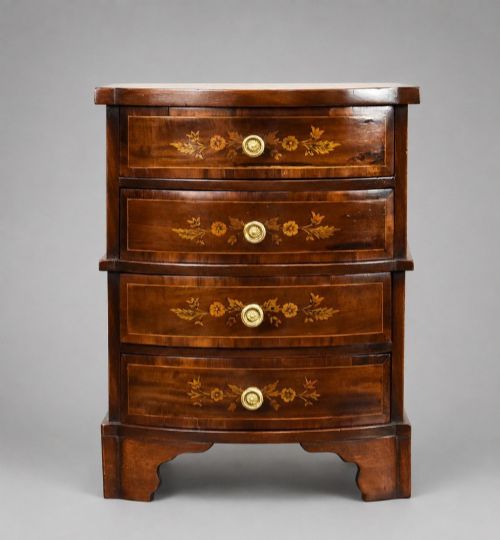
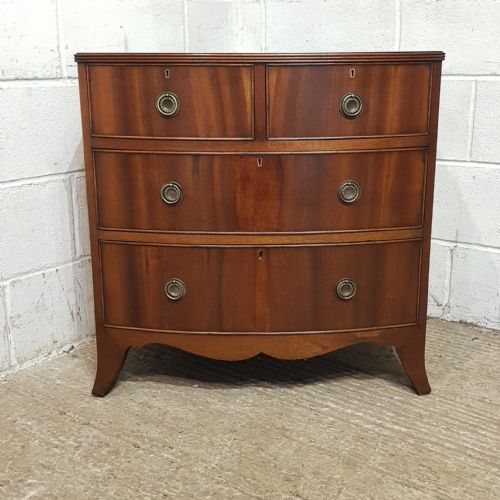
A georgian style bowfront chest is defined by its convex curved front, a profile that softens the corners of a bedroom or hall while providing deep central drawer capacity. The pieces gathered here span genuine 18th century examples through to Edwardian interpretations, the 1920s, and 1930s revivals.
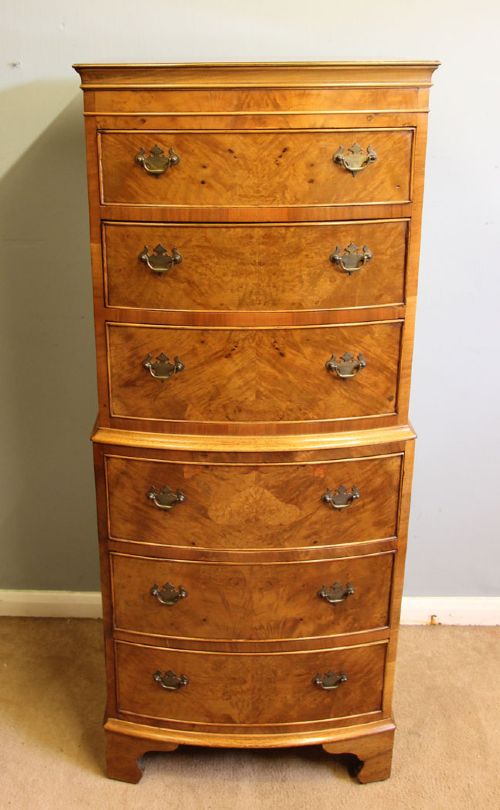
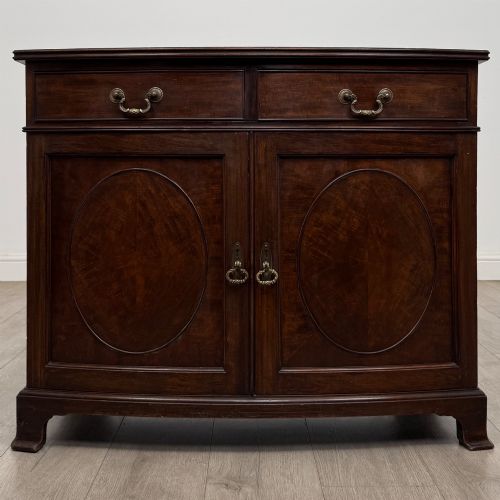
While authentic pieces from the 18th century and Regency periods appear, the selection is heavily populated by Edwardian and early 20th century reproductions in the Georgian manner. Alongside standard chests of drawers, the forms stretch to tallboys, chests on chests, bedside cabinets, and miniature furniture.
Proportions vary from monumental chest on chest pieces down to small bedside cabinets and diminutive miniature chests. The curved facade remains the unifying element across walnut, mahogany, and painted wood bodies.
Materials and Construction
Cabinetmakers relied on dense hardwoods, principally mahogany and walnut, often enhanced with burr walnut, flame mahogany veneer, and satinwood stringing. These figured timbers were carefully selected to create symmetrical grain patterns across the curved drawer fronts.
Inlaid wood and brass hardware finish the construction, with brass handles and escutcheons providing functional accents against the dark polished timber. Painted wood surfaces also occur, offering a distinct alternative to the clear-finished grains.
Materials recorded across the inventory include solid mahogany, burr walnut, satinwood, painted wood, and brass hardware.
Quality and Craftsmanship
The standard of a georgian style bowfront chest rests on the selection of the timber veneers and the precision of the curved drawer construction. Superior examples display continuous, matched grain across the sweep of the drawers rather than disjointed patches.
Fine craftsmanship shows in the crispness of any inlaid wood detailing and the tight fit of the drawers within their curved carcase. Heavier Edwardian and 1930s revival pieces rely on solid construction and rich burr walnut selections to achieve their presence.
Edwards and Roberts
The Georgian Style Bowfront Chest Glossary
- Bowfront
- A convex curved cabinet front that swells outward in the centre, softening the rectangular silhouette of standard chests. This shape requires specialised joinery to bend wood or shape veneers to the curved radius.
- Tallboy
- A tall chest of drawers, often constructed in two stacked sections where a shorter chest sits atop a larger base. These pieces maximise vertical storage space while maintaining a compact footprint on the floor.
- Flame mahogany veneer
- Thin slices of timber cut from mahogany logs where the grain creates a flickering, flame-like pattern. Cabinetmakers laid these veneers symmetrically across prominent surfaces like drawer fronts.
- Stringing
- Thin inlaid lines of contrasting wood used to create geometric borders and decorative outlines on furniture surfaces. This delicate inlay work defines drawer perimeters and top edges.
- Escutcheon
- A protective plate surrounding a keyhole, frequently cast in brass on these chests. It serves both a functional purpose and adds a decorative metallic highlight to the wood.
Georgian Style Bowfront Chest: Frequently Asked Questions
How do I date a bowfront chest?
Dating relies on secondary woods, handle hardware styles, and the construction methods used for the drawer linings. Earlier 18th and early 19th century pieces often employ oak or pine secondary timbers with hand-cut dovetails.
Later Edwardian and 1930s revival chests typically feature machine-cut joints and distinct veneer thicknesses. Examining the backboards and interior drawer construction reveals the manufacturing period.
Where should I place a bowfront chest?
The curved front projects outward from the wall, making these chests particularly effective in hallways, landings, or bedrooms where sharp corners would obstruct movement. Their finished silhouettes allow them to sit flat against a wall while offering visual depth.
Smaller versions function well as bedside cabinets or compact side tables in living spaces. Taller chest on chest models suit rooms with higher ceilings that can accommodate their vertical scale.
Are miniature chests authentic antiques?
Miniature chests were produced as apprentice pieces, salesman samples, or specialised tabletop storage during the 19th and early 20th centuries. They replicate the exact proportions and joinery techniques of full-scale furniture.
These smaller examples require the same cabinetmaking skills as larger pieces, utilising similar mahogany, walnut, and inlay materials. Collectors value them for their detailed execution and compact scale.