




Georgian Sterling Tray
A georgian sterling tray brings silver craftsmanship of the eighteenth and early nineteenth centuries directly to the table.
Georgian Sterling Tray
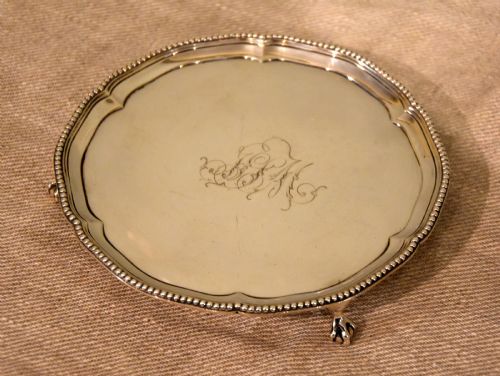
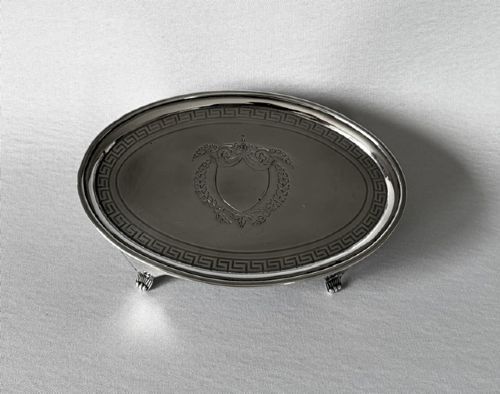
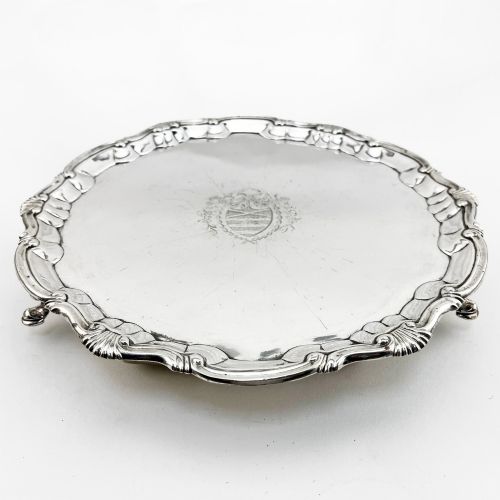
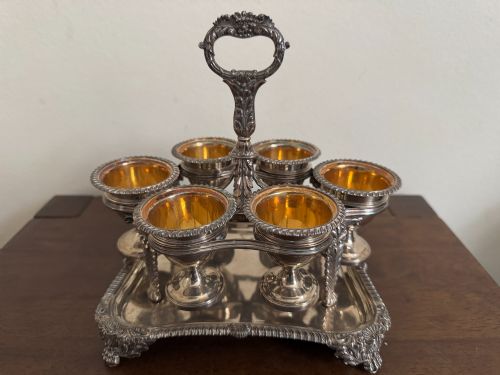
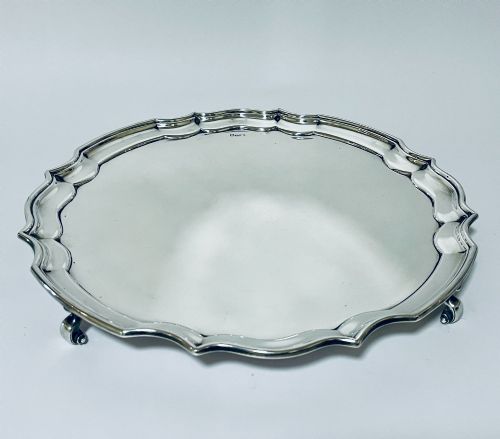
A georgian sterling tray encompasses a range of domestic silver forms including salvers, platters, card trays, bread baskets and teapot stands. These objects originate across the Georgian era and extend into related nineteenth-century designs.
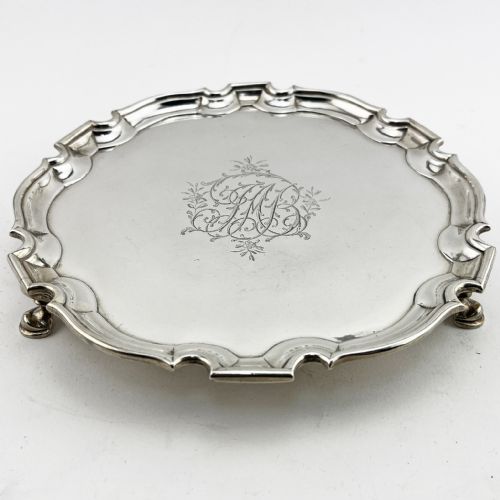
Salvers stand upon small feet and serve wine or tea, whilst card trays and teapot stands offer smaller surfaces for correspondence or hot vessels. Platters and bread baskets provide broader expanses intended for dining and hospitality.
The pieces on this page span the reigns of George II and George III, moving through the Regency period and into the reign of George IV. Irish and English provincial centres contribute distinct regional variations to these forms.
Gauge, casting and maker attribution
The thickness of the metal, often described as gauge, separates substantial silver from lighter domestic wares. Heavy metal prevents bending and gives the object a satisfying heft in the hand.
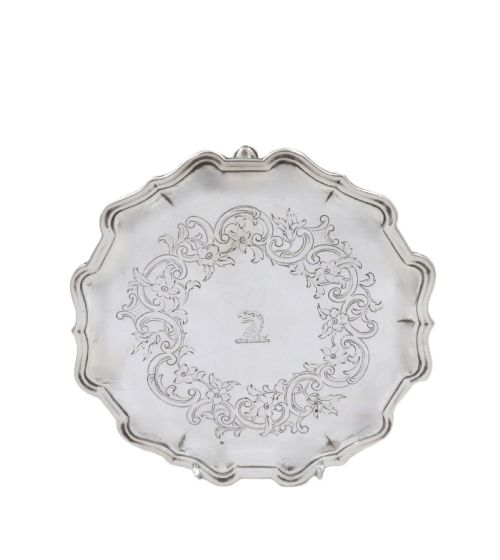
Detailing on the borders and feet reveals the skill of the silversmith, from chased scrollwork to cast shell motifs. Clear hallmarks and recorded makers elevate an object by confirming its exact provenance and London or provincial origin.
Regional assay offices represented in the evidence include London, Sheffield, York and Newcastle alongside Irish provincial centres.
John Schofield·S.C. Younge and Co.·William Burwash·Robert Abercromby·Robert Breading·John Hunt·William Garrard·Peter and Anne Bateman·Samuel Hennell·John Walton·James Fray·Paul Storr
The Georgian Sterling Tray Glossary
- Salver
- A flat plate or tray with feet used for serving drinks or holding small items. These objects often feature shaped rims and engraved centrepieces.
- Hallmark
- A series of official marks stamped into silver to guarantee its standard of purity, assay office and date of manufacture. These symbols allow collectors to trace the exact origin of a piece.
- Gauge
- The thickness of the silver sheet used to form the body of the tray. A good gauge ensures durability and substance.
- Chasing
- A technique of hammering metal from the front to depress the surface and raise decorative low-relief patterns. This method adds texture and ornamentation to borders and fields.
- Gilt
- A thin layer of gold applied to the surface of the sterling silver. This treatment protects the underlying metal and provides a rich dual-tone appearance.
Georgian Sterling Tray: Frequently Asked Questions
What was a georgian sterling tray used for?
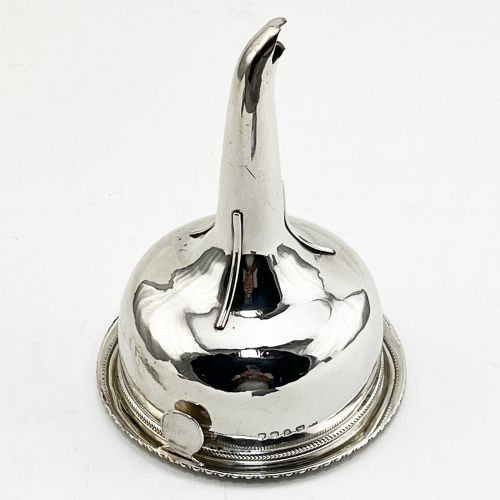
These items served a central role in domestic hospitality, carrying decanters, wine funnels, teapots or cards across the household. Servants presented refreshments upon them in formal drawing rooms.
They also functioned as permanent display pieces on sideboards, reflecting candlelight off polished silver surfaces during evening meals.
How do I identify a georgian piece?
Examine the silver for hallmarks that include date letters, town marks such as the leopard head for London, and sovereign duty marks. These stamps provide a reliable timeline of manufacture.
Stylistic indicators like gadroon borders, chased foliage and the specific forms of feet also point directly to the eighteenth or early nineteenth century.
What is the difference between a salver and a tray?
Salvers generally feature short bracket, claw or scroll feet that elevate the flat surface above the tabletop. They were traditionally used for serving wine and glassware.
Trays and platters often lack feet or incorporate integrated handles designed for carrying bread, meat or tea services across rooms.
How should I care for antique silver?
Clean the metal infrequently using a soft cloth and dedicated silver polish designed to remove tarnish without abrading the surface. Avoid harsh chemical dips that strip away the aged patina.
Store the items in dry environments away from direct sunlight and atmospheric pollutants to maintain the stable condition of the sterling silver.