
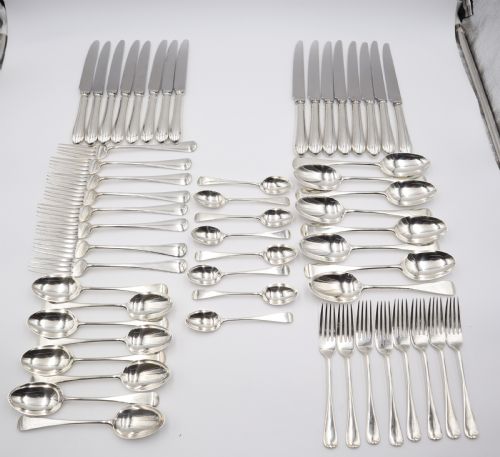


Georgian Sterling Silver Fork
These georgian sterling silver fork examples bring the weight of eighteenth and early nineteenth century dining directly to the modern table.
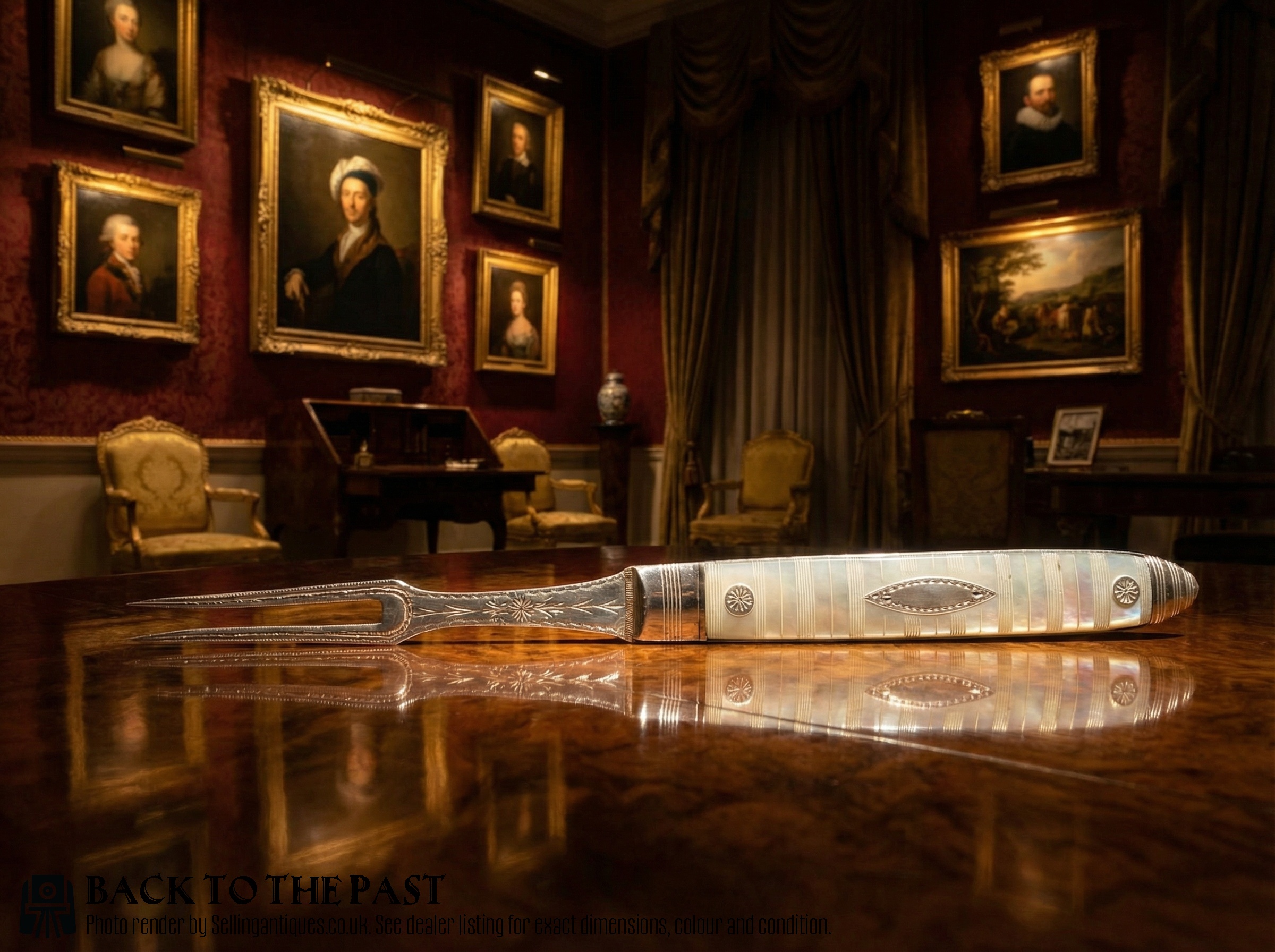
Georgian Sterling Silver Fork
A georgian sterling silver fork encompasses table forks, dessert forks, serving pieces, and folding fruit forks produced during the Georgian, Queen Anne, and Victorian periods. Buyers encounter various forms here, including three-pronged dessert forks, large serving forks, salad servers, and boxed sets.
The objects originate primarily from the eighteenth century and the early eighteen hundreds, spanning styles such as George II, George III, Coburg pattern, and Hanoverian pattern. These domestic and dining implements reflect the expanding cutlery requirements of British households across distinct reigns.
Judging quality and craftsmanship
Differentiation in quality rests upon the crispness of armorial crests, the integrity of hallmarks, and the original matching of sets. Pieces retaining substantial weight and balanced proportions demonstrate superior silversmithing.
The preservation of engraved details and the tightness of joints in folding mechanisms separate everyday utility items from finer surviving examples of period cutlery.
Listings feature items from the eighteenth century, 1800, and the Victorian era, utilising sterling silver, mother of pearl, velvet, and steel.
E Coker
The Georgian Sterling Silver Fork Glossary
- Sterling silver
- A silver alloy containing ninety-two point five percent silver by mass, with the remainder consisting of other metals. This standard alloy provides the durable material used for British flatware.
- Hanoverian pattern
- A style of spoon and fork featuring a ribbed spine down the centre of the handle stem. This design dominated British dining tables through much of the eighteenth century.
- Dognose
- An early flatware style characterised by a rounded tongue or upturned tip at the end of the handle. It precedes the Hanoverian pattern in sequence of form.
- Armorial crest
- A heraldic design engraved onto the silver surface to denote family lineage. These crests provide historical provenance for individual pieces.
Georgian Sterling Silver Fork: Frequently Asked Questions
How do I clean sterling silver forks?
Clean silver using a soft cloth and specialised silver polish to remove tarnish without harming the metal surface. Avoid harsh abrasive materials that can wear away engravings and armorial crests.
Store pieces in lined boxes or cloth rolls to minimise exposure to air and reduce the frequency of polishing required for regular maintenance.
Can I use these forks for daily dining?
These forks function adequately for modern meals, though older sterling silver is softer than modern stainless steel. Hand washing prevents damage to delicate elements such as mother of pearl handles or fitted velvet cases.
Heavier serving pieces and folding fruit forks require careful handling to preserve their structural integrity and historical finish.
What is a folding fruit fork?
A folding fruit fork is a pocket-sized eating utensil designed for consuming fruit at the end of a meal. A hinged mechanism allows the tine section to fold neatly into the handle.
Examples from the late eighteenth and early nineteenth centuries often incorporate decorative handles made from mother of pearl or silver.
How do I identify a Georgian fork?
Identification relies on examining maker marks, town marks, and date letters stamped directly onto the silver. Stylistic indicators such as Hanoverian patterns and three-pronged tines also point toward the eighteenth century.
Matching the object type to recorded forms helps confirm whether a piece belongs to the Georgian period or later Victorian revivals.