



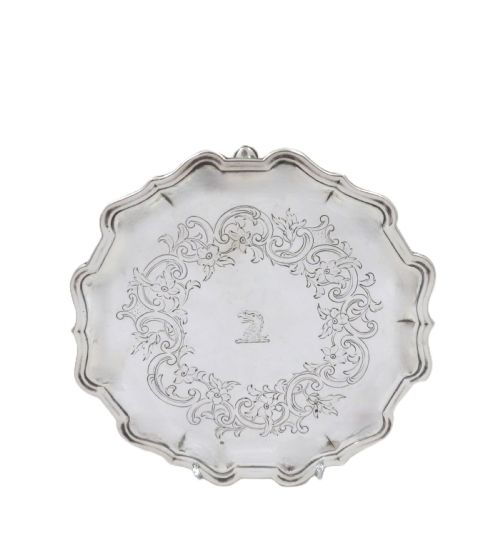


Georgian Sterling Salver
A georgian sterling salver is a heavy silver serving dish raised on feet, sought after for formal display and elegant entertaining.
Georgian Sterling Salver
When you search for a georgian sterling salver, you encounter circular silver serving vessels designed to hold cups, glasses or cards. These pieces emerge predominantly from the eighteenth and early nineteenth centuries, bearing the distinct aesthetic of the Georgian era and George IV period.
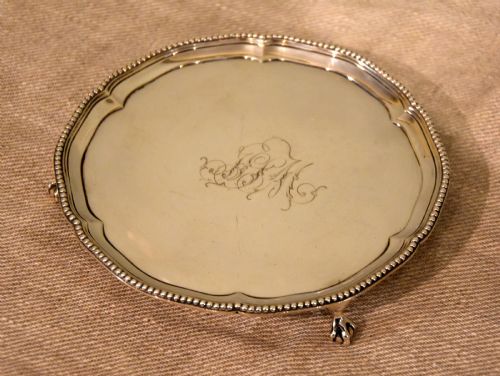
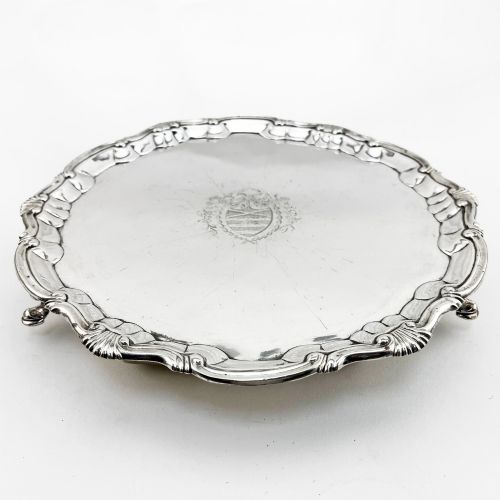
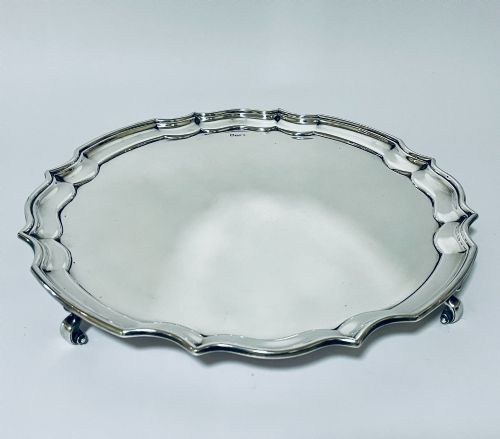
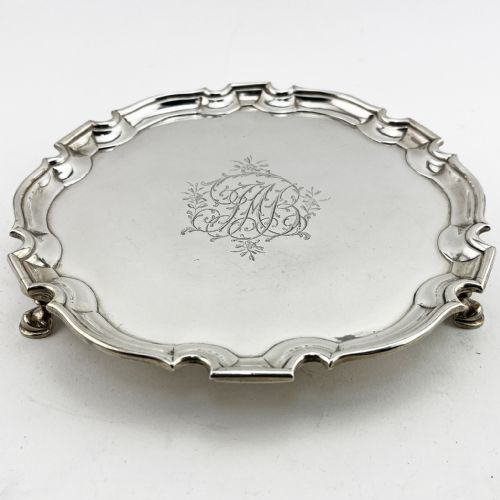
You meet items ranging from small six-inch card trays to large sixteen-inch platters. The form typically rests upon three or four feet, often shaped as scroll, bracket or hoof supports, with borders cast and chased in shell, scroll or gadroon motifs.
How they were made
Silversmiths formed the body of a georgian sterling salver using sterling silver, hammering and shaping the metal into heavy plates. Borders and feet were frequently cast separately and soldered onto the central tray, allowing for intricate ornamentation.
Workshops applied techniques of engraving, chasing and piercing to decorate the surface. Makers often added crests, armorial bearings or floral patterns by hand before submitting the finished piece to the assay office for hallmarking.
Georgian Sterling Salver Retail Price Guide 2026
Typical asking prices for georgian sterling salver among the pieces listed under this phrase on Sellingantiques today, from the lower quarter to the upper quarter. They describe what is for sale here now, not the wider market.
Makers represented across the archive include prominent silversmiths such as Paul Storr and the Bateman family working in London.
What varies in quality
The weight of the sterling silver dictates much of the substance and durability of a georgian sterling salver. Thicker metal resists bending and supports the raised form securely upon its feet.
The crispness of the chased decoration and the precision of the cast border separate standard utilitarian items from exceptional commissions. Master silversmiths achieved sharper relief and more balanced proportions in the surface engraving and edge work.
S.C. Younge & Co.·William Garrard·James Fray·Paul Storr·Peter & William Bateman·William Bateman·William Peaston
The Georgian Sterling Salver Glossary
- Sterling silver
- An alloy containing a high proportion of pure silver combined with other metals to ensure strength. This material forms the durable foundation of every piece listed.
- Salver
- A flat plate or tray with feet, utilised for serving food and drink or presenting calling cards. It stands distinct from flat trays by virtue of its supporting feet.
- Hallmark
- A series of official marks stamped into the metal indicating the standard of silver, the assay office, the maker and the year of manufacture. These stamps provide the primary evidence for dating.
- Chasing
- A metalworking technique where the silversmith depicts designs from the front by hammering with punches rather than removing metal. This method raises the pattern in relief against a textured background.
- Gadroon
- A decorative border pattern consisting of convex curves or rounded moulding. This edge treatment frequently appears on the rims of trays from this era.
Georgian Sterling Salver: Frequently Asked Questions
What is a georgian sterling salver used for?
These vessels originally served wine, tea or chocolate in affluent households. Hosts also utilised smaller versions to present visiting cards.
Today, owners display them on sideboards or use them for modern entertaining and holding small decorative objects.
How do I identify a georgian sterling salver?
Look for the hallmarks stamped into the underside or rim, which typically include a date letter, a maker's mark and the lion passant indicating sterling standard.
The stylistic clues include neoclassical motifs, gadrooned borders, cast feet and hand-engraved armorial crests characteristic of the period.
Are all pieces made in London?
While many pieces originated in London workshops, provincial centres also produced notable examples. Assay office marks reveal origins from cities such as Sheffield and York, alongside Irish pieces.
Each office used distinct town marks within the hallmarking sequence to denote where the metal was tested.
How should I clean a sterling salver?
Maintain the surface using a soft cloth and a reputable silver polish formulated to preserve antique finishes. Avoid harsh abrasive cleaners that can wear away crisp engraving.
Regular, gentle upkeep prevents heavy tarnish accumulation while protecting the historical surface character.