





Georgian Specimen Side Table
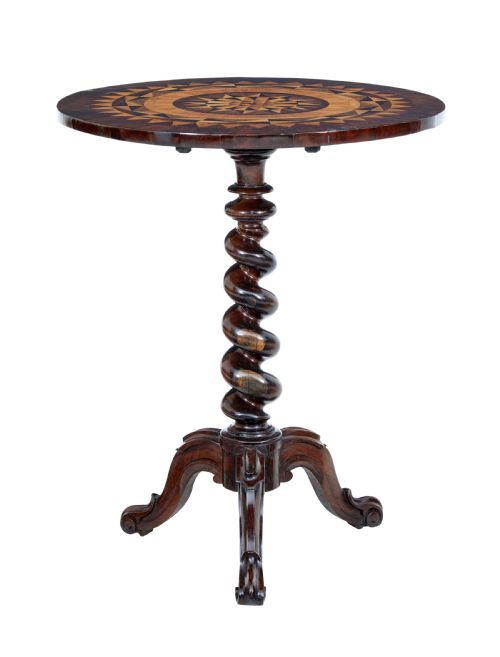
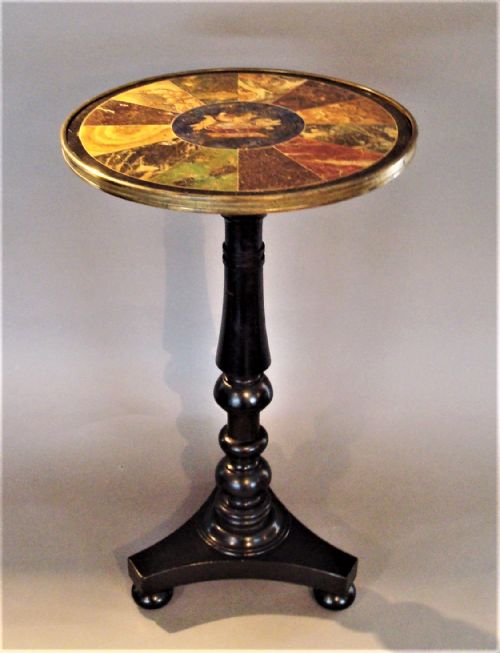
A georgian specimen side table gathers geometric timber veneers and stone tops into a polished surface designed to catch the eye.
Georgian Specimen Side Table
When you search for a georgian specimen side table, you are looking at small tables constructed to display intricate arrangements of multiple woods or marble. The examples you are most likely to meet on this page date from the georgian, regency, and early nineteenth century periods.
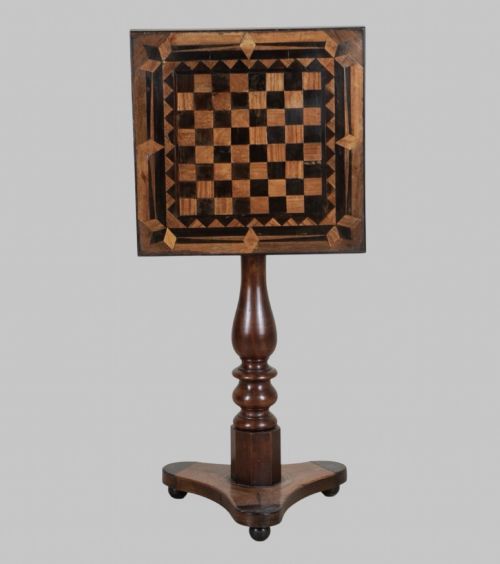
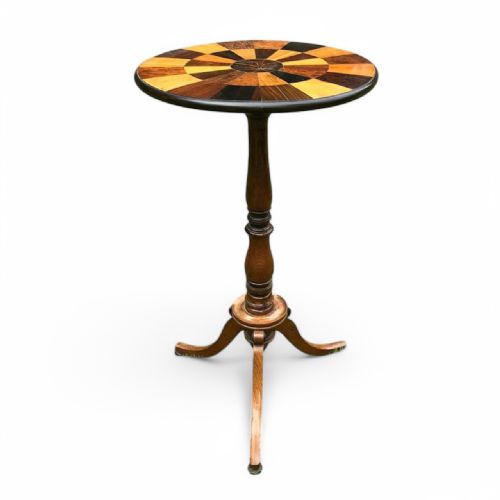
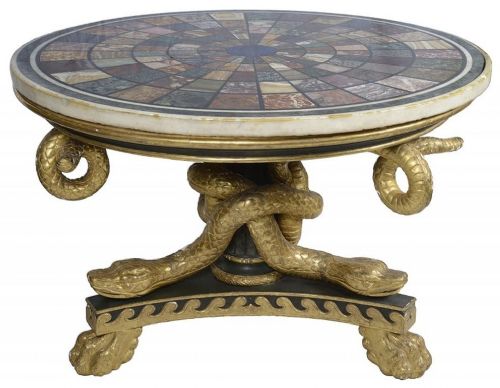
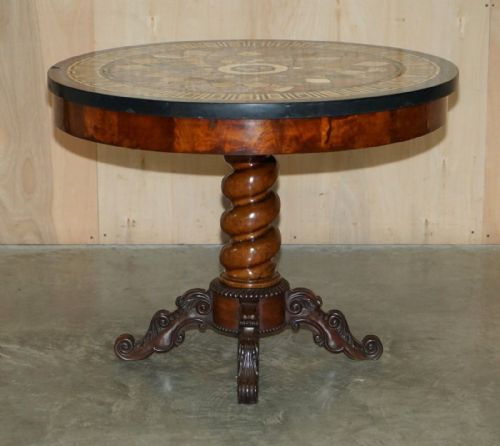
Forms range from circular occasional tables and games tables to side tables and centre tables featuring parquetry tops, sunburst designs, and pietra dura work. Mahogany, walnut, rosewood, and oak form the structural bases supporting these elaborate tops.
Cabinetmakers of the late georgian and william iv eras utilised varied specimen wood veneers to create geometric patterns and contrasting borders. These pieces functioned as both display surfaces and functional furniture in polite rooms.
How they were made
Craftsmen built the structural frames from solid timbers such as mahogany, walnut, and oak, often incorporating brass mounts or giltwood details. These structural elements provided a stable foundation for the heavier stone and veneered surfaces.
Tops were formed by meticulously cutting and fitting small geometric pieces of specimen woods or marble into complex parquetry and sunburst patterns. Ebonised wood and simulated marble finishes were also employed to enhance the visual contrast of the design.
Listings feature woods like mahogany, walnut, rosewood, and oak alongside marble, brass, and giltwood across the nineteenth century.
What varies in quality
The precision of the veneer work and the complexity of the geometric layout dictate the distinction between ordinary and superior examples. Tighter joints between individual timber specimens and more ambitious stone inlay show greater workshop skill.
The choice of secondary timbers and the architectural integrity of the base frame determine the overall construction standard. Tables retaining their original polished surfaces and stable tilt mechanisms command stronger interest.
The Georgian Specimen Side Table Glossary
- Parquetry
- Geometric mosaic woodwork formed by small veneer pieces laid down in repeating patterns. This technique defines the patterned surfaces seen on many occasional tables.
- Pietra dura
- Inlay work using cut and fitted polished coloured stones to create pictorial or geometric designs. This technique appears on high-status marble table tops.
- Veneer
- Thin slices of fine timber glued over a secondary wood base to provide a decorative surface. Specimen tables rely on contrasting veneers to achieve their graphic patterns.
- Sunburst
- A decorative wood veneer arrangement radiating outward from a central point like the rays of the sun. This motif frequently centres the tops of nineteenth-century tables.
Georgian Specimen Side Table: Frequently Asked Questions
How do I date these tables?
Dating relies on examining the secondary timbers, the style of the base supports, and the specific combinations of veneers used. Pieces from the georgian period often feature mahogany structures, while later nineteenth-century examples incorporate walnut or rosewood.
Construction methods, such as the use of hand-cut screws and dovetails, also help narrow down the period of manufacture alongside stylistic cues like william iv or regency turning.
Where were these tables placed?
These tables were typically positioned against walls as side pieces or placed in the centre of principal rooms to display decorative objects. Their elaborate tops made them focal points for conversation.
Smaller occasional and work tables were easily moved around the room to suit the domestic activities of the household.
What is pietra dura?
Pietra dura is an Italian term for an inlay technique using meticulously shaped sliced stones such as marble, jasper, and quartz. These stones fit together flush to form smooth pictorial or geometric compositions.
When found on nineteenth-century tables, this work elevates the status of the piece, introducing rich natural colours that timber alone cannot achieve.