



Georgian Silver Mustard
Georgian silver mustard pots are small table vessels that bring proper weight and bright metal to a dining table.
Georgian Silver Mustard
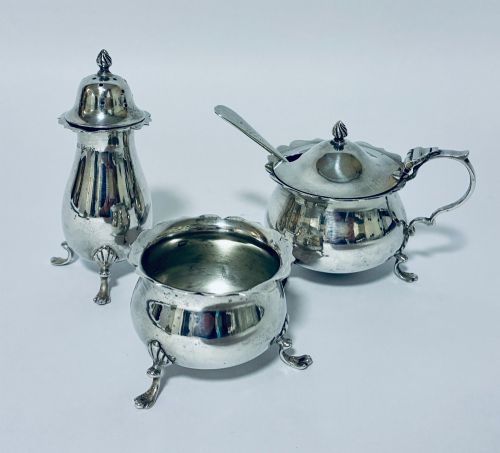
When you search for Georgian silver mustard pots, you encounter small condiment vessels designed to hold prepared mustard on dining tables. The pieces on this page span the actual Georgian period, Regency era, and later revivals such as Edwardian and George V interpretations.
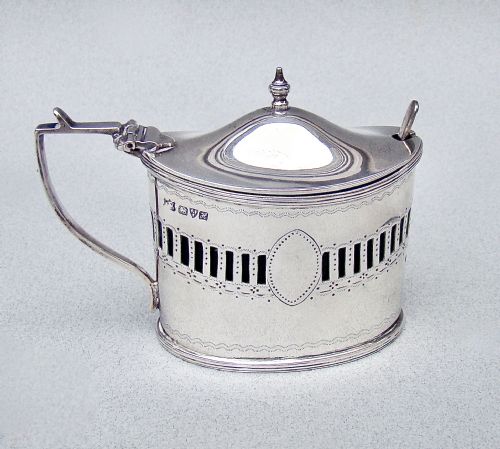
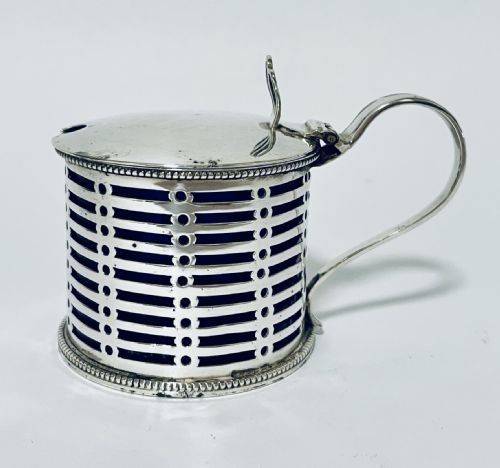
Most examples take the form of small pots with hinged lids, often accompanied by glass liners in cobalt blue or clear cut glass. You will also find them as part of larger cruet sets and condiment sets alongside other table vessels.
The selection ranges from plain George III sterling silver pots to elaborate revival pieces made in Chester and Sheffield. Makers represented include notable silversmiths like Matthew Boulton and Robert Hennell I, alongside later firms.
How they were made
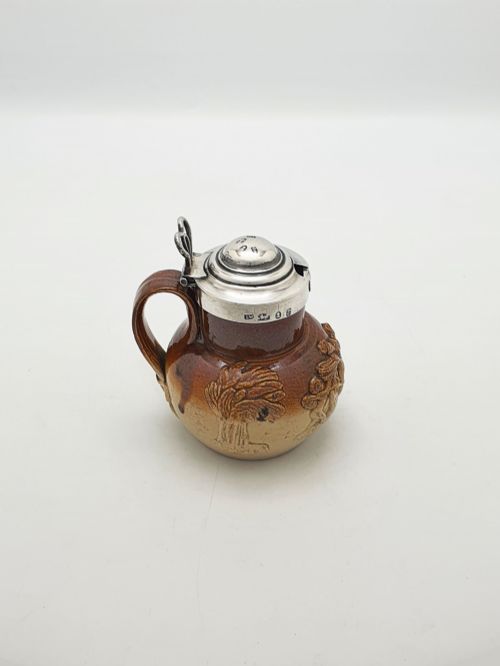
Silversmiths constructed these pots primarily from sterling silver and silver plate, frequently pairing the metal bodies with fitted glass liners or stoneware bodies. The addition of a sterling silver collar and hinged lid protected the contents while allowing easy access at the table.
Cut glass and cobalt blue glass provided colourful internal vessels that contrasted sharply with the polished exterior silver. Workshops utilised traditional smithing techniques to form the bodies, secure the hinges, and stamp hallmarks denoting origin and date.
Georgian Silver Mustard Retail Price Guide 2026
Typical asking prices for georgian silver mustard among the pieces listed under this phrase on Sellingantiques today, from the lower quarter to the upper quarter. They describe what is for sale here now, not the wider market.
Listings feature sterling silver, stoneware, and cobalt blue glass across Georgian, Victorian, and Edwardian periods.
What varies in quality
The distinction between ordinary and exceptional pots lies in the weight of the silver and the crispness of the hallmarks. Pieces produced by celebrated makers demonstrate superior handling of hinges, lids, and overall proportions.
The inclusion of original cobalt blue glass liners or matched stoneware bodies elevates a piece significantly. Furthermore, the finesse of the piercing or engraving on the silver body separates standard utility items from distinguished table silver.
Alfred Marston·Matthew Boulton·Robert Hennell I·Charles Stuart Harris·Viners
The Georgian Silver Mustard Glossary
- Sterling silver
- A silver alloy containing 92.5 percent pure silver and 7.5 percent other metals, usually copper. This standard composition provides the durability required for functional tableware.
- Hallmark
- A series of official marks stamped onto precious metal items in the United Kingdom. These marks indicate the maker, the assay office, and the year of manufacture.
- Cobalt blue glass
- A deep blue glass coloured by the addition of cobalt salts. It was frequently utilised for removable liners inside silver mustard pots.
- Cruet set
- A matched group of small bottles or pots for holding condiments such as mustard, oil, vinegar, salt, and pepper. They usually rest together on a dedicated stand or frame.
- Silver plate
- A base metal object coated with a thin layer of silver. This technique offered the appearance of solid silver at a lower production cost.
Georgian Silver Mustard: Frequently Asked Questions
What is a silver mustard pot?
A silver mustard pot is a small tabletop vessel created to serve prepared mustard during meals. These pieces typically feature a hinged lid and often contain a removable glass liner.
They emerged as essential dining accessories during the eighteenth and nineteenth centuries. Today they function both as decorative items and as usable tableware.
How were they used?
These pots sat on dining tables alongside cruet sets containing other seasonings and sauces. Diners used a small spoon to transfer mustard from the pot to their plates.
The glass liner protected the silver metal from the corrosive properties of mustard. This kept the metal clean and made the vessel easier to wash after a meal.
How do I identify a Georgian mustard pot?
Identification relies on examining the hallmarks stamped into the silver, which reveal the assay office and date letter. Stylistic markers such as neoclassical shapes or plain silver bodies also indicate the period.
Revival pieces from later eras often mimic these earlier forms. Checking the specific hallmarks ensures you distinguish an original eighteenth-century piece from a later Edwardian copy.
How do I care for silver mustard pots?
Maintenance involves gentle cleaning with appropriate silver polish to remove tarnish without damaging the metal surface. Removing the glass liner allows thorough washing of both components after use.
Storing the pots in a dry environment prevents rapid oxidation. Regular handling and gentle upkeep preserve the finish of the silver.