

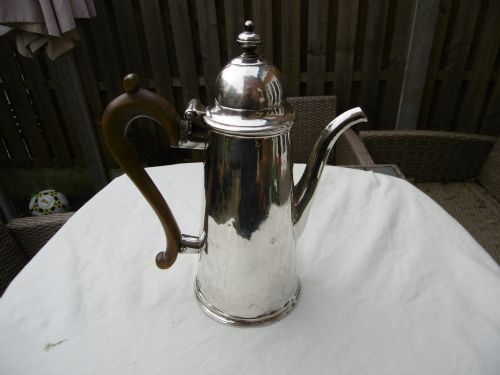
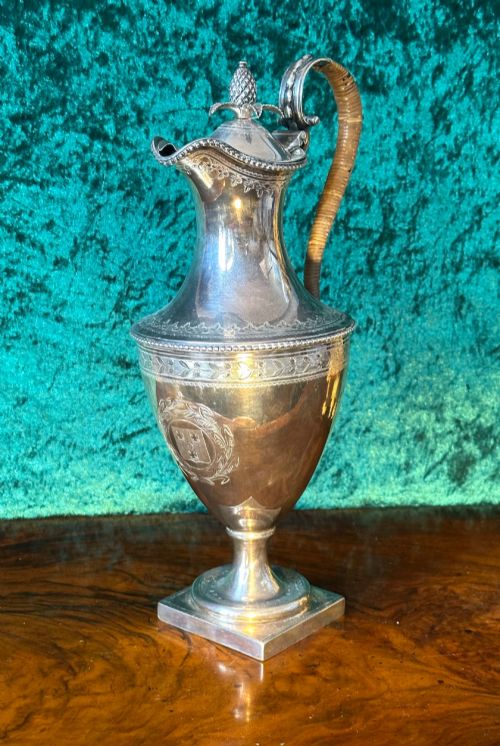

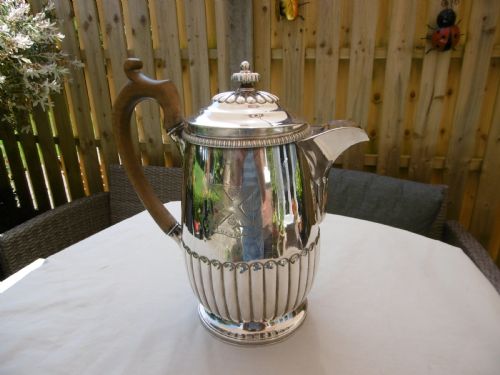


Georgian Silver Coffee Jug
A georgian silver coffee jug brings the elegance of the eighteenth and nineteenth centuries straight to the table.
Georgian Silver Coffee Jug
A georgian silver coffee jug encompasses tall serving vessels designed for pouring hot beverages during the Georgian, Regency, and William IV eras. The selection on this page ranges from sterling silver examples to old Sheffield plate and silver plate constructions. Buyers frequently encounter eighteenth-century pieces alongside nineteenth-century iterations featuring distinct spouts and lidded designs.
Forms extend beyond standalone pots to include ewers, water jugs, and parts of larger tea and coffee services. Makers utilised materials such as wood, hardwood, and wicker for handles and insulators. These vessels reflect the changing domestic habits and social rituals of Britain across the eighteenth and nineteenth centuries.
How they were made
Silversmiths formed the bodies of sterling silver pieces from heavy sheets of metal, raising them into tall tapered jugs. Old Sheffield plate items utilised a fusion technique where a thin layer of silver was fused to a copper base, visible on edges and wear points. Handles often incorporated organic materials like wood, hardwood, or wicker to insulate against heat.
Decoration relied on hand-engraved crests, heraldry, and chased floral motifs rather than cast ornament alone. Lidded designs required precise hinge work to ensure a secure fit during the pouring of hot liquid.
Georgian Silver Coffee Jug Retail Price Guide 2026
Typical asking prices for georgian silver coffee jug among the pieces listed under this phrase on Sellingantiques today, from the lower quarter to the upper quarter. They describe what is for sale here now, not the wider market.
What varies in quality
Quality rests in the weight of the metal and the crispness of the hand-engraving or crest work. Heavier sterling silver pieces demonstrate substantial material investment by the original silversmith. In old Sheffield plate examples, the preservation of the silver layer over the copper core dictates the grade of the piece.
The integrity of the original handle insulation, whether wood, hardwood, or wicker, affects the preservation state. Maker marks and early hallmarks provide distinct evidence of workshop origin and date.
Richard Gurney·Matthew Boulton·John Hoyland·Edward Power·Joseph Craddock
The Georgian Silver Coffee Jug Glossary
- Old Sheffield Plate
- A composite material made by fusing a sheet of silver to a copper ingot, developed in the eighteenth century. This technique precedes modern electroplating.
- Sterling Silver
- An alloy of silver containing ninety-two point five percent pure silver and seven point five percent other metals, typically copper. This standard defines high-grade British plate and hollowware.
- Hallmark
- An official stamp applied to precious metals in Britain to guarantee purity and origin. These marks identify the maker, assay office, and year of production.
- Ewer
- A large pitcher with a flared spout and curved handle, often used interchangeably with early coffee jugs. This form dates back centuries before dedicated coffee services became common.
- Chased
- Decorated by hammering metal from the front to create raised patterns in relief. This technique adds texture and depth to the surface of the vessel.
Georgian Silver Coffee Jug: Frequently Asked Questions
How do I clean a silver coffee jug?
Use a soft cloth and a specialised silver cleaner designed for antiques. Avoid abrasive pads that can wear away old plating or fine engraving.
Wash gently in warm water and dry thoroughly immediately afterward to prevent water spotting.
Can I use these pots for serving coffee today?
Most of these pieces are antique display items or collector pieces rather than modern kitchenware. Old Sheffield plate and sterling silver vessels require careful handling.
If utilised, inspect the interior for historical repairs and clean thoroughly before any liquid contact.
What is the difference between silver plate and sterling silver?
Sterling silver is solid precious metal throughout the body of the jug. Silver plate and old Sheffield plate consist of a base metal covered by a thin layer of silver.
Old Sheffield plate uses a mechanical fusion method, whereas later silver plate relies on electroplating.
How do I identify the date of a jug?
Check for hallmarks stamped into the metal, which indicate the assay office and year letter for sterling silver pieces. Stylistic clues such as handle materials and body shape also help narrow down the period.
Early marks on old Sheffield plate provide clues to the manufacturing decade.