


Georgian Silhouette Art
Georgian silhouette art brings domestic history into sharp focus through profile portraits cut from paper or painted on glass.
Georgian Silhouette Art
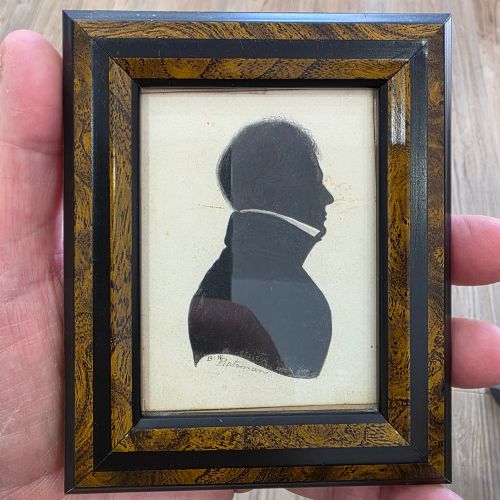
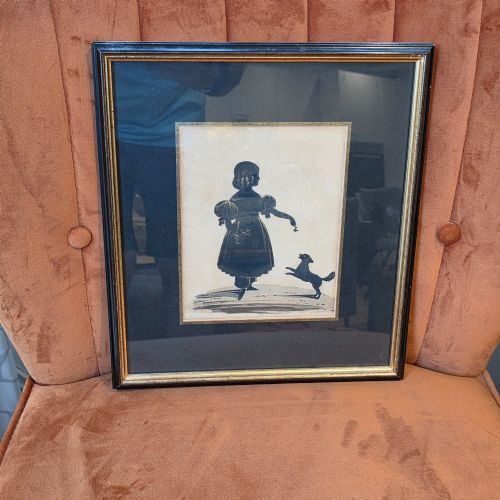
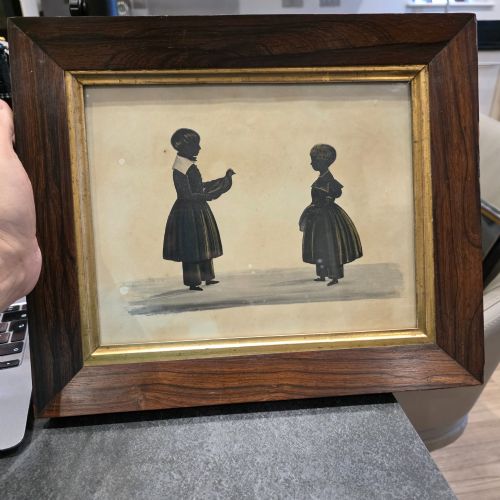
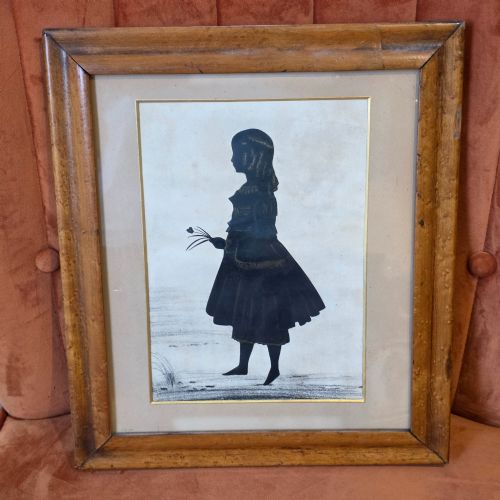
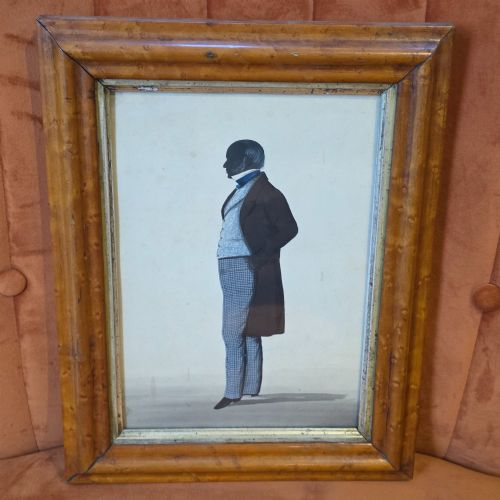
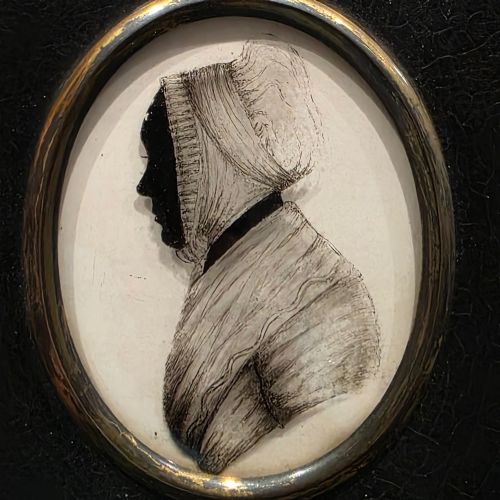
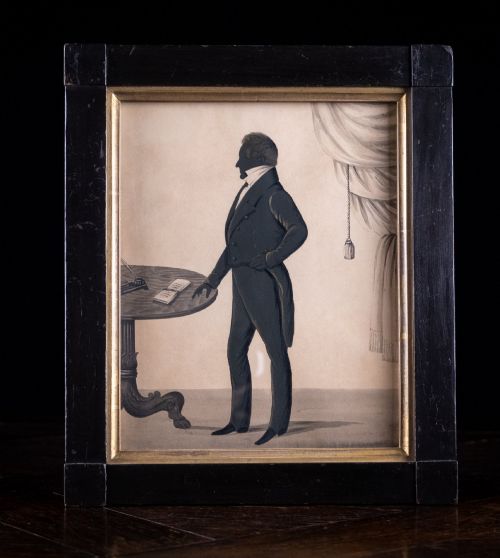
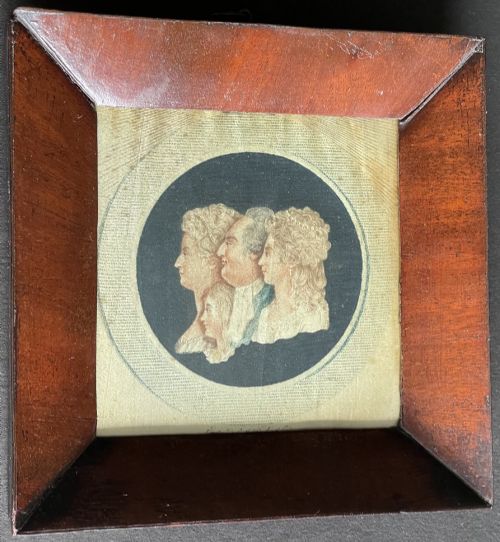
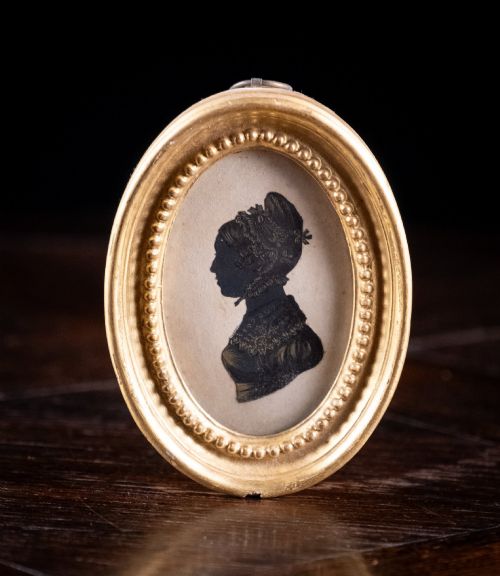
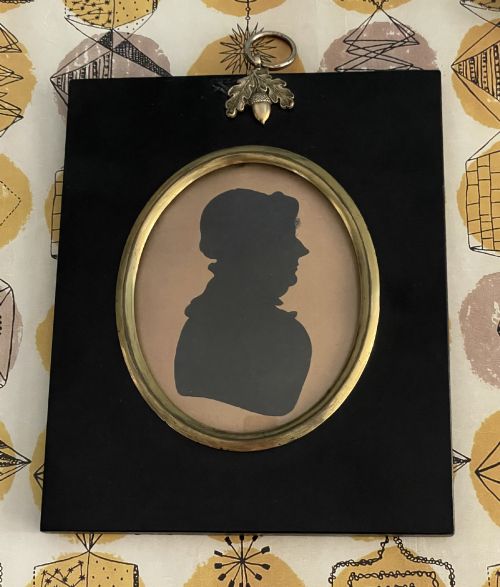
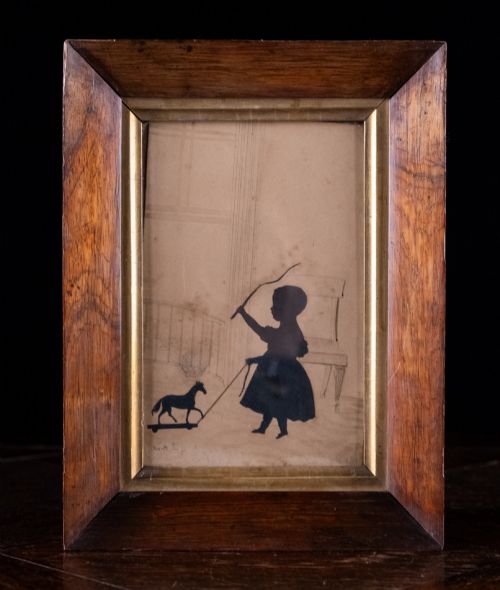
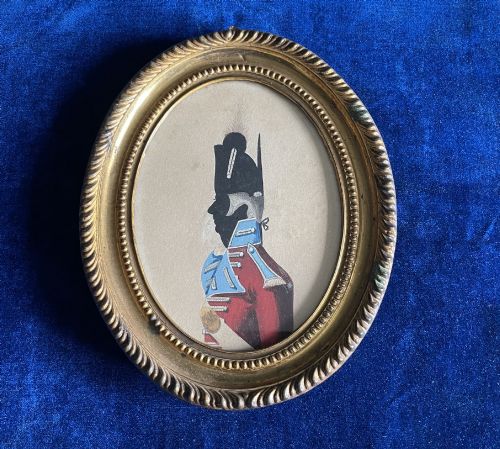
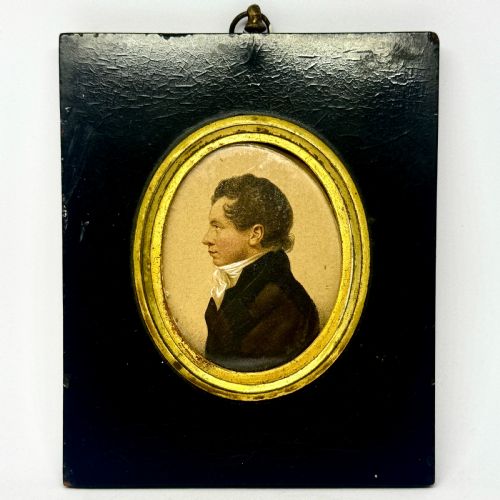
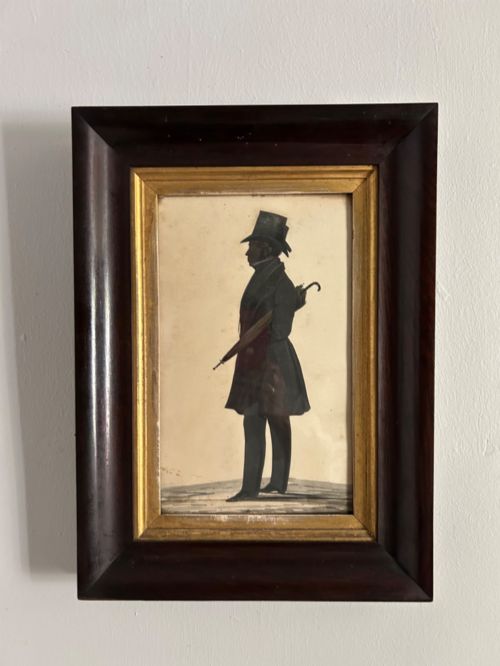
Georgian silhouette art encompasses framed portrait miniatures, full-length likenesses, and conversation pieces produced during the eighteenth and nineteenth centuries. These profile likenesses capture sitters from gentlemen and ladies to children and pets with striking economy.
The most common examples on this page date from the Regency era and the early nineteenth century, reflecting the peak of popularity for profile portraiture before photography took hold. Makers worked across various formats, from simple paper cutouts to detailed depictions enhanced with gold leaf and watercolour.
Framed artwork appears in materials such as ebonised wood, rosewood, and maple, often retaining original glazing and brass fittings. Pieces range from intimate miniature pendants to larger wall art depicting family groups and animal companions.
Markers of execution
Quality rests upon the precision of the cutting or brushwork, where confident lines capture the exact likeness and posture of the sitter without hesitation. Superior examples show careful attention to costume details, hair texture, and facial expression within miniature scales.
The condition of the original materials also defines the piece, with intact glass, minimal fading to the background, and well-preserved gold leaf indicating careful preservation over centuries. Signed works or those retaining period framing and contemporary provenance carry greater documentary weight.
Bateman·William James Hubard·Frith·George Atkinson·James Gillespie·Augustin Edouart·John Miers·Elizabeth Hudson·Thomas London·J. Deacon·John Smith of Edinburgh
The Georgian Silhouette Art Glossary
- Silhouette
- A profile portrait filled in with a solid dark colour, typically black, originating from shadow tracing.
- Reverse painting on glass
- A technique where the artist paints the image on the back of a glass panel so it is viewed correctly from the front.
- Gilded silhouette
- A profile enhanced with applied gold leaf to render costume details, lace, or jewellery against the dark figure.
- Plaster
- A fine white composition material used by makers like John Miers as a smooth ground for painted profiles.
- Conversation piece
- An artwork depicting a group of figures engaged in a social setting or shared activity.
Georgian Silhouette Art: Frequently Asked Questions
How do I date a silhouette?
Dating relies heavily on the clothing, hair styling, and headdress of the sitter, alongside the framing materials and any signature or trade label on the reverse.
Early examples often feature painted plaster or delicate hollow-cut paper, while Regency pieces frequently employ full-length figures with gilt highlights.
Where were silhouettes displayed?
These portraits hung in domestic parlours and bedchambers, often arranged in clusters on walls alongside other family likenesses.
Smaller examples were worn as jewellery pendants or carried in pocket cases as personal tokens of affection.
How do I care for antique silhouettes?
Keep pieces away from direct sunlight to prevent the fading of ink, watercolour backgrounds, and dark paper.
Avoid damp environments that can cause condensation behind the glass and damage the delicate painted surfaces.
Are all silhouettes signed by the artist?
Many fine examples remain unsigned because artists often relied on paper trade labels pasted to the reverse of the frame rather than signing the image itself.
Loss of the backing paper during framing overhauls frequently removes the maker's attribution.