


Georgian Sheffield Plate Cooler
Georgian Sheffield plate cooler items are substantial wine vessels fused from copper and silver, prized for their elegant neoclassical lines and rich history.
Georgian Sheffield Plate Cooler
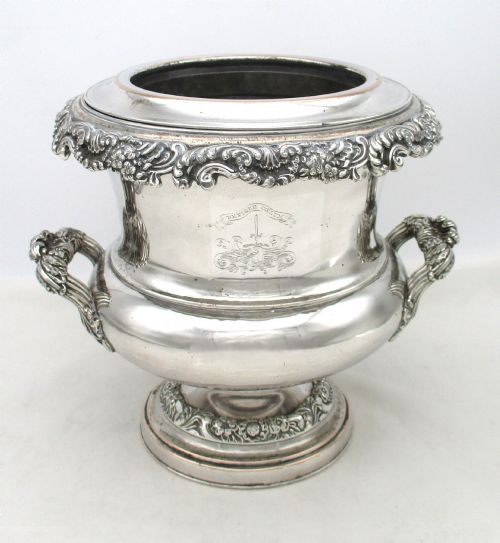
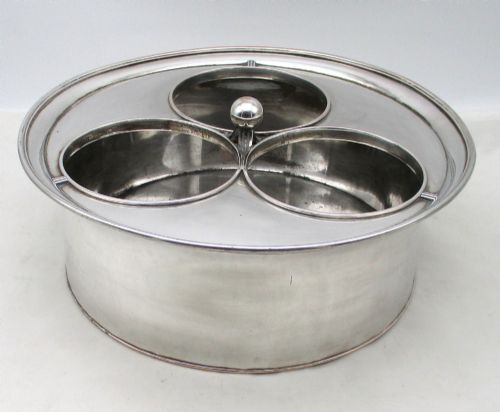
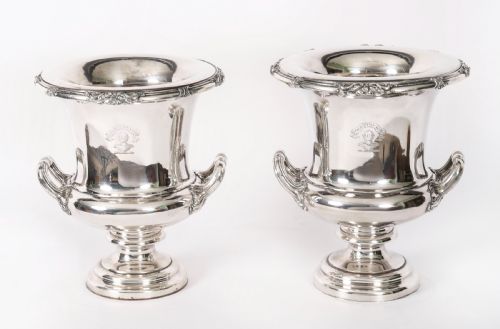
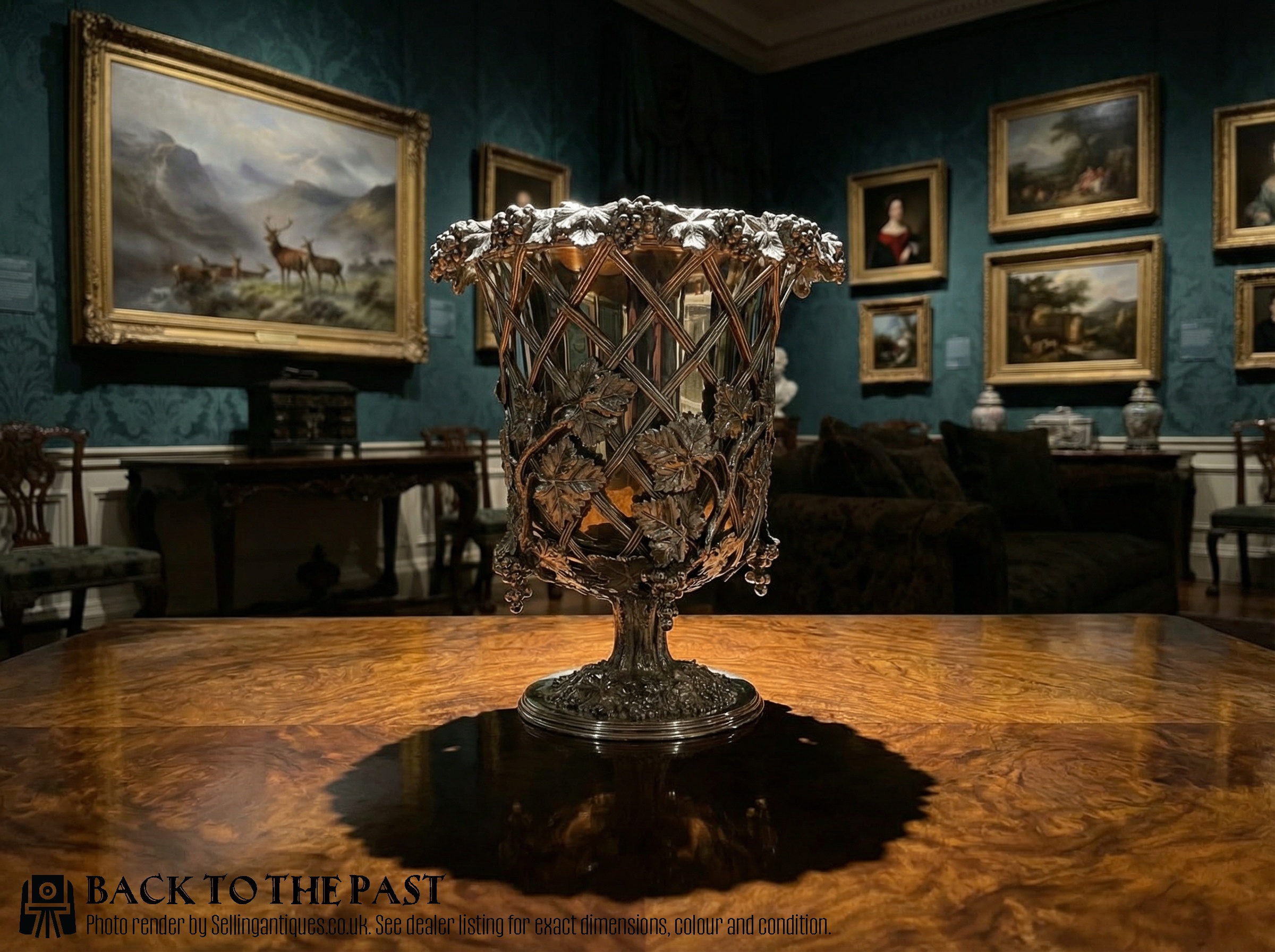
A georgian sheffield plate cooler serves to chill wine and champagne, typically taking the form of a campana vessel or a multi-bottle holder designed for the dining table. These pieces frequently feature engraved armorial crests or coats of arms, reflecting their aristocratic provenance and initial domestic use.
The objects span the eighteenth and nineteenth centuries, connecting the Georgian, Regency, and William IV eras through distinct stylistic evolutions. Buyers meeting these items will encounter campana designs alongside traditional bucket forms, often presented as matched pairs.
How they were made
Makers fused a thin sheet of silver to a thicker base of copper through a high-heat thermal process, creating the dual-metal stock known as Old Sheffield Plate. Craftsmen then shaped this fused metal by hand and hammering, soldering distinct components together to form the body and handles.
Engravers added armorial crests to the outer surface by hand, cutting directly into the silver layer without exposing the underlying copper. Interior liners and rims often received reinforcement or silver wire borders to hide exposed base metal edges.
These heavy metal buckets kept Georgian toasts frosty while family crests judged the guests.
What varies in quality
The integrity of the fused silver layer over the copper core dictates the longevity and visual richness of the vessel. Pieces that retain heavy silver content without excessive wear or copper bleed demonstrate superior original manufacture.
Artisanal execution in the casting of handles, rims, and heraldic engraving separates standard domestic vessels from masterworks. The crispness of the campana profile and the balance of applied decorative mounts reveal the skill of the original workshop.
Matthew Boulton and Co
The Georgian Sheffield Plate Cooler Glossary
- Old Sheffield Plate
- A composite material made by fusing silver and copper together through heating and rolling. This technique preceded modern electroplating.
- Campana
- A bell-shaped vessel design popular during the Georgian and Regency periods. Such forms frequently feature flared rims and footed bases.
- Coat of Arms
- A heraldic design engraved onto the metal surface to denote family lineage. These markings are often found on the main body of the cooler.
- Regency
- An architectural and decorative style period spanning the early nineteenth century. Pieces from this era often display classical revival motifs.
Georgian Sheffield Plate Cooler: Frequently Asked Questions
What is a georgian sheffield plate cooler?
A georgian sheffield plate cooler is a dual-metal wine vessel produced by fusing silver and copper. These items were designed to hold ice and bottles at the dining table during formal meals.
They utilise Old Sheffield Plate manufacturing techniques rather than later electroplating methods. The forms include campana shapes and multi-bottle holders decorated with cast handles.
How do I date a sheffield plate cooler?
Dating relies on stylistic markers such as campana silhouettes, neoclassical handles, and armorial engraving styles. Regency and Georgian examples exhibit specific proportions and mount designs.
Objects from this category span the late eighteenth century into the nineteenth century. Examining the construction of the base and rim helps confirm the production era.
How were these coolers used originally?
Servants filled the vessels with ice and water to chill wine and champagne before serving them to guests. The thick metal walls kept beverages cold throughout long dining courses.
They occupied a central place on the dining sideboard or table. Crests and coats of arms displayed the household's identity to visitors.
How do I clean an old sheffield plate cooler?
Cleaning requires a soft cloth and mild silver polish applied gently to preserve the thin silver layer. Avoiding abrasive materials prevents wearing through to the underlying copper core.
Careful maintenance protects any hand-engraved armorial crests from fading. Regular dusting keeps the metal surface stable in domestic environments.