
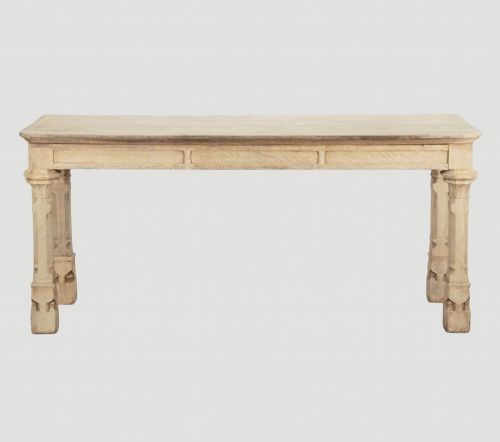

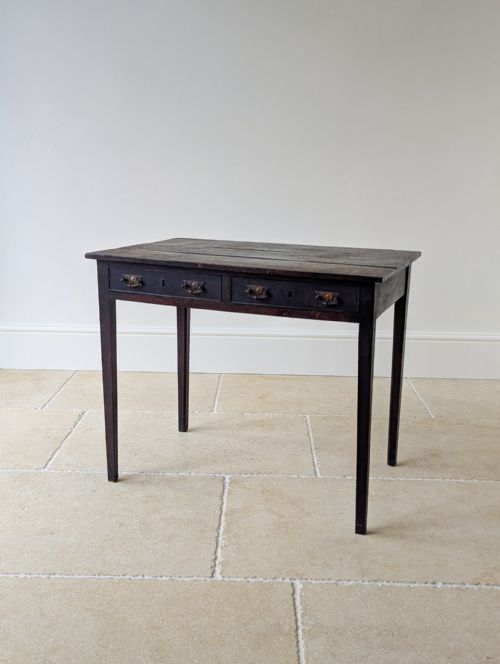
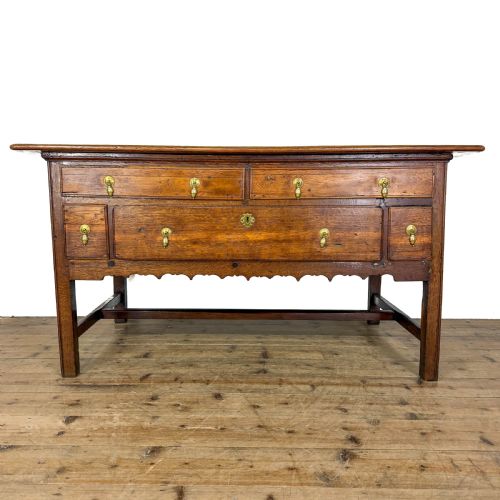
Georgian Serving Console
A georgian serving console provides a grand surface for dining rooms and hallways, combining practical storage with classic proportions.
Georgian Serving Console
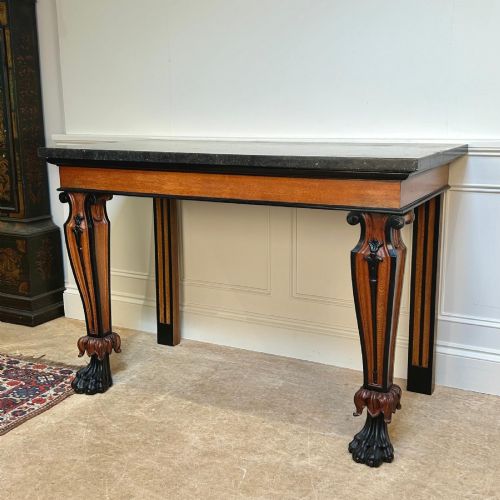
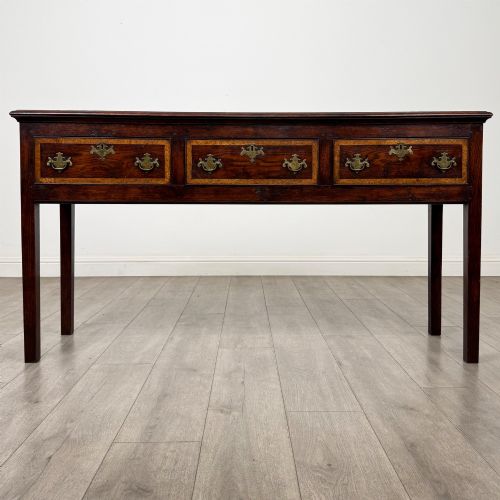
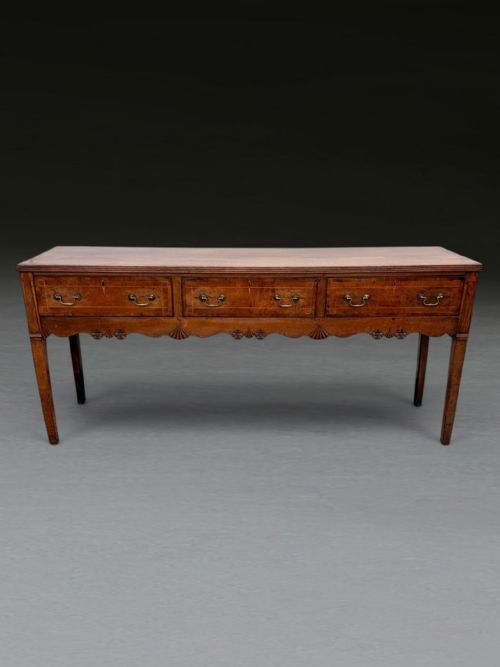
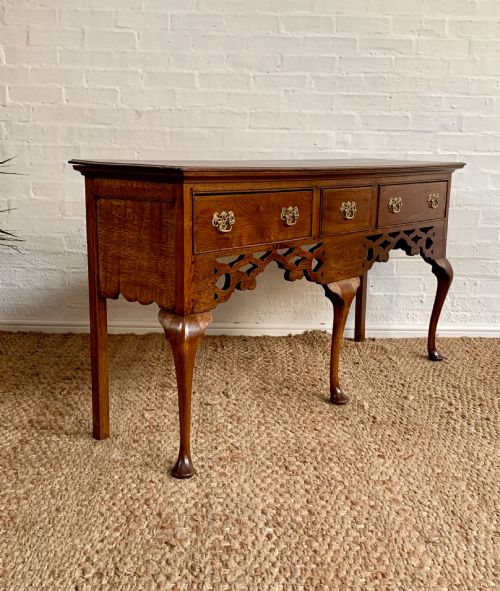
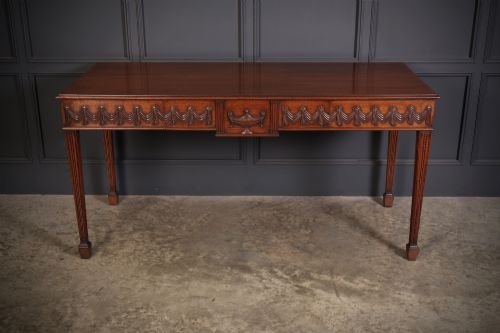
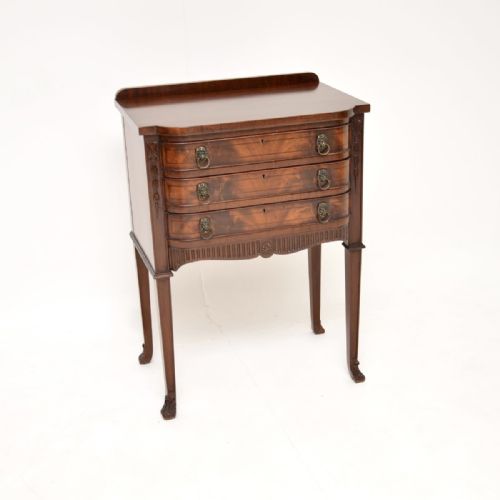
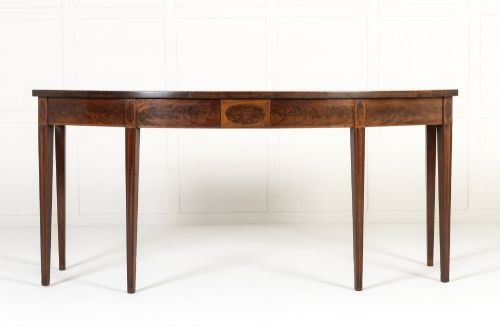
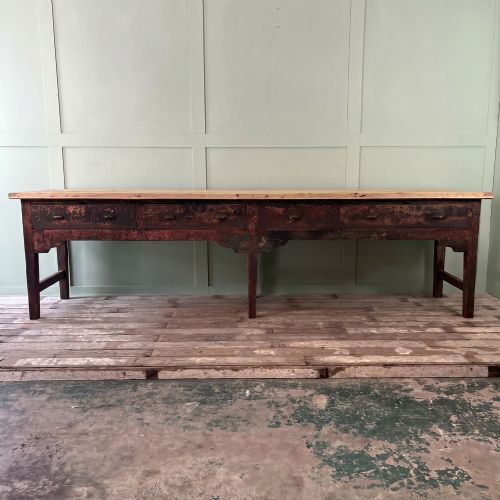
A georgian serving console brings functional surface area to dining spaces and hallways through forms such as serving tables, side tables, console tables, sideboards, and dresser bases. Buyers searching for a georgian serving console encounter pieces originating from periods including the Georgian era, the 18th century, the 19th century, Regency, Edwardian, and later revivals.
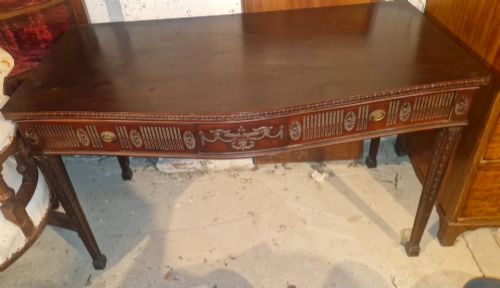
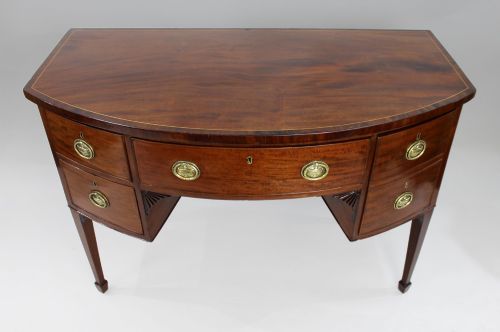
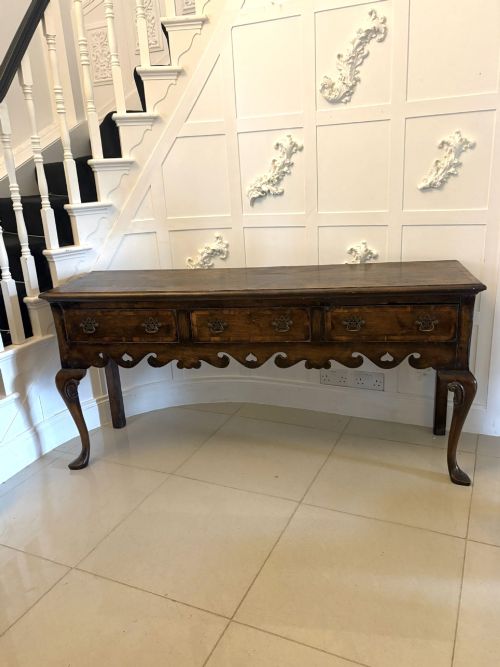
The pieces on this page span formal mahogany designs with bow fronts and serpentine shapes alongside robust country house oak examples and painted finishes. Variations include multi-drawer configurations, potboard designs, and demi-lune profiles suited to formal and vernacular interiors alike.
Materials and construction
Makers utilised solid timbers like mahogany, oak, pine, and walnut, frequently applying flame mahogany veneer, boxwood, and satinwood for decorative contrast. Wood inlay and painted surfaces appear across both formal urban pieces and regional country furniture.
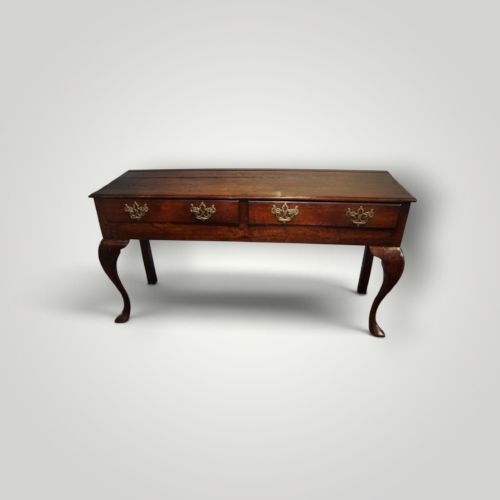
Brass hardware such as handles and escutcheons complement the primary woods, while structural joinery incorporates drawer boxes and cabriole legs or straight tapered supports depending on the period and regional workshop traditions.
Lord Leverhulme clearly knew a thing or two about dining arrangements when he acquired his George III serving table.
Judging quality and proportion
Quality rests upon the selection of timber figures, such as matched flame mahogany veneer, and the crispness of carved details like those found in Chippendale or Adam styles. Finer examples display meticulous attention to inlay work, cabinet proportions, and the original integrity of timber surfaces.
Regional or country pieces derive their character from honest vernacular construction and patinated oak timbers rather than urban refinement. The distinction lies in whether the cabinetwork, drawer linings, and structural framing remain true to their period of origin.
The Georgian Serving Console Glossary
- Bow front
- A convex curved cabinet front that swells outward in the centre, common in late 18th-century side tables and servers. This shape softens linear room arrangements and showcases figured timber veneers.
- Serpentine front
- A furniture front featuring a concave curve flanked by two convex curves, or the reverse. It requires advanced woodworking skill to shape solid timber and veneer accurately.
- Potboard
- An open slatted lower shelf fitted beneath a dresser base or serving table. Originally designed to hold heavy ceramic serving vessels, it adds structural stability to large tables.
- Demi-lune
- A half-moon shape used for console and serving tables designed to stand flat against a wall. These tables often feature painted or inlaid decoration.
- Cabriole leg
- A furniture leg that curves outward at the knee and tapers inward at the ankle, ending in a pad or foot. It derives from ancient furniture forms and gained popularity during the Georgian period.
Georgian Serving Console: Frequently Asked Questions
Where were serving consoles placed?
These tables stood against dining room walls to hold dishes, silver, and serving platters before courses were brought to the main table. They also functioned in grand entrance halls as side pieces.
Their narrow profile allowed them to occupy circulation spaces without obstructing movement while providing a stable surface for display.
How do I identify a George III table?
George III pieces typically exhibit classical proportions, refined mahogany timbers, and decorative details like satinwood inlay, brass handles, or carved edge mouldings. Regional examples may substitute oak for mahogany while retaining similar functional forms.
Construction methods, such as hand-cut dovetails on drawer boxes and secondary timbers like pine or oak, help confirm the period.
Can I use a console in a hallway?
A serving console works effectively in a hallway or landing due to its shallow depth against the wall. It provides a practical drop surface for keys and post while adding architectural presence.
Drawers on many models offer concealed storage for household sundries, keeping entrance areas tidy.
What is the difference between a console and a server?
While terms overlap in antique listings, servers traditionally function in dining rooms for food and dish management, whereas console tables often feature decorative wall-fixing brackets or lighter frames for formal reception rooms. Many surviving pieces combine attributes of both.
Both types share a long, narrow format designed to stand flush against a wall.