

Georgian Secretaire Chest of Drawers
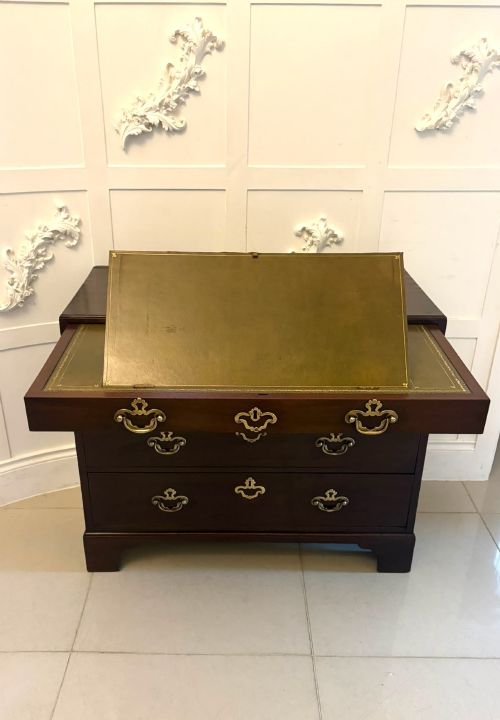
A georgian secretaire chest of drawers combines a set of bedroom drawers with a fitted writing desk.
Georgian Secretaire Chest of Drawers
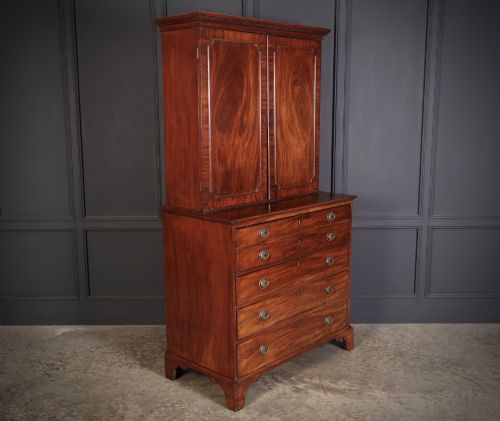
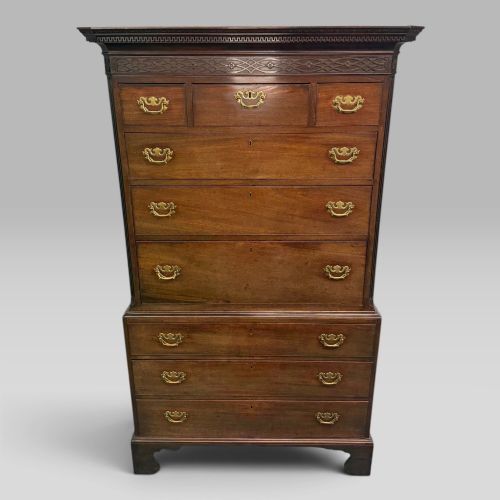
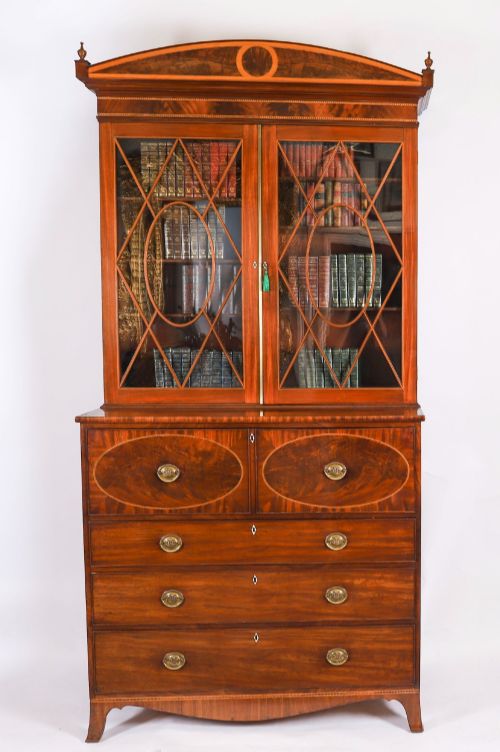
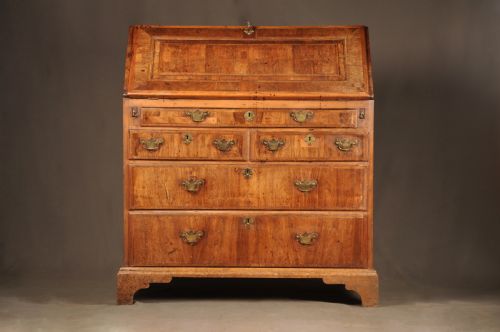
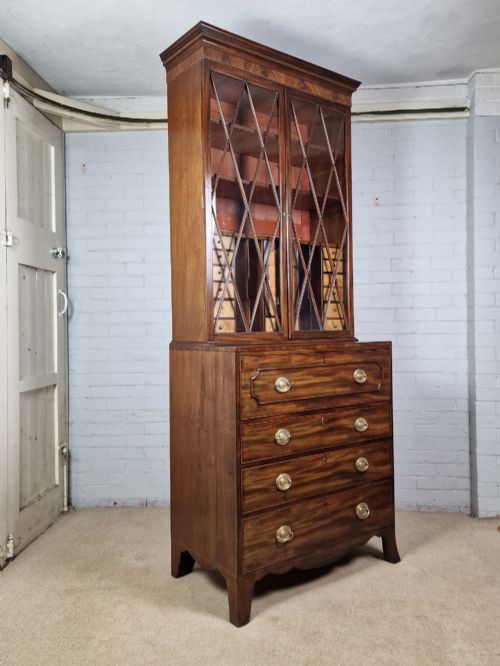
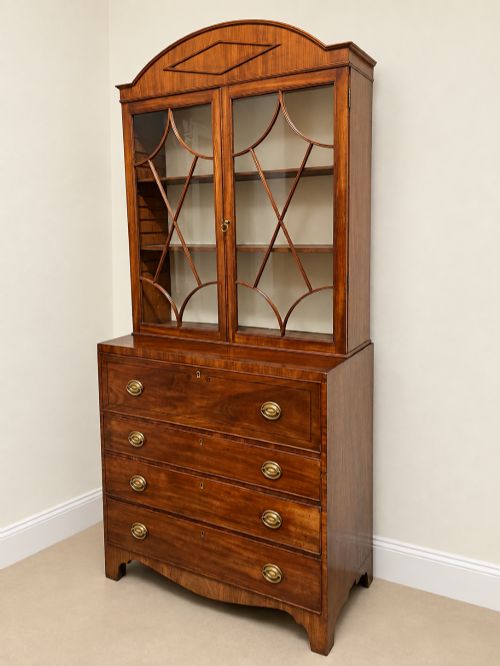
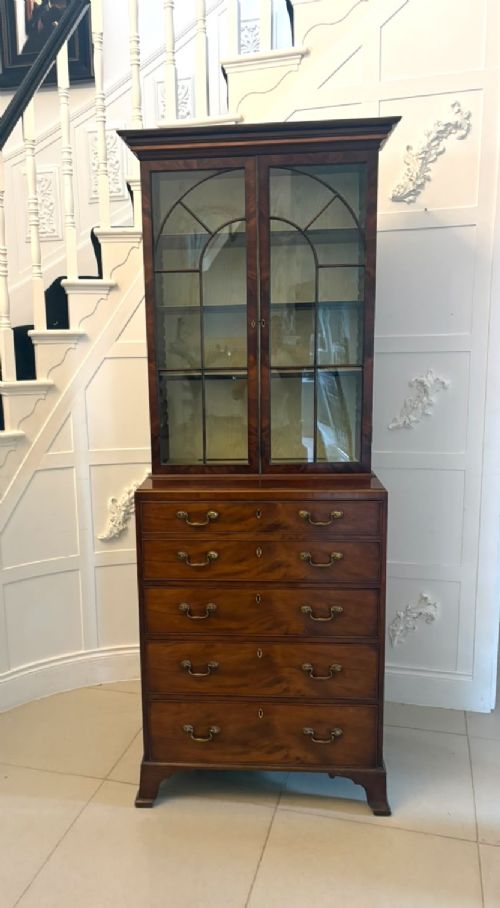
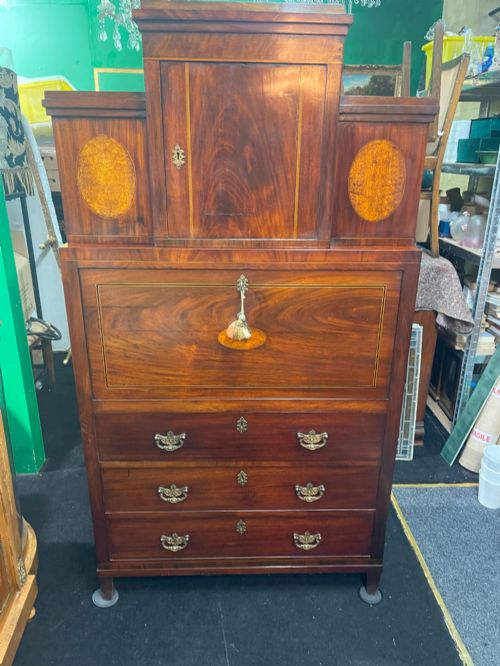
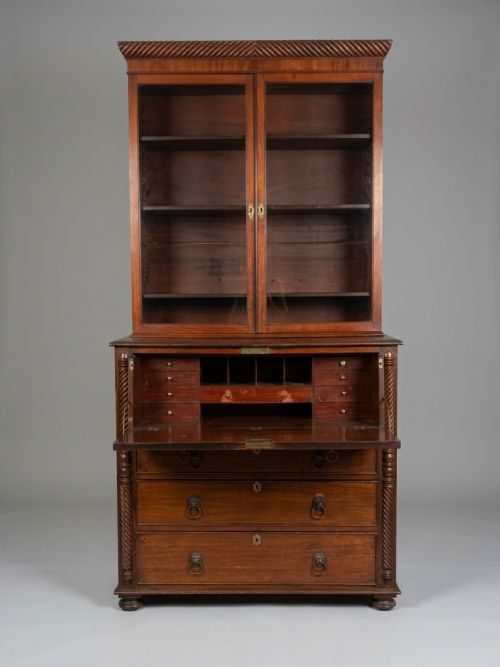
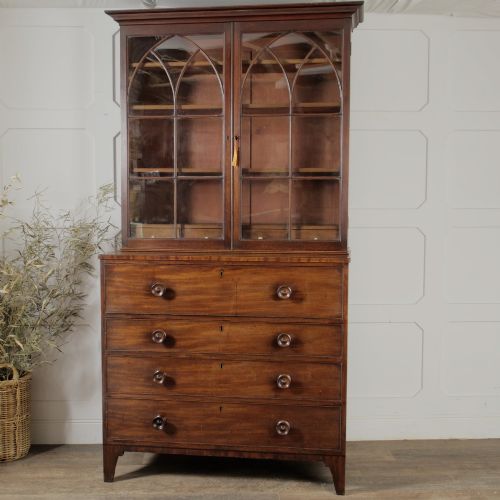
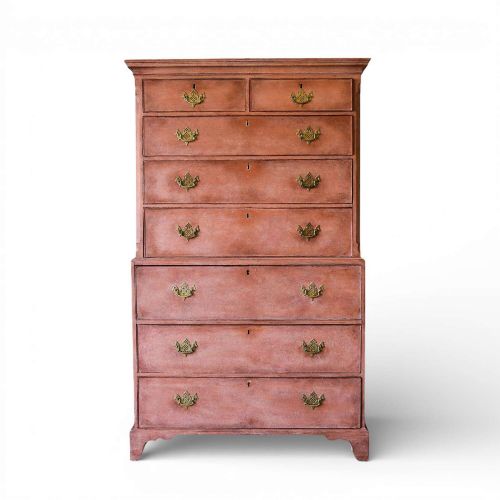
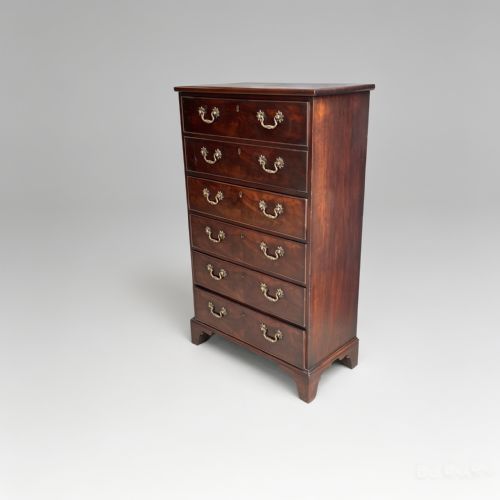
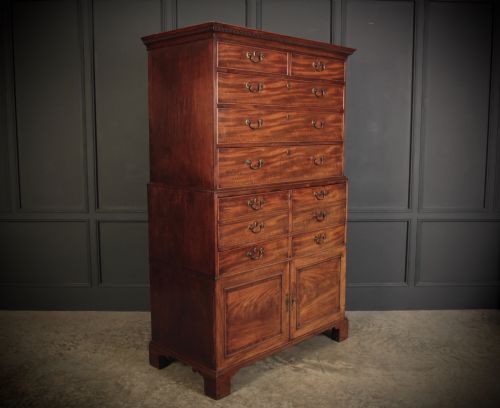
A georgian secretaire chest of drawers serves as a dual-purpose item designed for both storage and correspondence. These pieces typically take the form of a chest of drawers, a tallboy, a chest on chest, or a secretaire bookcase.
The version most commonly met on this page is the mahogany chest dating from the eighteenth or nineteenth century, often reflecting George III or Regency styles. Makers produced these items in formats that incorporated glazed doors, press cupboards, or fall-front writing compartments.
How They Were Made
Craftsmen built these pieces primarily using solid timber and veneers, relying heavily on mahogany alongside walnut, satinwood, and oak for structural carcasses and drawer linings. Surface decoration often involved flame mahogany figuring and delicate inlay work.
Functional elements required specialised hardware, including brass handles for the drawers and fitted interiors lined with baize or leather for writing surfaces. Glass featured prominently in the upper sections of bookcase variants, held within astragal glazing bars.
Georgian Secretaire Chest of Drawers Retail Price Guide 2026
Typical asking prices for georgian secretaire chest of drawers among the pieces listed under this phrase on Sellingantiques today, from the lower quarter to the upper quarter. They describe what is for sale here now, not the wider market.
Hidden within the fitted pigeonholes of many secretaire drawers lie secret compartments designed for stashing private correspondence and stray postage stamps.
What Varies in Quality
The standard of timber selection divides ordinary items from superior examples, with figured flame mahogany and matched walnut veneers indicating higher workshop output. Subtle inlay work in satinwood and precise cabinet joints elevate certain pieces above standard production.
Internal complexity of the fitted writing drawer dictates execution level, where secret compartments, small pigeonholes, and small drawers demonstrate superior joinery. The crispness of carved details, such as astragal glazing bars and brass hardware integration, further separates individual pieces.
Gillows
The Georgian Secretaire Chest of Drawers Glossary
- Secretaire
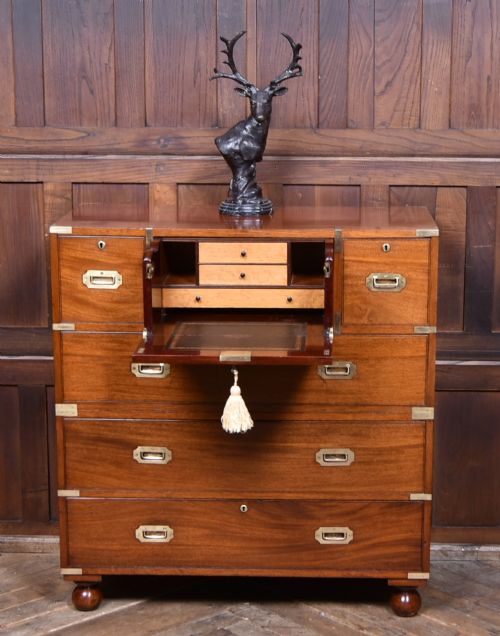
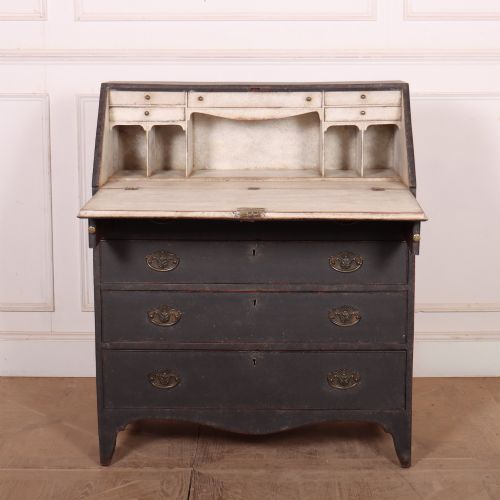
- A piece of furniture containing a drawer or compartment that pulls down to form a writing desk. It conceals pigeonholes and small drawers behind the drop-front panel.
- Tallboy
- A tall chest of drawers made by stacking one chest on top of another. These pieces maximise vertical storage space in domestic chambers.
- Astragal
- A moulding profile used to hold panes of glass within a glazed cabinet door. These wooden bars create geometric patterns across bookcase fronts.
- Campaign
- A style of furniture designed for portability by military officers. These items often feature recessed brass handles and corner brackets.
- Baize
- A coarse woolen material resembling felt. Makers used this fabric to line the pull-down writing surfaces of secretaire drawers.
Georgian Secretaire Chest of Drawers: Frequently Asked Questions
What is a secretaire chest of drawers?
A secretaire chest of drawers is a dual-purpose item of furniture that looks like a standard set of drawers from the outside. The top drawer pulls down or pulls out to reveal a fitted writing desk complete with pigeonholes and small compartments.
This design allowed owners to write letters and manage correspondence without needing a separate standalone desk in the room.
How were these pieces used historically?
These items served daily domestic needs for both clothing storage and administrative tasks. The lower drawers held garments, while the drop-front secretaire drawer provided a clean surface for writing and storing stationery.
In larger houses, bookcase variants also housed libraries and valuable book collections behind glazed upper doors.
How do I tell George III from Regency pieces?
George III pieces often display classic proportions, understated mouldings, and intricate mahogany veneer patterns. Cabinetmakers working during this era frequently utilised astragal glazing and bracket feet.
Regency pieces tend to show heavier classical influences inspired by ancient Rome and Greece, sometimes incorporating brass inlay and bolder architectural lines.
Where should I place a tallboy in my home?
A tallboy requires a room with sufficient ceiling height and floor space to accommodate its vertical proportions. Bedrooms and dressing rooms suit them well, as their deep drawers offer substantial storage capacity.
Because these pieces are top-heavy by nature, placement against a secure wall is essential for stability.