





Georgian Seascape
Georgian seascape paintings and prints capture British maritime history through oil on canvas and watercolour, offering dramatic naval scenes for your collection.
Georgian Seascape
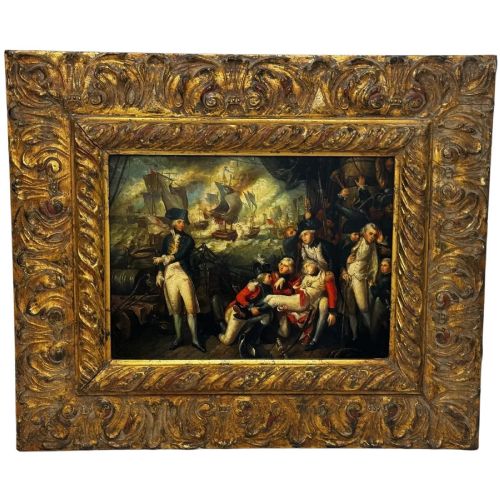
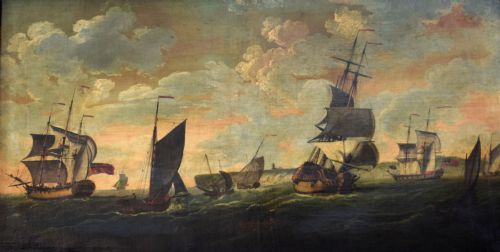
A georgian seascape brings the maritime history of the eighteenth and nineteenth centuries directly into domestic interiors through oil paintings, watercolours, and framed prints. These works portray coastal landscapes, naval engagements, and harbour scenes featuring warships, frigates, and smaller fishing boats.
Buyers encountering this page will primarily find oil paintings on canvas alongside framed prints and watercolours. The selections span from the mid-eighteenth century through the Regency period and into the mid-nineteenth century, reflecting shifting artistic interpretations of British coastal life.
The subjects range from tranquil coastal figures and shipping scenes to intense sea battles involving galleons with cannon and raised sails. Works such as depictions of Portsmouth harbour or specific vessels like HMS Swift ground these artistic representations in documented maritime contexts.
Materials and Technique
Artists working within this genre relied primarily on oil paint applied to canvas, capturing the shifting textures of sea and sky through layered pigment. Watercolour on paper served as an alternative medium, frequently utilised for detailed maritime watercolours that recorded specific coastal topography and shipping movements.
Many of these works are housed in period frames, including giltwood surrounds that complement the tonal depth of the paintings. Printmakers also reproduced maritime subjects using aquatint techniques, creating sets of works such as coastal views by W. Collard.
Georgian Seascape Retail Price Guide 2026
Typical asking prices for georgian seascape among the pieces listed under this phrase on Sellingantiques today, from the lower quarter to the upper quarter. They describe what is for sale here now, not the wider market.
Listings feature works spanning the eighteenth and nineteenth centuries, utilising oil paint, canvas, paper, glass, and giltwood frames.
Assessing Quality
The distinction between standard works and exceptional pieces rests upon the precision of the maritime detail and the handling of atmospheric light. Master painters render rigging, hull structures, and coastal topography with rigorous accuracy, whereas lesser examples rely on formulaic representations of water and vessels.
Attribution to documented artists or proximity to known hands elevates a piece within the tradition. Works linked directly to painters such as Samuel Owen or Francis Holman demonstrate superior compositional balance and historical fidelity compared to anonymous workshop productions.
W. Collard·Samuel Owen·Francis Holman·R I Barrow
The Georgian Seascape Glossary
- Aquatint
- A printmaking technique that produces tonal effects similar to watercolour washes. W. Collard utilised this method for sets of coastal views.
- Giltwood
- Wood carved and finished with a gold leaf coating. It forms the material for many period frames enclosing these canvases.
- Man-of-war
- A powerful armed sailing warship of the Royal Navy during the eighteenth and nineteenth centuries. These vessels frequently populate naval battle scenes.
- Regency
- The period in British history from 1811 to 1820, often applied broadly to styles and works produced during the early nineteenth century.
- Watercolour
- Paint consisting of pigment suspended in a water-soluble vehicle, applied to paper. Samuel Owen employed this medium for harbour scenes.
Georgian Seascape: Frequently Asked Questions
What periods do these seascapes cover?
The works span from the eighteenth century through the Regency era to the mid-nineteenth century, encompassing pieces dated across the seventeen-hundreds and eighteen-hundreds.
This broad chronological range records the evolution of British maritime art, from early sailing vessels to later coastal fortifications.
Are these paintings executed in oil?
Many examples are oil on canvas, capturing dramatic sea battles and harbour views through rich pigments and textured brushwork.
Other items on offer include watercolours on paper and framed aquatint prints depicting British coastal scenes.
How do I identify a naval scene?
Naval compositions typically feature identifiable vessels of the Royal Navy, including frigates, man-of-war ships, and galleons with raised sails and cannon.
Specific locations such as Portsmouth harbour or coastal forts often provide geographical context for the maritime activity.
How should I hang a framed print?
Ensure the piece is positioned away from direct sunlight to protect the canvas, paper, and any giltwood framing from fading.
Secure the weight of the frame properly to the wall using fixings appropriate for the construction of your room.