



Georgian Sea Chest
Georgian sea chest examples combine robust maritime utility with rich cabinet timbers like mahogany and camphorwood.
Georgian Sea Chest
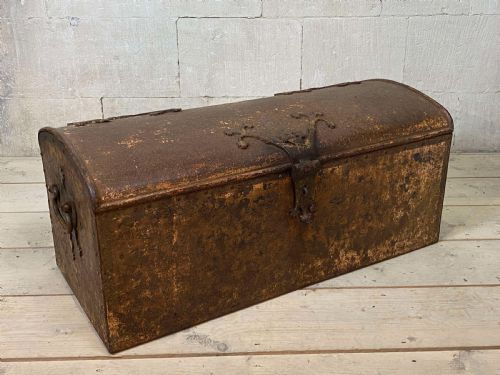
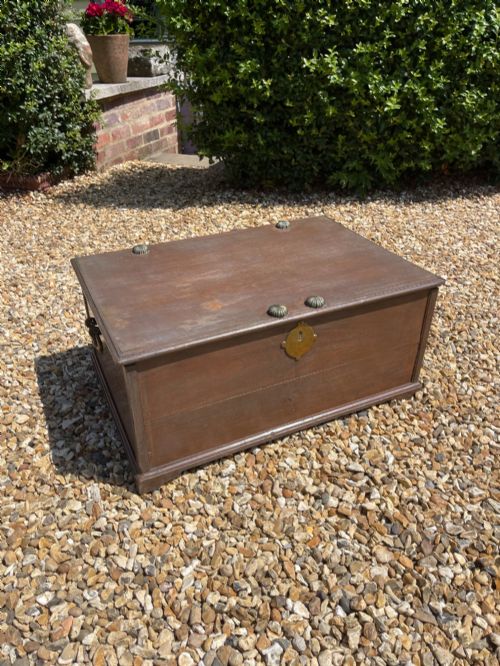
A georgian sea chest is a heavy storage trunk built for maritime voyages and military campaigns during the Georgian and 19th Century periods. These pieces serve primarily as secure transport for personal effects, uniforms, and navigational instruments aboard ships.
The versions most commonly met on this page span the Georgian era through to 1850, taking forms such as campaign chests, shipping trunks, and sloped sailors boxes. They originate from domestic workshops and colonial outposts alike, reflecting the travel and trade of the British Empire.
Materials range from native hardwoods like oak and mahogany to durable imported timbers such as teak and camphorwood, frequently reinforced for rough handling. Buyers encounter plain utility trunks alongside finely detailed campaign furniture adapted for officers at sea.
Construction and materials
Construction relies heavily on robust hardwoods including mahogany, teak, camphorwood, and oak, chosen for their resilience against damp maritime environments. Cabinets are joined securely to withstand the constant shifting of cargo holds and long sea voyages.
Metal hardware such as brass corners, strap hinges, and iron bindings are fastened to reinforce the structural corners and edges of the trunk. Integrated rope handles or recessed brass carrying grips allow sailors and soldiers to hoist the heavy boxes between deck and shore.
Georgian Sea Chest Retail Price Guide 2026
Typical asking prices for georgian sea chest among the pieces listed under this phrase on Sellingantiques today, from the lower quarter to the upper quarter. They describe what is for sale here now, not the wider market.
Camphorwood chests bring a potent, medicinal woodland aroma into the room that lingers quietly across the centuries from distant eastern ports.
Judging quality in maritime trunks
Quality separates primitive seaman's chests from high-status campaign furniture by the choice of cabinet timber and the precision of the joinery. Finer pieces utilise solid mahogany, teak, or aromatic camphorwood rather than basic painted pine or chestnut.
The refinement of the brass or iron hardware and the presence of original interior compartments elevate a piece significantly. Superior examples retain untouched surface patination, original painted folk art motifs, or documented historical associations.
The Georgian Sea Chest Glossary
- Campaign chest
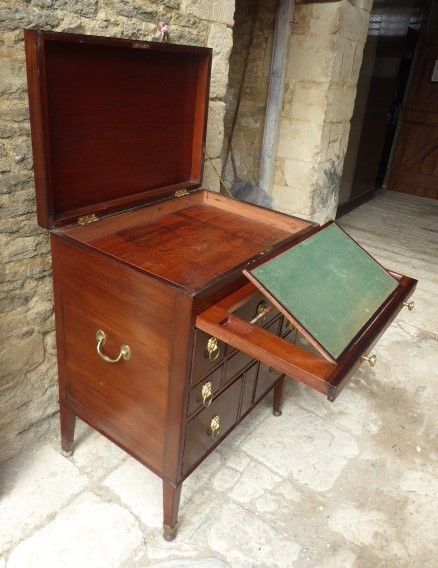
- A portable trunk or set of drawers designed to be easily packed and transported on military campaigns or sea voyages. These pieces frequently feature recessed brass handles and corner brackets to prevent damage during transit.
- Camphorwood
- An aromatic Asian timber prized for its insect-repellent properties, commonly utilised for sea chests to protect woollens and uniforms from moths. The wood maintains a distinctive fragrance and takes a rich finish.
- Baize
- A coarse woolen material resembling felt, historically used to line the interiors of boxes, desks, and chest compartments to protect delicate instruments or documents from scratching.
- Maritime folk art
- Decorative painting, carving, or embellishment executed by sailors or local craftsmen on nautical objects. Examples include painted emblems, whaling scenes, and ship portraits on chests.
Georgian Sea Chest: Frequently Asked Questions
What is a Georgian sea chest?
A Georgian sea chest is a heavy wooden storage trunk used by sailors, officers, and travellers during the 18th and 19th centuries. These boxes were designed to withstand harsh maritime conditions while storing personal belongings and equipment.
They appear in various forms, from plain pine seaman's chests to brass-bound camphorwood and mahogany campaign boxes. Their durable construction allowed them to survive decades of shipboard life and global transport.
How were sea chests used at sea?
Sailors and officers utilised these chests to hold clothing, rations, navigational books, and personal valuables during long voyages. The heavy trunks doubled as furniture inside cramped cabins, serving as seats or writing desks when fitted with sloped lids.
Iron bindings and rope handles ensured the chests could be hoisted securely using tackle between the deck and the hold. Their sturdy lids also protected contents from sea spray and damp cabin air.
Which woods are typical for these chests?
Makers selected dense native and exotic timbers capable of resisting moisture and heavy impacts. Mahogany, oak, and walnut appear frequently alongside colonial imports like teak and aromatic camphorwood.
Secondary woods such as pine and chestnut occasionally form the internal structures or simpler utility trunks. Metal reinforcements in brass and iron are standard across the majority of surviving examples.
How do you date a sea chest?
Dating relies on examining the construction techniques, hardware styles, and timber choices across the Georgian and 19th Century periods. Early pieces often feature hand-cut dovetails, wrought iron hardware, and native hardwoods like oak or mahogany.
Later 19th Century examples introduce machine-sawn elements, standardised brass campaign fittings, and imported timbers such as camphorwood or teak. Historical inscriptions, painted dates, or maker plaques also help narrow down the period of manufacture.