





Georgian School Child Portraits
Georgian school child portraits capture youth with solemn grace, offering intimate glimpses into past centuries through canvas and paper.
Georgian School Child Portraits
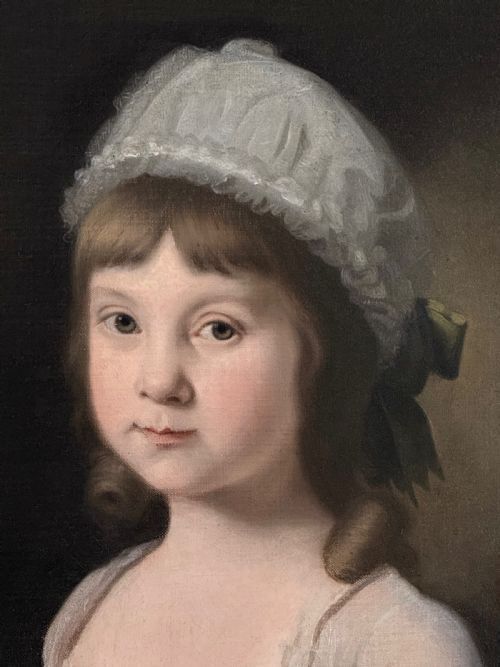
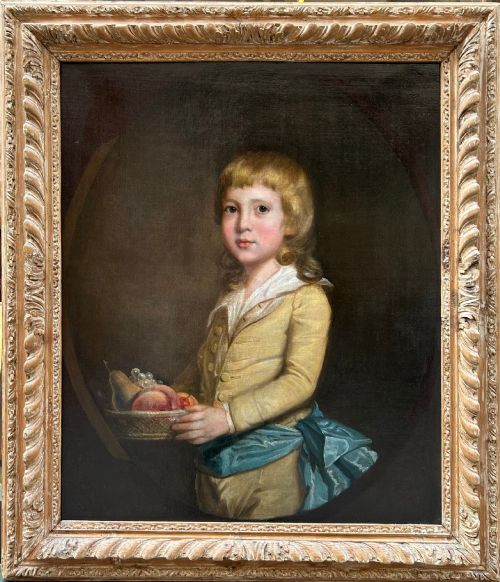
Georgian school child portraits depict young subjects often accompanied by pets, fruit, or books, reflecting the domestic ideals of their era. These works frequently emerge from the eighteenth and nineteenth centuries, spanning Georgian, Regency, and Victorian periods.
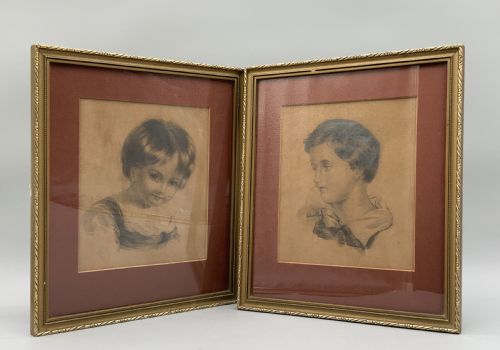
Buyers will most commonly encounter oil on canvas paintings alongside pastel portraits and pencil drawings. The subjects range from solitary young boys and girls to family groups featuring mothers and children.
Many pieces originate from the English School or bear attribution to notable circles, capturing children with dogs, birds, or sitting at spinets and tables.
Materials and technique
Techniques varied between formal studio portraiture and looser circle or follower studies, capturing texture in lace, hair, and jackets through layered brushwork.
Georgian School Child Portraits Retail Price Guide 2026
Typical asking prices for georgian school child portraits among the pieces listed under this phrase on Sellingantiques today, from the lower quarter to the upper quarter. They describe what is for sale here now, not the wider market.
Several young subjects share the canvas with unexpected companions, including exotic birds and tiger cowrie shells.
Assessing the execution
Quality rests upon the psychological engagement of the portrait and the skill evident in rendering hands, textiles, and facial expressions. Works by named masters or close studio circles exhibit superior draftsmanship compared to broader regional school pieces.
The preservation of the original surface, along with the harmony of the accompanying giltwood frame, elevates the standing of an individual artwork.
Joshua Reynolds·Allan Ramsay·Thomas Beach·Michael Dahl·William Egley·Arthur Pond·George Knapton·Robert Byng·Francis Alleyne·John Russell·Henry Edridge
The Georgian School Child Portraits Glossary
- English School
- A designation used when a painting originates in England but lacks a confirmed specific master, often reflecting prevailing regional styles of the period.
- Giltwood
- Wood carved and covered with a thin layer of gold leaf, commonly utilised for traditional picture frames during the Georgian and Regency eras.
- Gesso
- A plaster-like mixture applied to wooden frames as a smooth base before gilding.
- Pastel
- A dry medium made of powdered pigment and a binder, frequently utilised for delicate eighteenth-century portraits on paper.
- Circle of
- A term indicating the work of an unknown artist who closely followed the style and studio practice of a recognised master.
Georgian School Child Portraits: Frequently Asked Questions
What defines a Georgian child portrait?
These artworks present young subjects dressed in the formal attire of the eighteenth and early nineteenth centuries, often posed with familiar objects like fruit or pets.
The compositions highlight changing attitudes towards childhood, shifting from miniature adults to more natural depictions of youth.
How do I care for antique oil paintings?
Keep the canvas away from direct sunlight and dramatic fluctuations in household temperature to prevent cracking in the paint layer.
Dust the surface gently with a soft, dry brush and avoid applying liquid cleaners to either the canvas or the frame.
Why do many paintings show animals?
Dogs and birds frequently accompanied young sitters to symbolise loyalty, obedience, or gentle temperament within domestic family life.
These animals also served as visual devices to keep young children stationary during long painting sessions.
How can I tell the period?
Clothing styles, hairstyles, and the construction methods of the underlying canvas or stretcher frame offer clear chronological clues.
Additionally, the profile of the accompanying giltwood moulding often aligns with specific decades from the eighteenth or nineteenth century.