
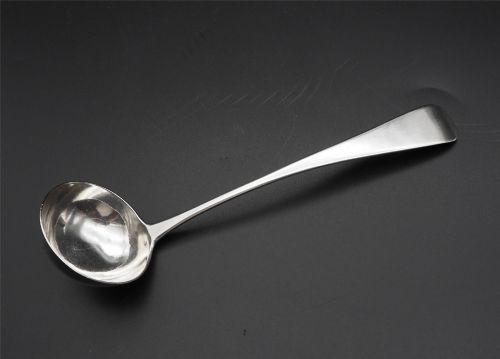
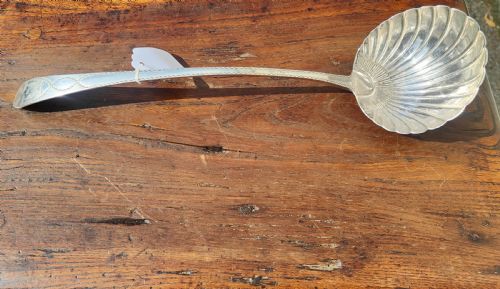
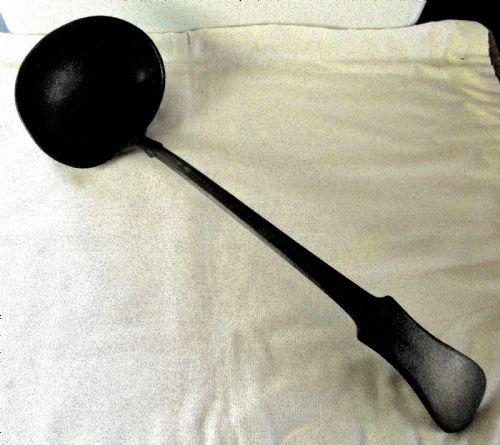
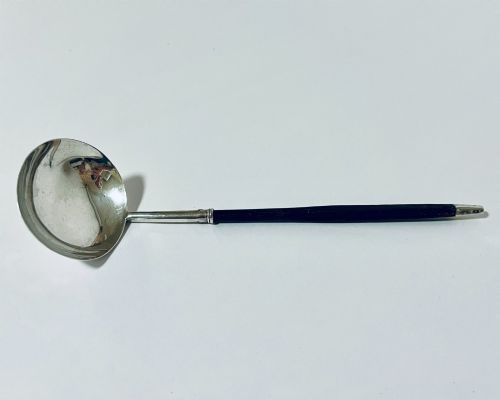




Georgian Sauce Ladle
A georgian sauce ladle brings small-scale silver work and polished horn to the dining table, offering a tactile piece of period dining history.
Georgian Sauce Ladle
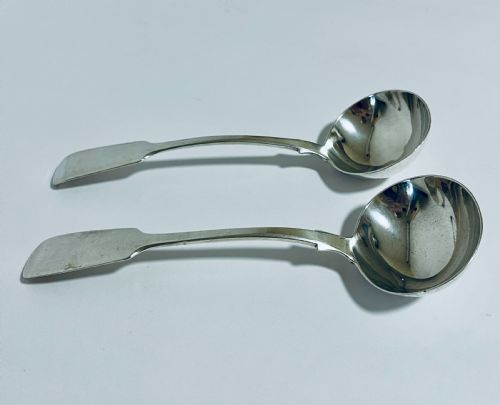
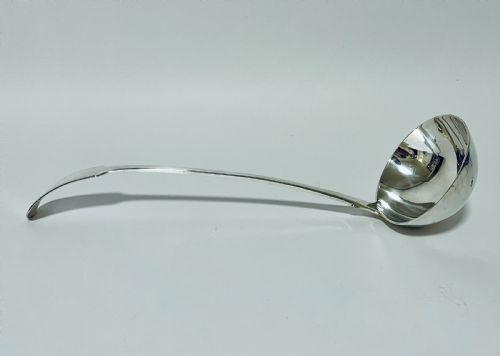
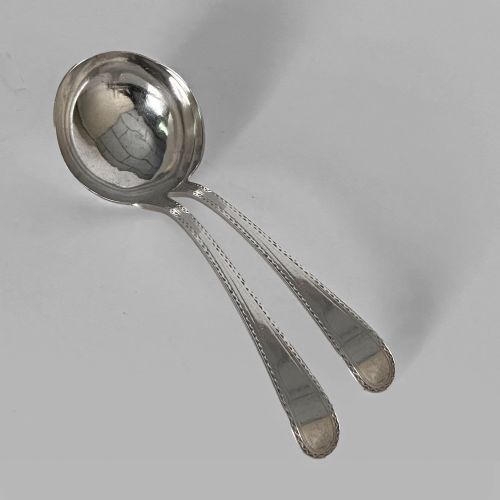
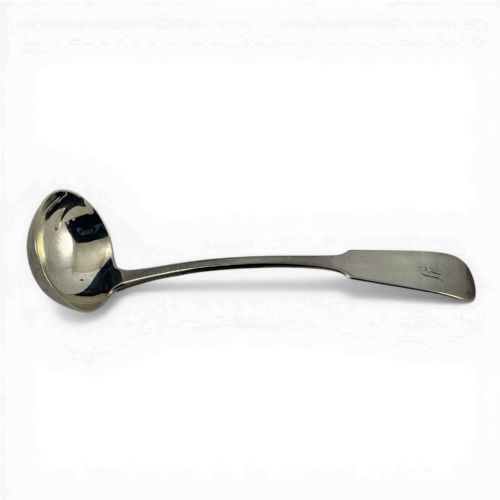
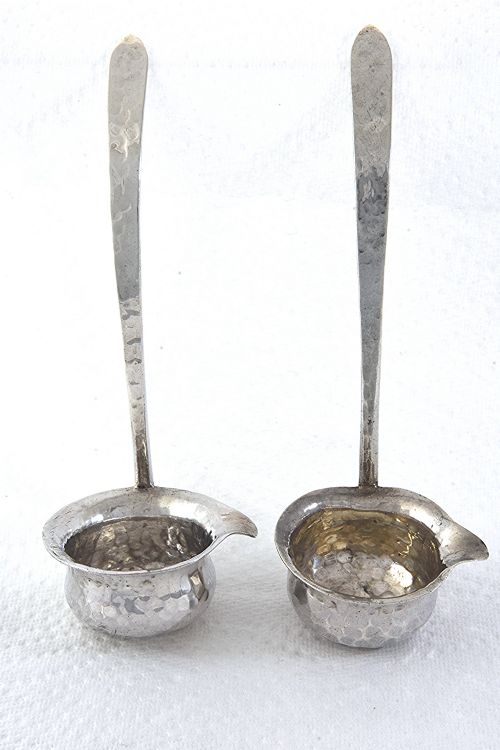
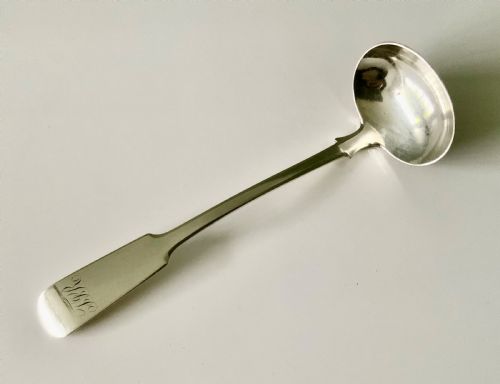
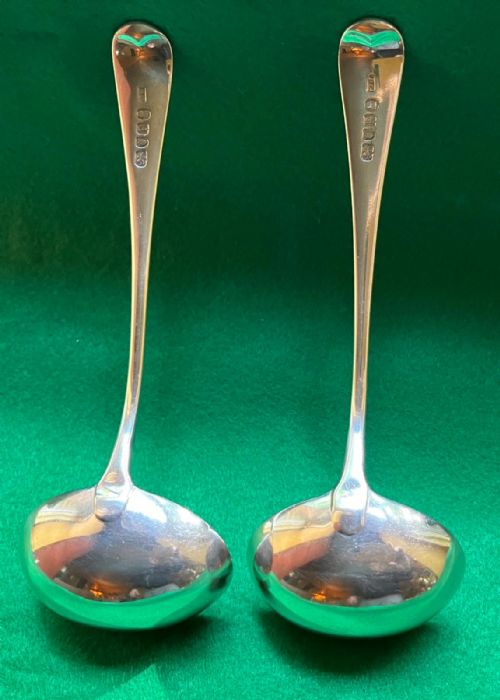
A georgian sauce ladle is a small serving utensil designed for gravies, creams, and sauces, typically encountered in sterling silver or silver with wooden and horn handles. The pieces appearing on this page span the georgian period, the 18th century, the 19th century, and the regency era, alongside later echoes.
Forms include single examples, pairs, and small collections of sauce, gravy, cream, and toddy ladles. Makers worked within regional traditions, producing items in English, Irish, and Scottish provincial centres.
Most examples align with classic georgian or provincial styles, though occasional pieces touch upon arts and crafts or later Victorian interpretations.
Distinguishing quality in silver ladles
Quality rests in the crispness of the maker's mark, the balance of the bowl to the stem, and the integrity of any organic handle material like horn or wood. Weight and gauge of the silver distinguish substantial dining pieces from lighter condiment spoons.
Provincial pieces often display distinct local touchmarks and hand-wrought eccentricities that set them apart from standard London workshop production. Crisp engraving and well-preserved bowl contours elevate individual pieces within the range.
Listings incorporate sterling silver, pewter, wood, and horn across georgian, regency, and Victorian periods.
Dixon And Son·Hester Bateman·William Ferguson·Bateman·Thomas Wilkes Barker·George Pearson
The Georgian Sauce Ladle Glossary
- Toddy ladle
- A small drinking vessel ladle featuring a deep bowl and a long twisted whalebone, horn, or wooden handle. These were used to ladle hot punch or toddy into glasses.
- Provincial silver
- Items made outside major assay towns like London, often bearing regional town marks and maker's initials. Scottish and Irish provincial pieces are notable examples.
- Hallmark
- An official stamp struck into precious metals to indicate the standard of purity, the maker, and the year of assay. English, Irish, and Scottish offices used distinct sequences.
- Sauce ladle
- A short-handled serving spoon with a rounded bowl, specifically sized for pouring liquid condiments from a boat or tureen. They frequently survive as pairs.
Georgian Sauce Ladle: Frequently Asked Questions
What is a georgian sauce ladle?
A georgian sauce ladle is a small silver or metal spoon with a rounded bowl, created during the georgian era for serving gravies and sauces at the dining table.
They are frequently found today as single items or matching pairs, often bearing clear hallmarks from London, Dublin, Edinburgh, or regional assay offices.
How do I spot provincial silver?
Provincial silver displays maker marks and town marks that originate outside the main assay offices of London, showing local craftsmanship.
Scottish and Irish provincial pieces often feature unique punch marks and regional design variations that distinguish them from standard capital production.
Are these ladles made of sterling silver?
Many of the pieces listed are struck in sterling silver, whilst others are formed from pewter, horn, wood, or base metal.
Hallmarks stamped directly onto the silver elements confirm the metal standard and provide clues to the manufacturing date and maker.