


Georgian Satirical Engraving
A georgian satirical engraving captures the wit, vice, and social commentary of the era through sharp visual humour.
Georgian Satirical Engraving
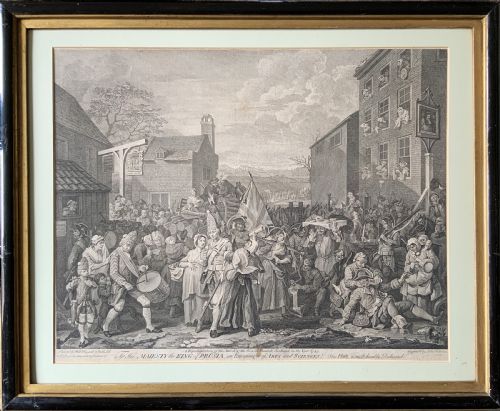
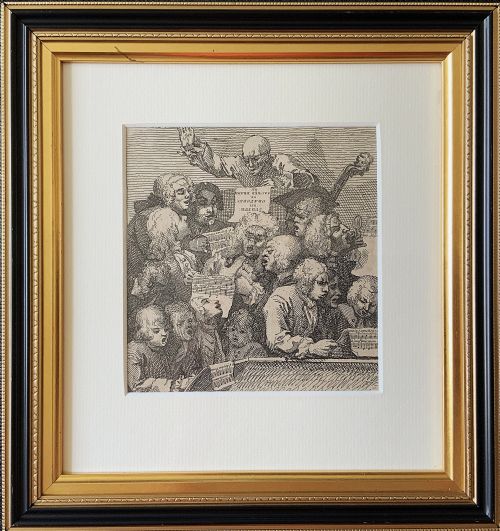
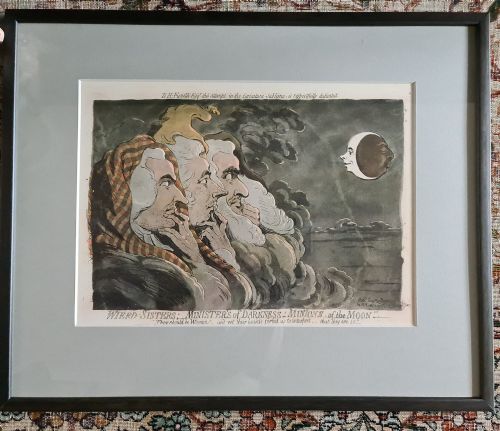
A georgian satirical engraving represents the sharp social and political commentary produced during the eighteenth century and the Regency period. These works use visual humour and caricature to critique contemporary manners, politics, and human folly. Collectors look for these prints to secure a primary window into the public life and popular culture of the period.
The selections available here range from individual plates to complete portfolios of copperplate engravings. Many examples are framed in traditional woods like maple, while others appear as hand-coloured sheets on paper. Buyers frequently encounter works after prominent satirists alongside original eighteenth-century printings.
Materials and Print Techniques
These works rely primarily on copperplate engravings and etchings executed on paper using carbon ink and watercolour. Master printmakers incised lines into copper plates before transferring the image to paper under high pressure. Subsequent impressions often received delicate hand colouring using watercolour pigments.
Framing materials reflect the period aesthetic, utilising maple wood and glass to protect the delicate paper sheets. The combination of engraved lines and applied ink creates the distinct visual texture characteristic of eighteenth-century graphic art.
The listings span the eighteenth century, the Georgian era, the Regency period, and extend into twentieth-century print editions.
Distinctions in Quality
Quality in these prints rests upon the clarity of the impression and the sharpness of the engraved lines. Early impressions taken directly from a fresh copper plate exhibit crisp detail, whereas later strikes show softened lines and wear. The presence of contemporary or later hand colouring also influences the visual impact of the sheet.
The survival of the paper sheet itself determines the desirability of the piece. Clean margins, minimal foxing, and original framing in materials like maple elevate the standing of an individual print or a complete portfolio.
William Hogarth·Luke Sullivan·E.L. Riepenhausen·Thomas Rowlandson·Henry William Bunbury
The Georgian Satirical Engraving Glossary
- Copperplate engraving
- A printmaking technique where an artist cuts an image directly into a copper plate with a burin. The resulting metal plate holds ink within the incised grooves to transfer the design onto paper.
- Etching
- A process where acid bites the lines into a metal plate covered with an acid-resistant ground. This method allows for greater freedom of line compared to direct engraving.
- Stipple engraving
- A method of dotting the plate to create tonal gradations and soft textures rather than continuous lines. It was frequently employed for portraits and genre scenes.
- Hand colouring
- The application of watercolour pigments by hand to a monochrome printed sheet. This painstaking process added vibrant colour to published satirical plates.
Georgian Satirical Engraving: Frequently Asked Questions
Are these prints original eighteenth-century impressions?
The inventory includes both original eighteenth-century printings and later nineteenth-century or twentieth-century editions. Each listing specifies the period of the actual paper and impression.
Buyers should examine the specific date assigned to the printing technique rather than relying solely on the birth dates of the artist.
How should I display and care for paper prints?
These works require framing behind glass to protect the paper from dust, atmospheric pollutants, and physical handling. Acid-free mounts prevent chemical damage to the delicate sheets over time.
Keep framed prints away from direct sunlight to prevent the fading of carbon ink and any applied watercolour pigments.
What is a complete portfolio?
A portfolio comprises a matched series of engravings published together, such as social satires or narrative sequences. These sets offer a comprehensive view of the artist's satirical commentary.
Keeping a series intact preserves the original context intended by the publisher and printmaker.
How do I identify hand colouring?
Hand colouring sits as a thin layer of pigment on top of the printed ink lines rather than being part of the printing process itself. Close inspection under magnification reveals the brushstrokes and pooling of watercolour.
This manual application means that individual sheets within the same edition can exhibit slight variations in tone and palette.