34,805  PAGES BROWSED TODAY PAGES TODAY • 120 ANTIQUES UPLOADED TODAYNEW ARRIVALS
GIFTS
120 ITEMS ADDED TODAY
Sort Order
Items Per Page
Antiques dealer?
Join as a Seller
Browse Categories
Sort order
Relevant Links
Items per page
sold SA787637
Sorry, but this item has been sold.
W.R. Harvey & Co. (Antiques) Ltd

W.R. Harvey & Co. (Antiques) Ltd

Sellingantiques Verified Since Sep 2016
Browse dealers 122 items
  • About Us
    Specialists in 17th-18th and early 19th century fine english furniture, art, clocks and other objets d'art
  • Trade Associations
    W.R. Harvey & Co. (Antiques) Ltd is a registered member of LAPADA 
Id #SA787637
SHARE
SAVE

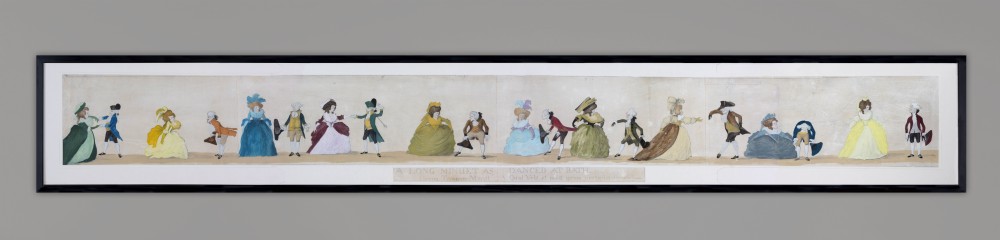
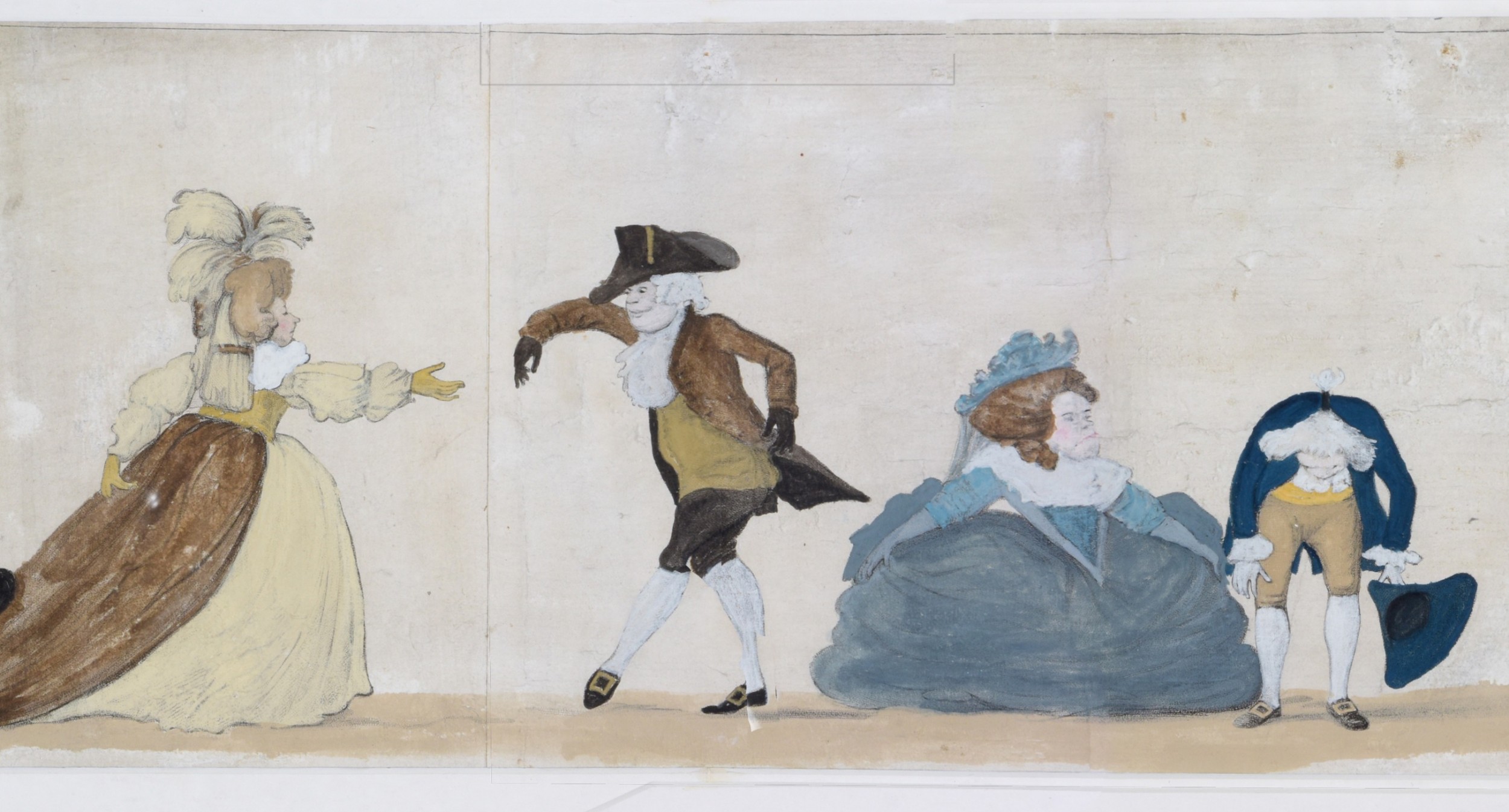
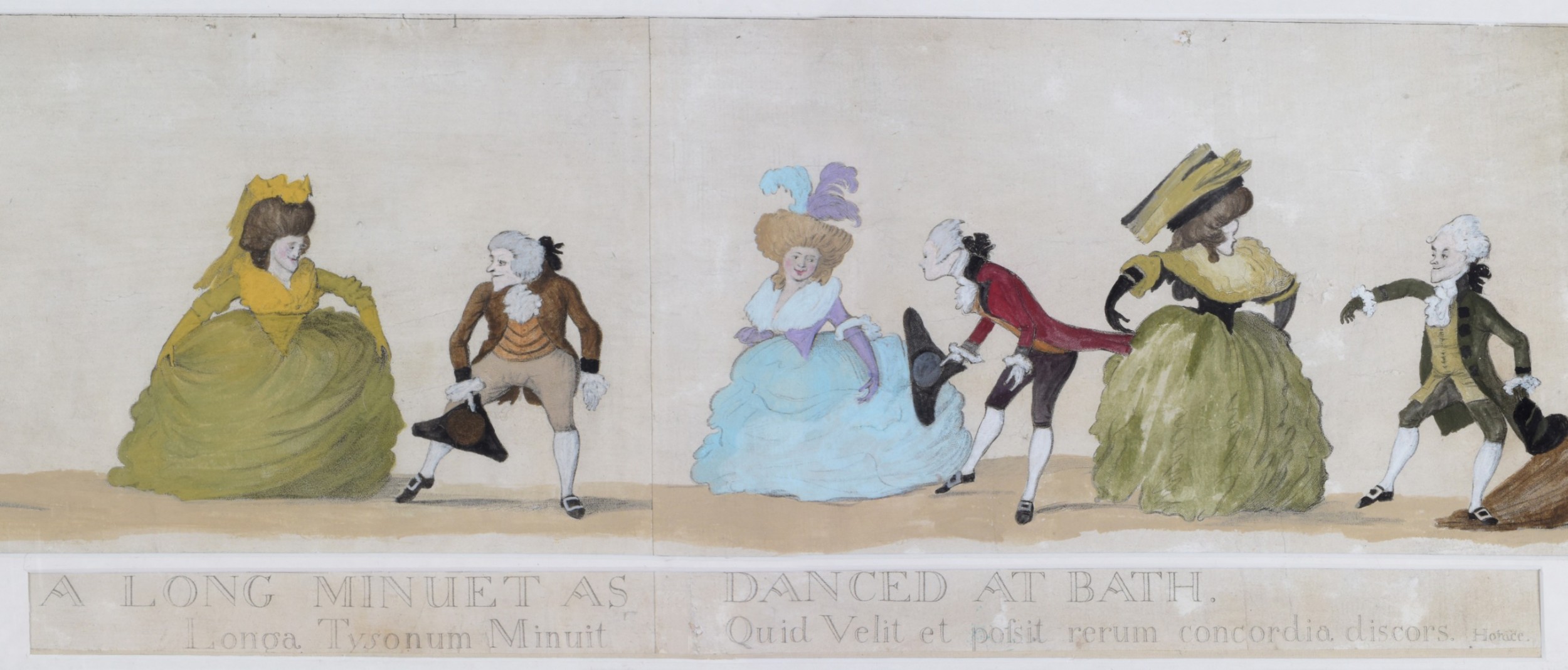
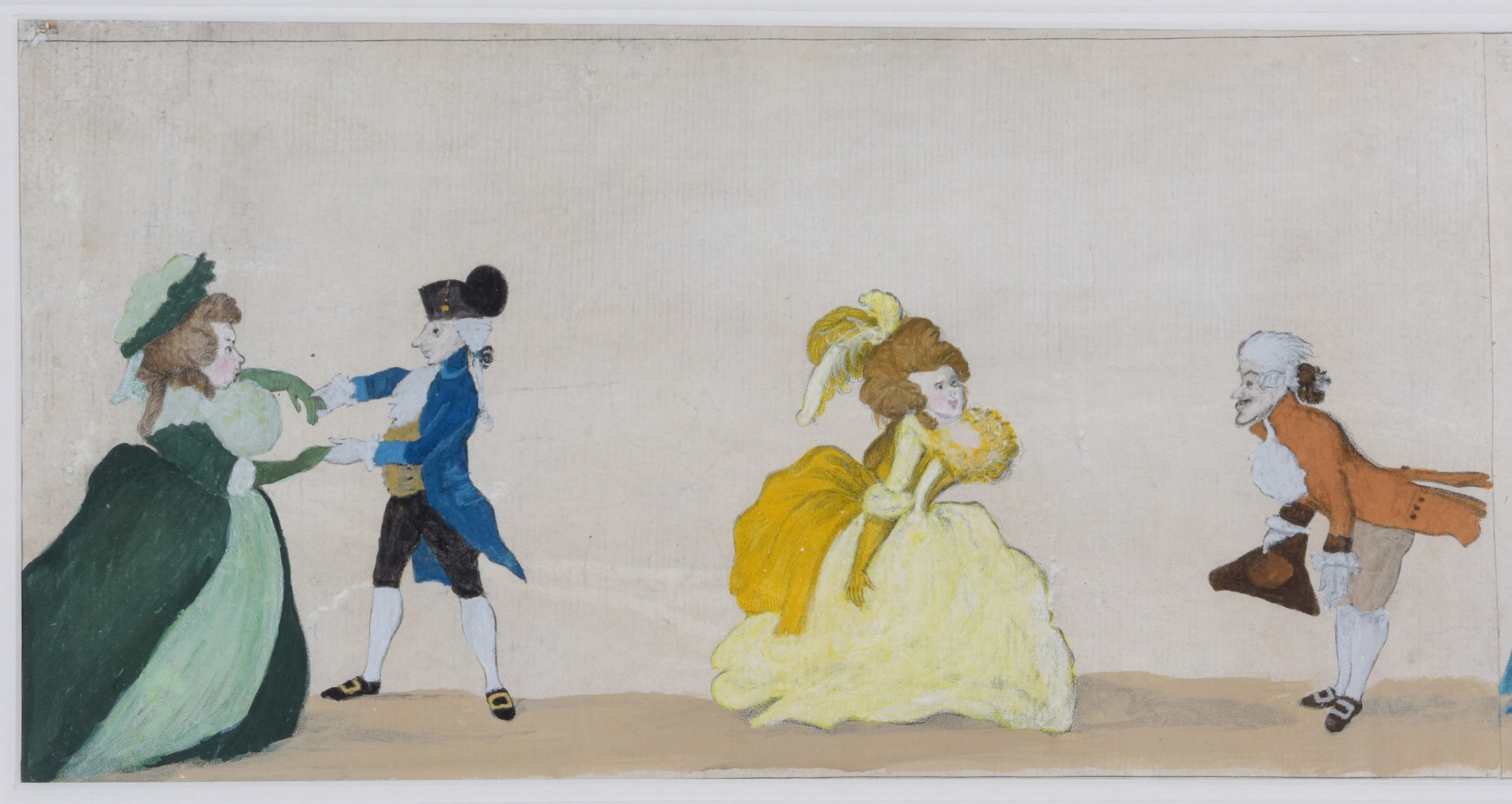
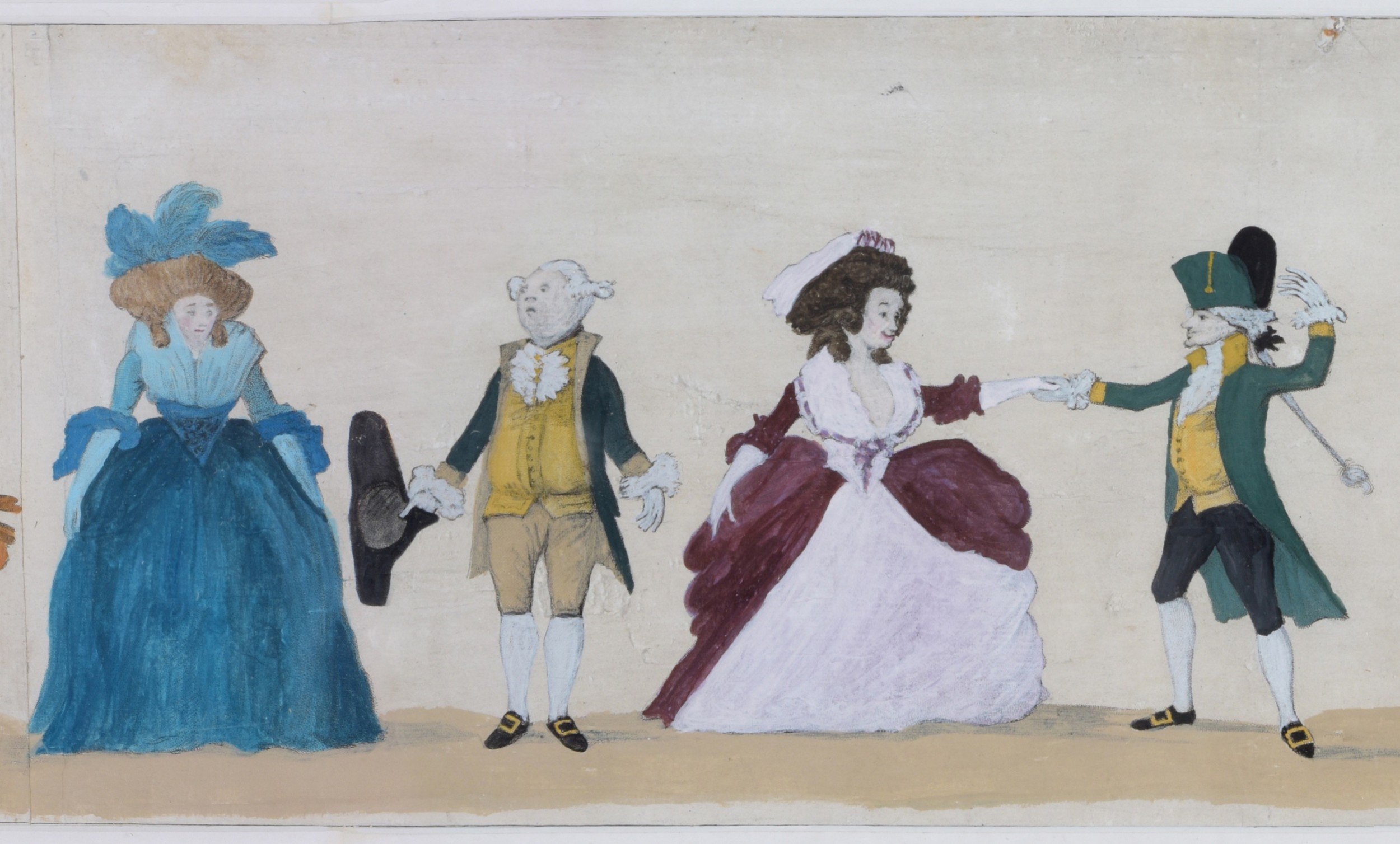
George III Period Long Engraving “A Long Minuet as Danced at Bath” by Henry William Bunbury

18th century
Sold 21 October 2026 · W.R. Harvey & Co. (Antiques) Ltd
This “George III Period Long Engraving “A Long Minuet as Danced at Bath” by Henry William Bunbury” found a buyer.

It was listed by W.R. Harvey & Co. (Antiques) Ltd. Sold pieces stay on Sellingantiques as a record of what has passed through, and the next one is rarely far away.

Description

Circa 1787

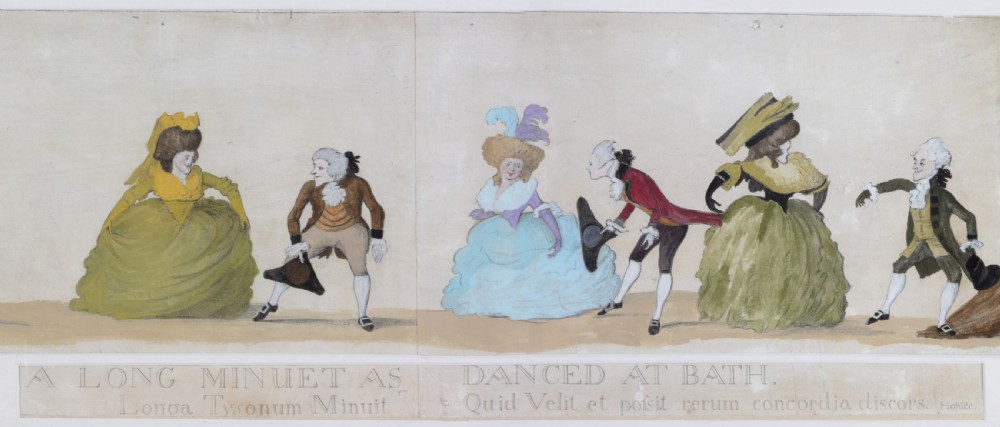
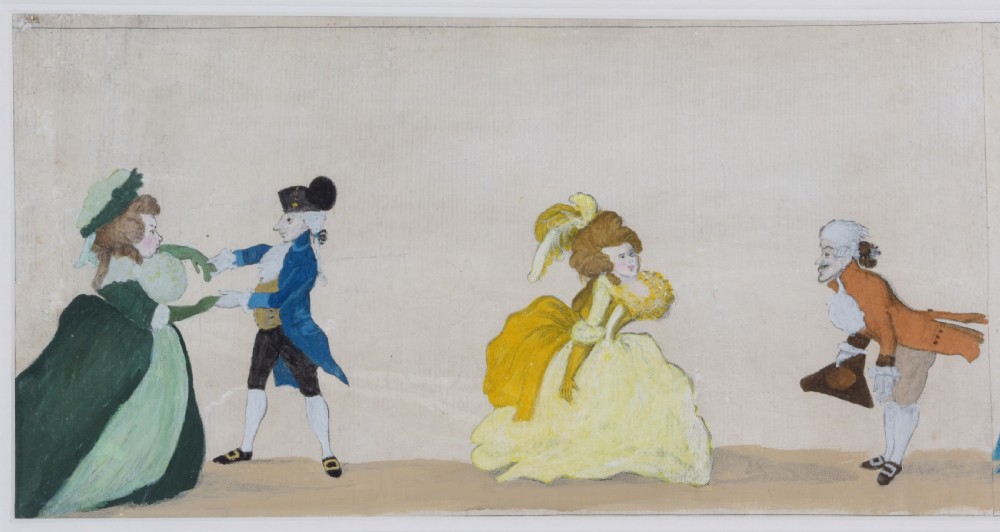
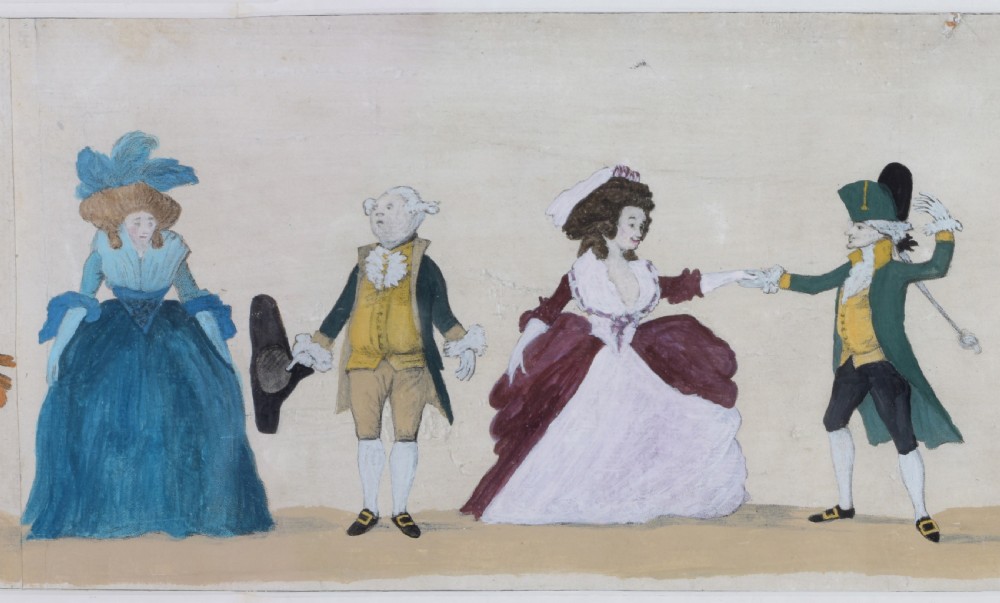
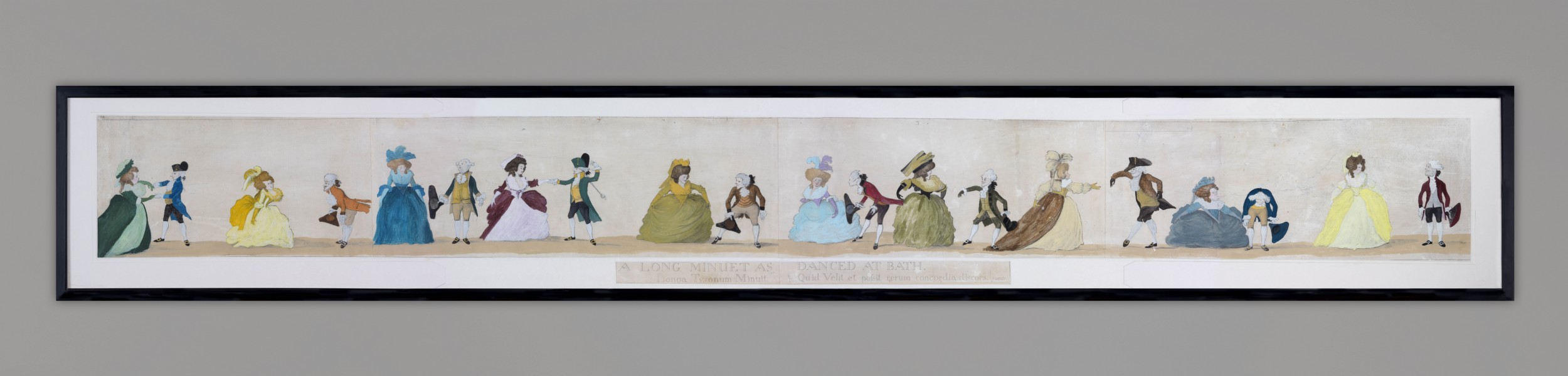
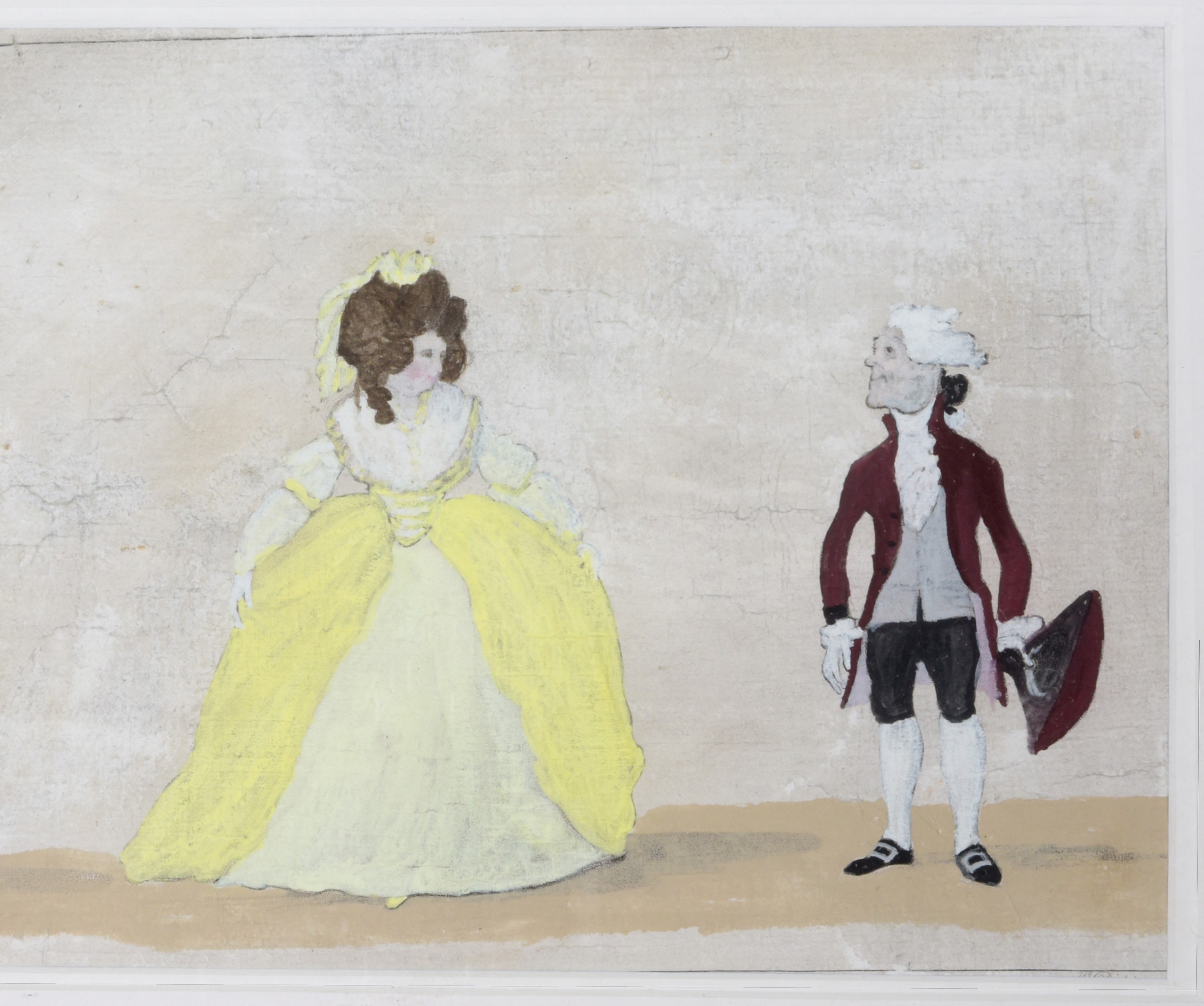
A truly rare George III Period Long Engraving, “A Long Minuet as Danced at Bath, Longa Tysonum Minuit velit & possit rerum Concordia Discors. Horace” by Henry William Bunbury (1750 – 1811) published by William Dickinson in 1787.

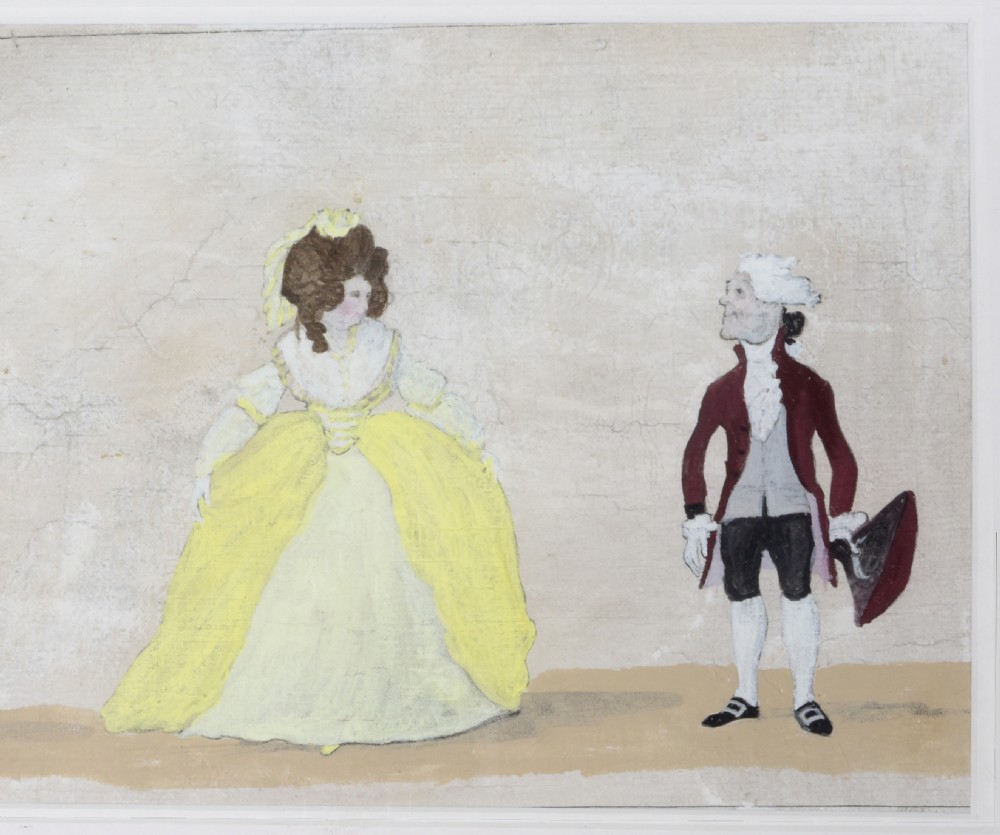
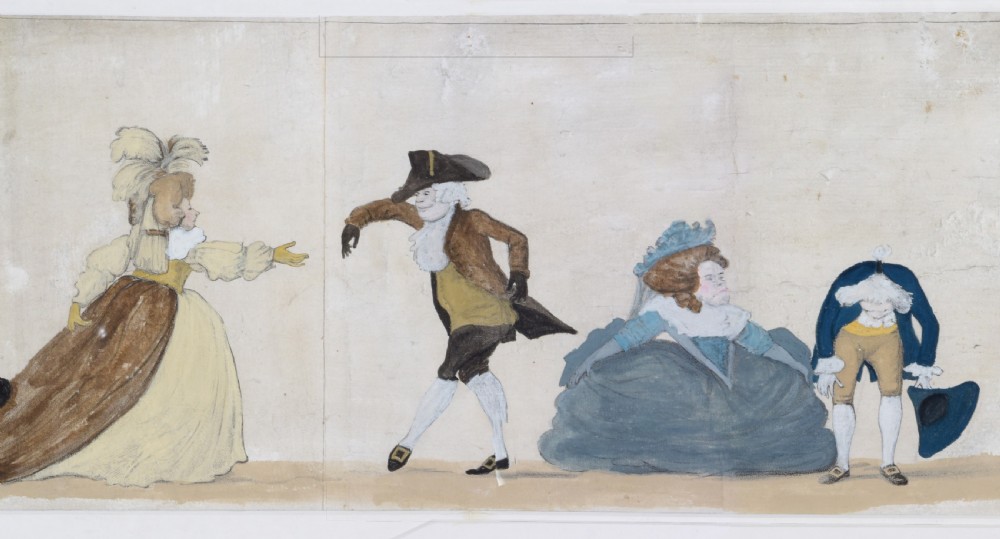
This is Bunbury’s most renowned and successful design with recent research revealing the figures are based on actual prominent people from the city of Bath at that time. They include the master of ceremonies, Richard Tyson, the ex-Prime Minister Lord North, his wife and daughter, the Mayor and Mayoress of Bath, some French financiers, Bunbury’s wife, Catherine (nee Horneck, a lady in waiting to the Queen) and the artist himself seemingly bowing to his audience.

H: 13” / 32.7cm, W: 88.4” / 224.5cm, D: 1.25” / 3cm

Price : £ 7,000-00p.

Henry William Bunbury (1750 – 7 May 1811) was an English caricaturist. The second son of Sir William Bunbury, 5th Baronet (see Bunbury baronets), of Mildenhall, Suffolk, he came of an old Norman family. He was educated at Westminster School and St Catharine’s College, Cambridge, and soon showed a talent for drawing, especially for humorous subjects.

His more serious efforts were no great success, but his caricatures are as famous as those of his contemporaries Thomas Rowlandson and James Gillray, good examples being his Country Club (1788), Barber’s Shop (1803) and A Long Story (1782). He was a popular character, and the friend of most of the notabilities of his day, whom he never offended by attempting political satire; his easy circumstances and social position (he was colonel of the West Suffolk Militia, and was appointed equerry to the Duke of York and Albany in 1787) allowed him leisure to practise his talents.

He married Catherine, eldest daughter of Kane William Horneck and his wife Hannah Muggles. Bunbury and Catherine’s son Henry succeeded to the baronetcy.

William Dickinson (1746–1823) was an English mezzotint engraver. He was born in London. Early in life he began to engrave in mezzotint, mostly caricatures and portraits after Robert Edge Pine, and in 1767 he was awarded a premium by the Society of Arts. In 1773 he commenced publishing his own works, and in 1778 went into partnership with Thomas Watson, who engraved in both stipple and mezzotint, and who died in 1781.

Dickinson appears to have been still carrying on the business of a printseller in 1791 in London, but he later moved to Paris, where he continued to engrave, making prints for the new regime and then for Napoleon; in 1814 Thomas Lawrence and Benjamin West visited him in Paris, the latter trying to persuade him to come back to London to engrave his paintings. He died in the summer of 1823 and his death was noted in the Gentleman’s Magazine in September of that year. One of his most famous engravings was of Henry William Bunbury‘s A Long Minuet as Danced at Bath, which he published in 1787 and which measured around seven feet (over two metres) in length.

Date of Manufacture

W.R. Harvey & Co. (Antiques) Ltd has dated this Georgian Panoramic Satire Engraving to the 18th Century.

Physical Dimensions
Height
32.7cm (12.87")
Width
224.5cm (88.39")
Depth
3cm (1.18")
Reference Numbers
Sellingantiques Reference
SA787637
Dealers Internal Reference
409L
Dealers Notes

We offer free delivery within the UK. For deliveries Worldwide, please contact us for a quote and we will get back to you within 12 hours.

If you would like to view the item in person, our showrooms are open Monday to Saturday 9.30 - 5.30 and by appointment on Sunday.

Any questions, please contact us as soon as possible. We will endeavour to get you an answer within 24 hours - and hopefully much quicker!

A long horizontal framed Georgian engraving depicting a satirical procession of figures dancing the minuet in colourful 18th-century attire.Detail view 1Detail view 2Detail view 3Detail view 4Detail view 5
SOLD21 OCT 26
1 / 6
18th Century · SA787637
George III Period Long Engraving “A Long Minuet as Danced at Bath” by Henry William Bunbury
Sorry, but this item has been sold.
Description
Circa 1787

A truly rare George III Period Long Engraving, “A Long Minuet as Danced at Bath, Longa Tysonum Minuit velit & possit rerum Concordia Discors. Horace” by Henry William Bunbury (1750 – 1811) published by William Dickinson in 1787.

This is Bunbury’s most renowned and successful design with recent research revealing the figures are based on actual prominent people from the city of Bath at that time. They include the master of ceremonies, Richard Tyson, the ex-Prime Minister Lord North, his wife and daughter, the Mayor and Mayoress of Bath, some French financiers, Bunbury’s wife, Catherine (nee Horneck, a lady in waiting to the Queen) and the artist himself seemingly bowing to his audience.

H: 13” / 32.7cm, W: 88.4” / 224.5cm, D: 1.25” / 3cm

Price : £ 7,000-00p.

Henry William Bunbury (1750 – 7 May 1811) was an English caricaturist. The second son of Sir William Bunbury, 5th Baronet (see Bunbury baronets), of Mildenhall, Suffolk, he came of an old Norman family. He was educated at Westminster School and St Catharine’s College, Cambridge, and soon showed a talent for drawing, especially for humorous subjects.

His more serious efforts were no great success, but his caricatures are as famous as those of his contemporaries Thomas Rowlandson and James Gillray, good examples being his Country Club (1788), Barber’s Shop (1803) and A Long Story (1782). He was a popular character, and the friend of most of the notabilities of his day, whom he never offended by attempting political satire; his easy circumstances and social position (he was colonel of the West Suffolk Militia, and was appointed equerry to the Duke of York and Albany in 1787) allowed him leisure to practise his talents.

He married Catherine, eldest daughter of Kane William Horneck and his wife Hannah Muggles. Bunbury and Catherine’s son Henry succeeded to the baronetcy.

William Dickinson (1746–1823) was an English mezzotint engraver. He was born in London. Early in life he began to engrave in mezzotint, mostly caricatures and portraits after Robert Edge Pine, and in 1767 he was awarded a premium by the Society of Arts. In 1773 he commenced publishing his own works, and in 1778 went into partnership with Thomas Watson, who engraved in both stipple and mezzotint, and who died in 1781.

Dickinson appears to have been still carrying on the business of a printseller in 1791 in London, but he later moved to Paris, where he continued to engrave, making prints for the new regime and then for Napoleon; in 1814 Thomas Lawrence and Benjamin West visited him in Paris, the latter trying to persuade him to come back to London to engrave his paintings. He died in the summer of 1823 and his death was noted in the Gentleman’s Magazine in September of that year. One of his most famous engravings was of Henry William Bunbury‘s A Long Minuet as Danced at Bath, which he published in 1787 and which measured around seven feet (over two metres) in length.
Date18th Century
Height32.7cm (12.87")
Width224.5cm (88.39")
Depth3cm (1.18")
ReferenceSA787637
Dealer's reference409L
W.R. Harvey & Co. (Antiques) Ltd
W.R. Harvey & Co. (Antiques) LtdSellingantiques verified since Sep 2016

Specialists in 17th-18th and early 19th century fine english furniture, art, clocks and other objets d'art

Member of LAPADA

SHARE
SAVE
Archive I A long horizontal framed Georgian engraving depicting a satirical procession of figures dancing the minuet in colourful 18th-century attire. SOLD21 OCT 26

George III Period Long Engraving “A Long Minuet as Danced at Bath” by Henry William Bunbury

Archive II A long horizontal framed Georgian engraving depicting a satirical procession of figures dancing the minuet in colourful 18th-century attire. View II
Archive III A long horizontal framed Georgian engraving depicting a satirical procession of figures dancing the minuet in colourful 18th-century attire. View III
Archive IV A long horizontal framed Georgian engraving depicting a satirical procession of figures dancing the minuet in colourful 18th-century attire. View IV
Archive V A long horizontal framed Georgian engraving depicting a satirical procession of figures dancing the minuet in colourful 18th-century attire. View V
Archive VI A long horizontal framed Georgian engraving depicting a satirical procession of figures dancing the minuet in colourful 18th-century attire. View VI
Enlarged Archival View
Telephone 01993 706501
Location
86 Corn Street
Witney
Oxfordshire
OX28 6BU
United Kingdom
Verified Since Sep 2016
Items For Sale 122
Items Sold 549
W.R. Harvey & Co. (Antiques) Ltd
Verified Since Sep 2016
View Dealer Info
Location: 86 Corn Street, Witney, Oxfordshire, OX28 6BU, United Kingdom
Verified
Sep 2016
For Sale
122
Sold
549
A long horizontal framed Georgian engraving depicting a satirical procession of figures dancing the minuet in colourful 18th-century attire.
George III Period Long Engraving “A Long Minuet as Danced at Bath” by Henry William Bunbury
Ref: SA787637
A long horizontal framed Georgian engraving depicting a satirical procession of figures dancing the minuet in colourful 18th-century attire.
Detail View 1
Detail View 2
Detail View 3
Detail View 4
Detail View 5
Archival Detail
Every single antique dealer on our platform is individually approved by our internal team. We verify their professional trade history, ethical standards, and photographic quality to ensure a secure, high-standard buying environment. Upon joining, every dealer agrees to a strict 9-point code of conduct. While issues can occasionally arise, our dealers typically resolve them swiftly and directly with the buyer. In fact, since our founding in 2002, Sellingantiques has only had to step in to help resolve an issue on roughly five occasions—a true testament to the quality of our dealers and their dedication to your happiness.
Our dealers are highly experienced in packing and shipping fragile, high-value antiques. Because you are in direct contact with the dealer, you will be able to easily go through all available shipping and insurance options together to ensure your item arrives safely.
Antiques are the ultimate green purchase. By choosing historical pieces over newly manufactured goods, you completely eliminate the carbon footprint of modern mass production while preserving exceptional, timeless craftsmanship.
Written by Sellingantiques from the dealer’s photographs and listing
  • ObjectPrints & Engravings
  • Period18th century
  • StyleGeorgian
  • MaterialPaper, Wood, Glass
  • ColourMulticolour
  • MotifsPanoramic format, Satirical figures, 18th-century costumes, Hand-coloured detail
  • SizeH 32.7 cm (13 in) x W 224.5 cm (88 in) x D 3 cm (1 in)

This George III period panoramic engraving, titled “A Long Minuet as Danced at Bath,” originates from the 18th century and is designed in a Georgian style. The work is presented within a plain black wooden frame under protective glass, enclosing a paper sheet bearing hand-coloured details in shades of blue, green, yellow, pink, and brown. The subject matter comprises a satirical procession of miniature human figures wearing 18th-century costumes, including voluminous skirts, tricorn hats, and tailcoats, marching across a pale background with printed descriptive text situated along the lower margin. Measuring 32.7 cm high, 224.5 cm wide, and 3 cm deep, the piece commands a substantial horizontal wall space. In a modern interior, this large decorative print is suited for placement above a sideboard in a dining room or hallway, contributing an English country house aesthetic to domestic spaces. The piece functions as a focal point in a traditional scheme, integrating with historical architectural details and period furniture collections.

Produced during the late 18th century, George III satirical engravings depicted contemporary social customs, fashion, and politics with humorous exaggeration. These prints were popularised by artists such as Henry William Bunbury to entertain the British public.

Eighteenth-century panoramic prints were typically created using etched or engraved copper plates printed onto laid paper, often joined horizontally to create an elongated frieze format, and finished with hand-applied watercolour washes.

Authentic Georgian prints feature distinct plate marks around the image border, visible chain lines and watermarks within hand-made paper, and soft hand-applied colour rather than modern mechanical dot-matrix printing.

Panoramic artwork creates visual balance when hung above a low sideboard, console table, or along a hallway wall, providing an architectural focal point in both traditional and contemporary settings.

Preserve antique paper artwork by displaying it behind UV-protective glass, utilising acid-free mounting boards, and maintaining a stable environment away from direct sunlight, dampness, and heat sources.
items
Add keywords to the filter
Price
£100
£250000
Era
Period
Style
Material
Origin
Stock Location
Recently Added
Online Payments
Categories