
Georgian Sarcophagus Box
A georgian sarcophagus box brings monumental classical form to tea caddies and wine coolers, prized for rich timber grains and architectural presence.
Georgian Sarcophagus Box
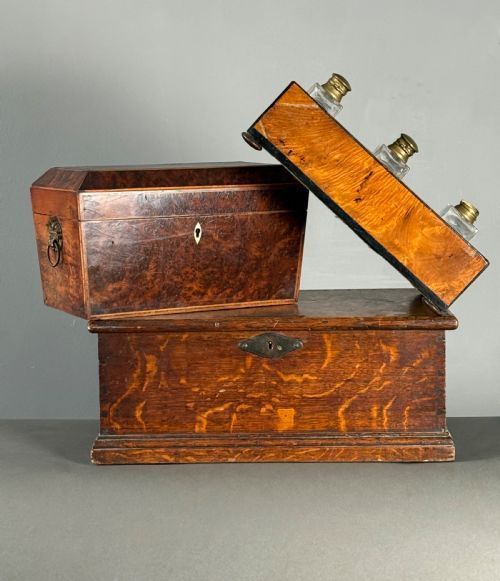
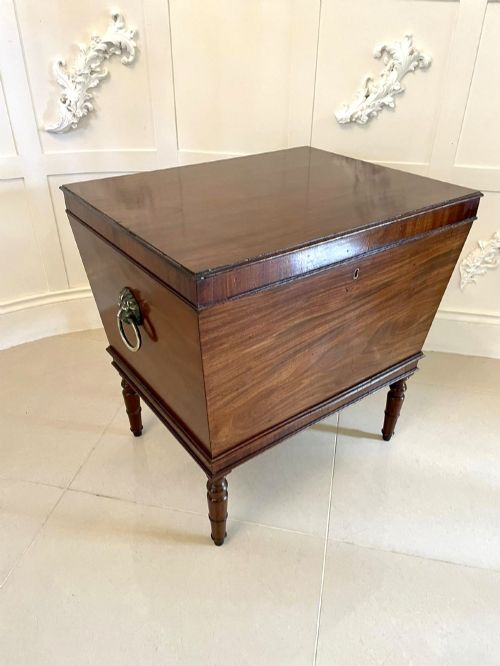
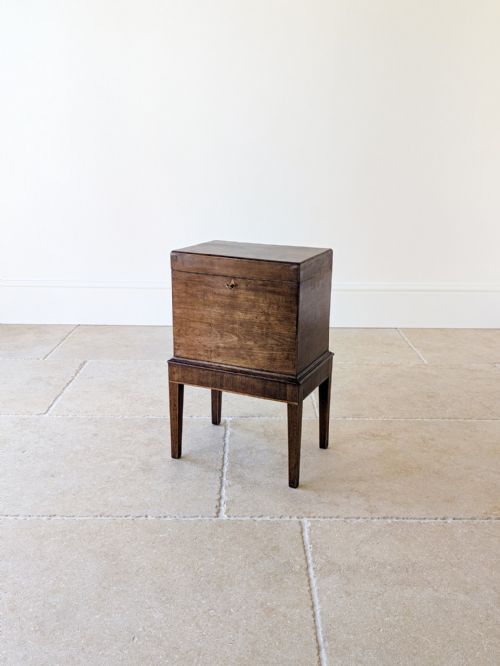
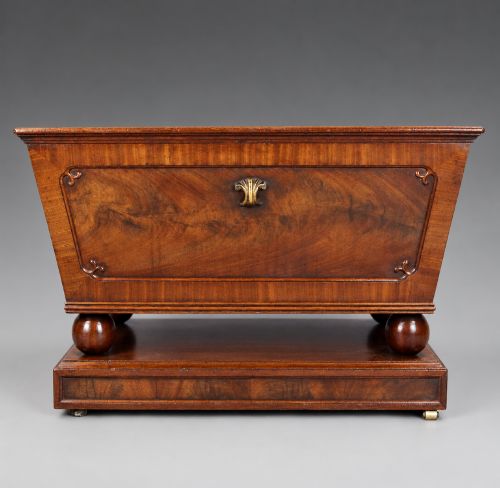
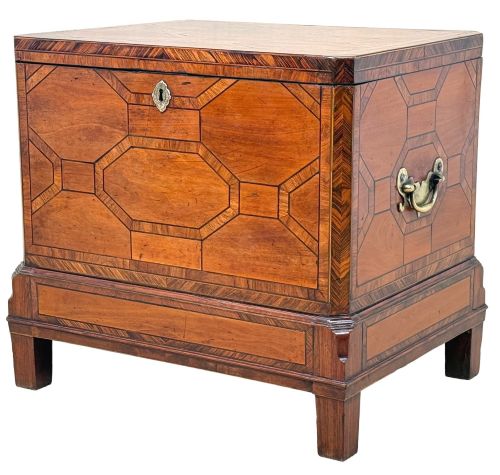
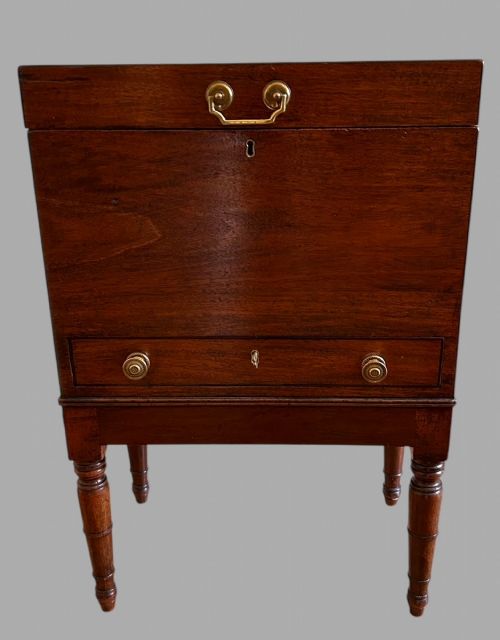
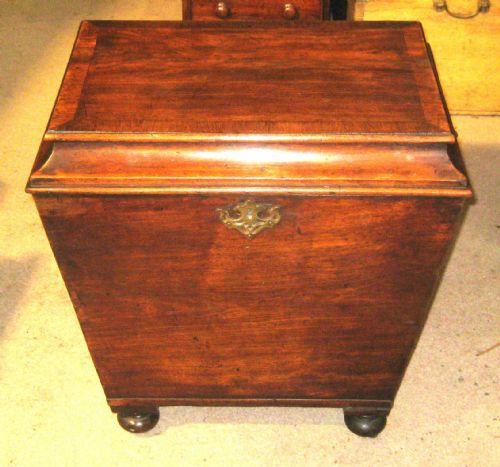
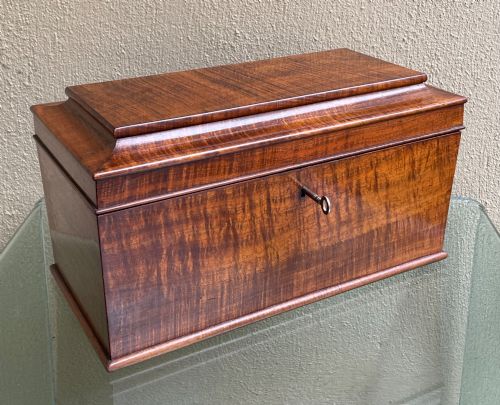
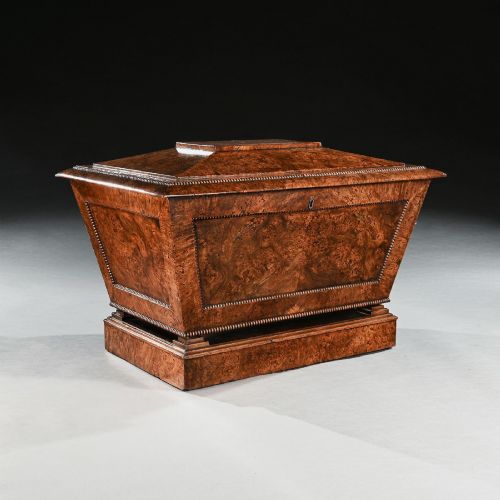
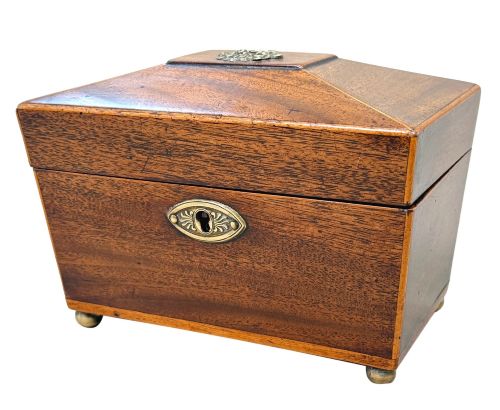
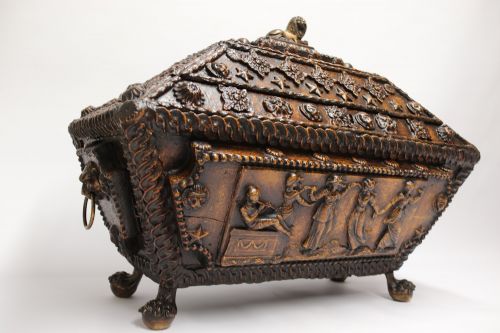
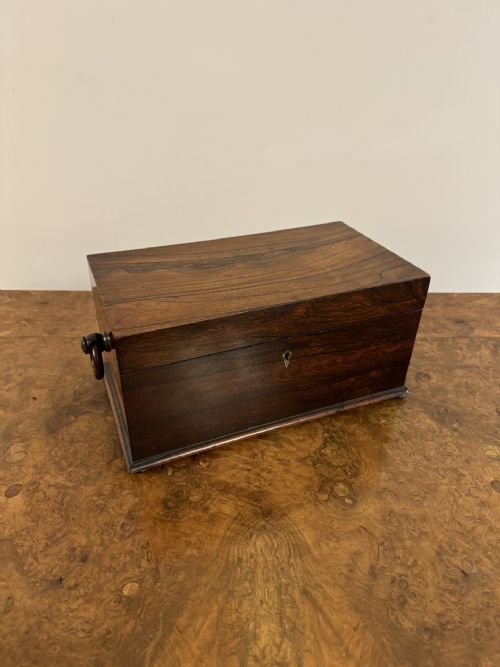
When buyers search for a georgian sarcophagus box, they encounter functional lidded containers shaped like classical stone tombs, spanning the Georgian, George III, George IV, and Regency periods. The forms on this page divide chiefly into wine coolers, cellarettes, tea caddies, and jewellery boxes, executed in mahogany, rosewood, and satinwood.
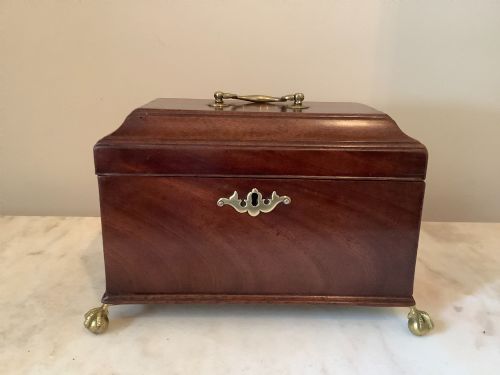
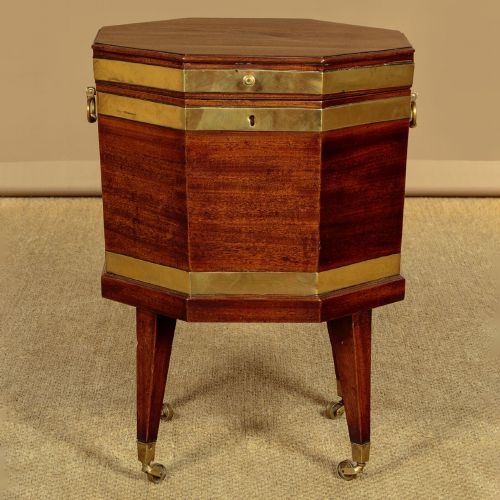
The tea caddy version typically sits on small feet, whilst wine coolers and cellarettes appear in larger proportions, occasionally featuring lead liners or brass mounts. These pieces originate from English workshops spanning the eighteenth and nineteenth centuries, reflecting neoclassical taste applied to everyday domestic storage.
Materials and Technique
Cabinetmakers utilised dense timbers such as mahogany, rosewood, and pollard oak, often selecting flame veneers or burr yew to create striking surface patterns. Construction relied on precise joinery, sometimes enhanced by brass inlay, boxwood stringing, or ormolu mounts.
Details such as lion mask handles, bone or mother of pearl inlay, and leather bindings appear across the selection. Interiors frequently preserve compartments for tea canisters, glass mixing bowls, or fitted trays lined with velvet or paper.
The selection includes pieces spanning the eighteenth century through to the Victorian era, utilising mahogany, rosewood, tortoise shell, and satinwood.
The Measure of Quality
Quality rests in the choice of timber and the restraint of its handling, where finely figured flame mahogany or pollard oak exhibits deep natural lustre and patination. The crispness of carved gesso, the precision of brass inlay, and the integration of original fittings like lead liners or working locks elevate an example.
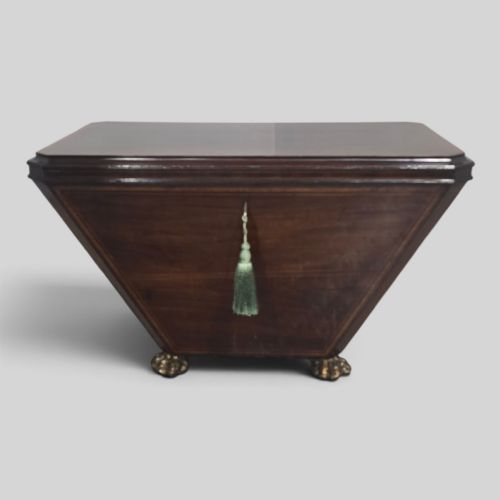
Lesser pieces rely on plain timber without distinctive grain or show heavy alterations to the interior compartments. The balance of the classical proportions, from the domed lid down to the paw or claw and ball feet, dictates the visual success of the piece.
Edwards and Roberts
The Georgian Sarcophagus Box Glossary
- Cellarette
- A freestanding or floor-standing container designed to hold bottles of wine or spirits near the dining table. They frequently mirror the architectural lines of a sarcophagus during the Regency era.
- Teapoy
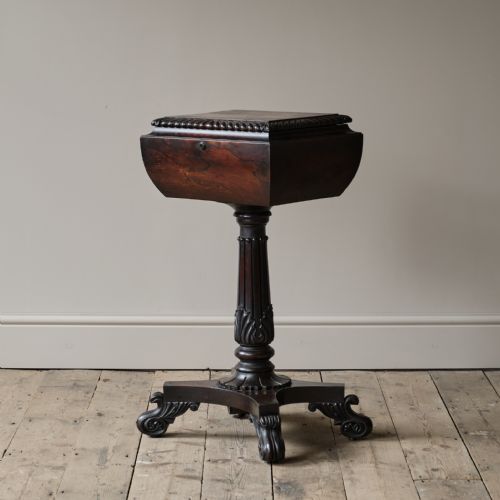
- A small stand or large table-top box housing tea caddies and mixing bowls. They often stand on a central pillar with tripod or platform feet.
- Satinwood
- A yellowish exotic timber valued for its fine grain and luminous quality. It appears frequently in bordered panels on eighteenth-century boxes.
- Pollard Oak
- Timber taken from oak trees that were pollarded, producing a tightly clustered knot formation in the grain. This creates a dense, highly decorative mottled pattern.
- Gesso
- A plaster-like mixture applied to a wooden base and carved or moulded. It provides a smooth surface for gilding or paint in neoclassical decorative schemes.
Georgian Sarcophagus Box: Frequently Asked Questions
What were georgian sarcophagus boxes used for?
These lidded containers served practical domestic storage functions in elite households, specifically keeping precious dry tea leaves secure or chilling wine bottles for the dining room. Smaller variations functioned as sewing caskets, writing slopes, or velvet-lined jewellery boxes.
Inside, tea caddies often contained lidded canisters and glass bowls for blending, while cellarettes utilised lead linings to hold ice and bottles. Their monumental architectural shapes allowed them to double as sculptural ornaments on sideboards and tables.
How do I tell a tea caddy from a cellarette?
Tea caddies are compact table boxes designed to hold loose tea leaves, featuring internal compartments and small lids. Cellarettes are substantially larger wine coolers meant to rest on the floor, often fitted with heavy brass handles or standing on paw feet.
While both share the characteristic tapered sarcophagus profile, a cellarette usually contains a lead-lined interior or bottle dividers. Tea caddies rely on fine wood veneers and delicate escutcheons suited for surface placement.
Where should I place a sarcophagus box at home?
These boxes suit placement on sideboards, side tables, or chests of drawers where their sculptural wood grain can be appreciated. Larger cellarettes work effectively as freestanding floor pieces in a dining room or study.
Keep them away from direct sunlight and heat sources to prevent the exotic mahogany or rosewood veneers from drying or splitting. The flat tops also allow small decorative objects to rest safely on the lid.
How do I distinguish Regency pieces from earlier Georgian ones?
Regency pieces often incorporate bolder classical motifs such as brass inlay, ormolu mounts, and carved paw feet influenced by Thomas Hope. The forms lean into heavier architectural references inspired by ancient Roman sarcophagi.
Earlier eighteenth-century examples rely more on the purity of the timber grain, subtle stringing, and restrained bracket feet. Proportions during the George II and George III periods tend toward understated elegance before Regency ornamentation took hold.