




Georgian Royal Portraits
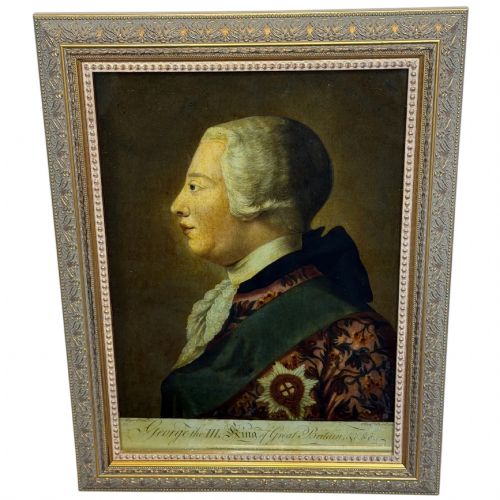
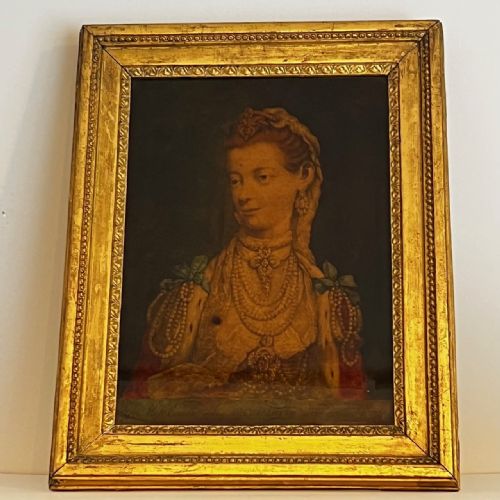
Georgian royal portraits capture monarchs and members of the court through oil painting, mezzotint and reverse glass printing.
Georgian Royal Portraits
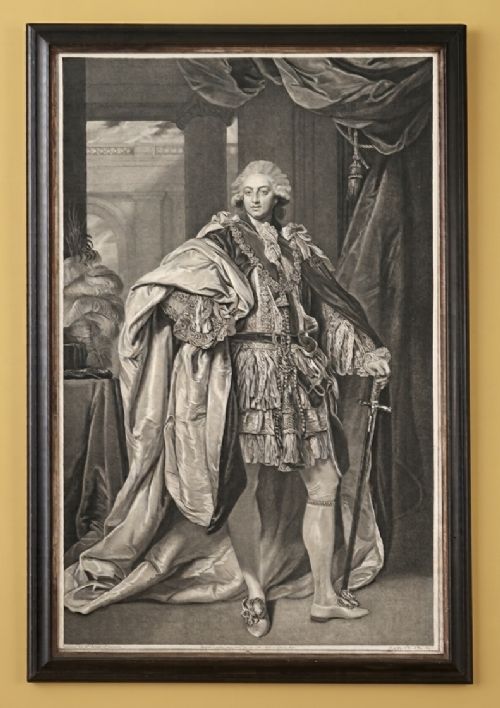
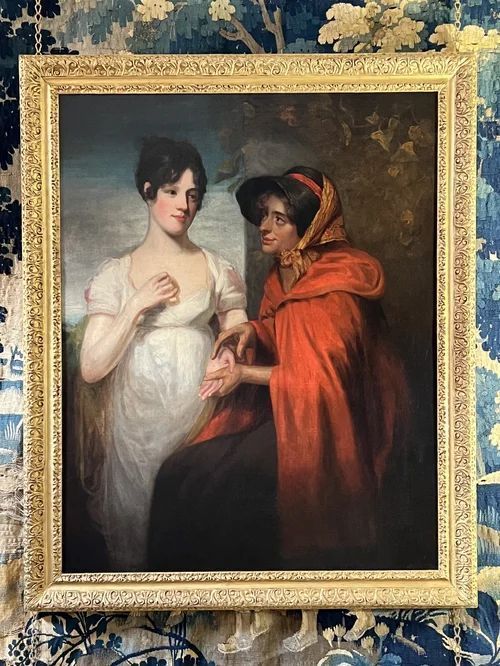
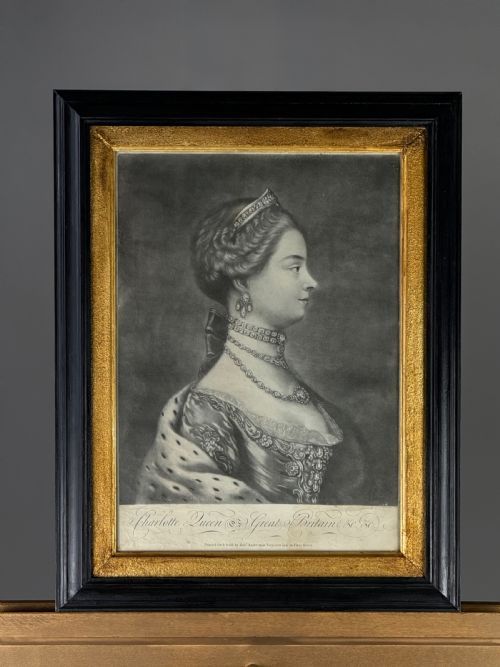
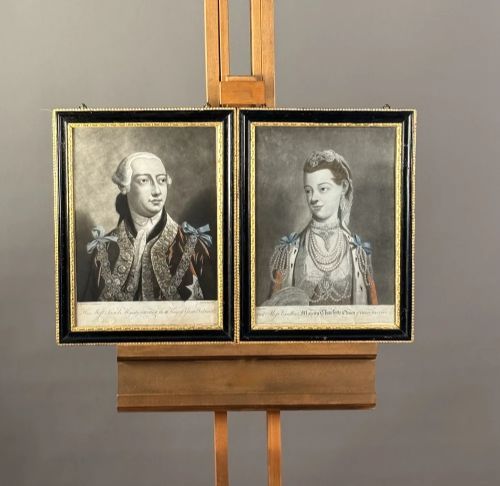
Georgian royal portraits encompass framed prints, oil paintings on canvas and glass prints representing figures from the eighteenth and nineteenth centuries. These works include depictions of monarchs such as King George III and Queen Charlotte alongside princes and princesses.
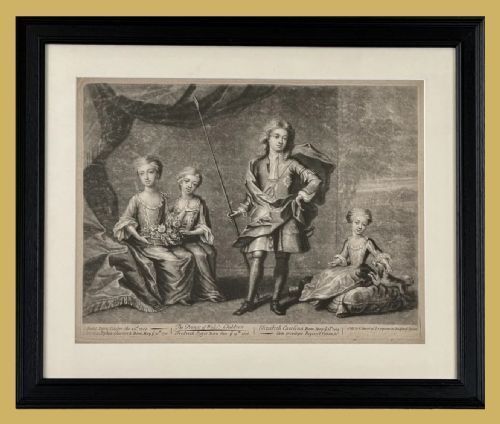
Buyers will encounter mezzotints after painters like Reynolds and Frye, alongside enamel miniatures and silhouette conversation pieces. The selection spans the Georgian and Regency eras, extending into later commemorative double portraits on canvas.
Many items record specific members of the royal family and associated military figures, preserved within period wood frames and glass panels. The category blends fine art paintings with historical prints of royal and dignitary subjects.
How they were made
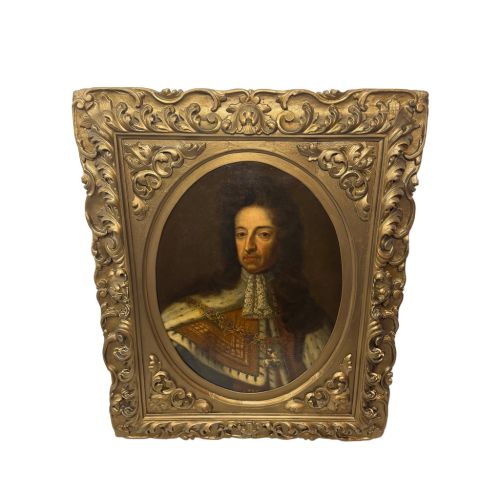
Artists and printmakers utilised oil paint on canvas, paper for engravings and mezzotints, and specialised glass for reverse painted and printed portraits. Gold leaf often appears on frames enclosing these works.
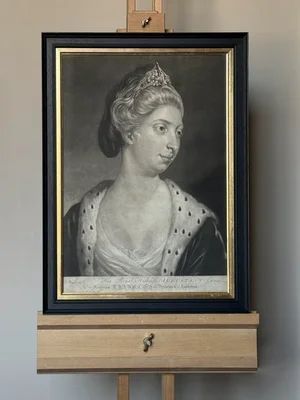
Mezzotint engraving involved roughening a copper plate to produce rich tonal gradations, frequently published in London. Reverse glass prints required applying the image directly to the glass substrate, often finished with backings of wood.
The inventory records pieces dated from the eighteenth century through to the 1920s, encompassing Georgian and Regency styles.
What varies in quality
Quality rests upon the precision of the engraving, the subtlety of the artist's brushwork in oil on canvas, and the clarity of the likeness. Early impressions of mezzotints preserve greater detail than later printings from worn plates.
The preservation of the original glass, enamel or wood frame contributes significantly to the integrity of the piece. Works retaining contemporary inscriptions or specific historical attribution carry greater documentary weight.
John Smith·G. Kneller·Henry Bone·Edward·Purcell·Reynolds·James McArdell·Jeremiah Meyer·Thomas Frye·Richard Purcell·Henry Pierce Bone·William Owen·Kershaw Schofield·Edward Bird·Henry Walton·John Russell·Samuel Lane·George Dawe
The Georgian Royal Portraits Glossary
- Mezzotint
- A printmaking process of the tonal engraving method, allowing smooth gradations between light and shade. This technique was frequently employed for eighteenth-century royal portraiture.
- Reverse glass painting
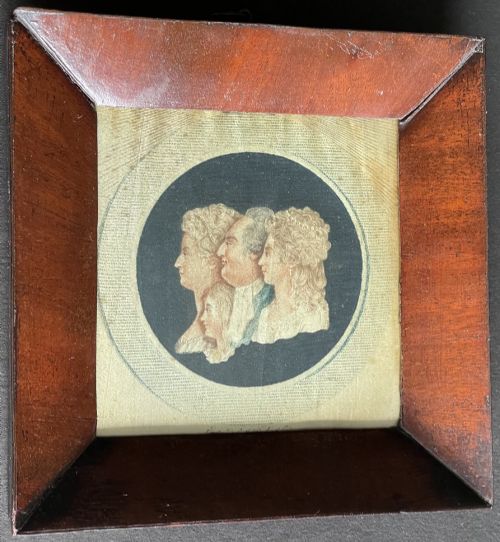
- An artwork applied to the back of a glass panel, viewed from the unpainted front. This method gives the surface a lustrous sheen.
- Enamel portrait
- A miniature painting fired onto a metal base, creating a durable glossy finish. These delicate works were often mounted in protective frames.
- Allegorical print
- An artwork using symbolic figures and motifs to convey political or moral commentary. Such prints frequently address Georgian events and monarchy.
- Silhouette
- A solid black profile portrait, often cut from paper or painted on card. These pieces occasionally record conversation pieces within royal galleries.
Georgian Royal Portraits: Frequently Asked Questions
What periods do these royal portraits cover?
The listings span the eighteenth and nineteenth centuries, concentrating on the Georgian and Regency eras. Additional pieces extend into later commemorative formats from the early twentieth century.
Buyers will find items specifically dated to the reigns of various monarchs, reflecting evolving artistic styles from Baroque to Neoclassical.
How were reverse glass prints displayed?
Reverse glass prints were mounted in frames to protect the delicate painted or printed surface behind the glass. They hung in domestic and public spaces as decorative and patriotic wall art.
The glossy medium required careful placement away from direct moisture to preserve the underlying pigments.
What is the difference between an oil painting and a mezzotint?
An oil painting is a unique work created with pigmented oil on canvas by an artist's hand. A mezzotint is an engraved print produced from a copper plate, allowing multiple impressions of a royal likeness to be circulated.
Both forms served to commemorate monarchs, though paintings offered greater scale and colour variation.
How do I identify a Regency portrait?
Regency portraits often display the specific clothing, hairstyles and framing conventions characteristic of the early nineteenth century. Signatures, inscriptions or uniform details frequently point to this precise era.
Enamel miniatures and political allegorical prints from this timeframe also reflect the distinct aesthetic of the period.