



Georgian Rope Twist Chairs
Georgian rope twist chairs bring sculptural carved backs to the dining table, combining classic proportion with distinctive carved detail.
Georgian Rope Twist Chairs
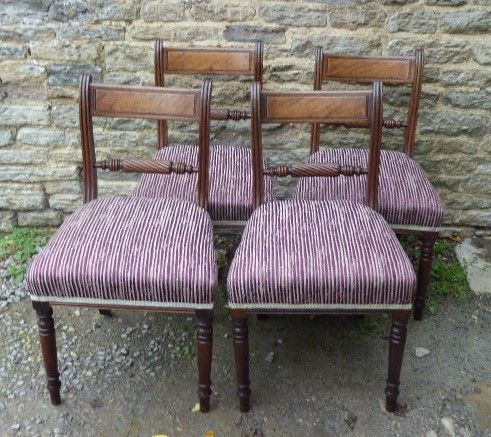
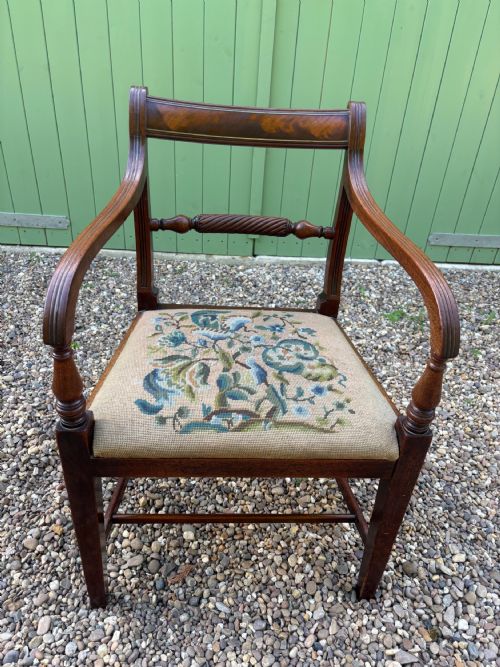
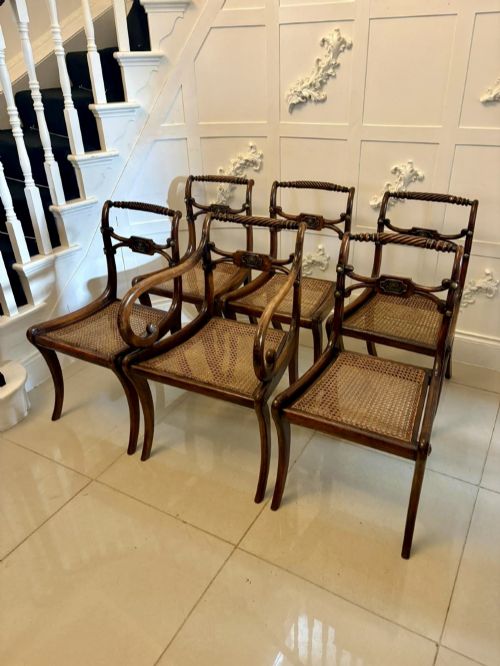
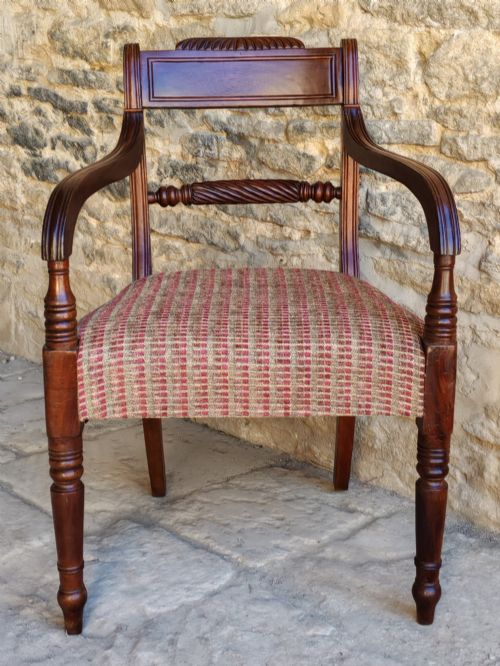
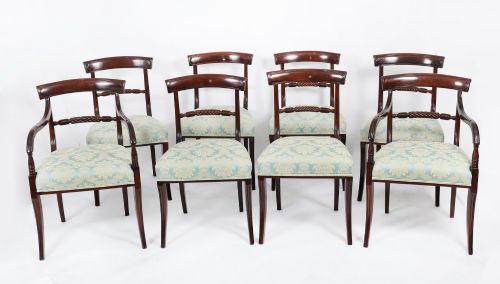
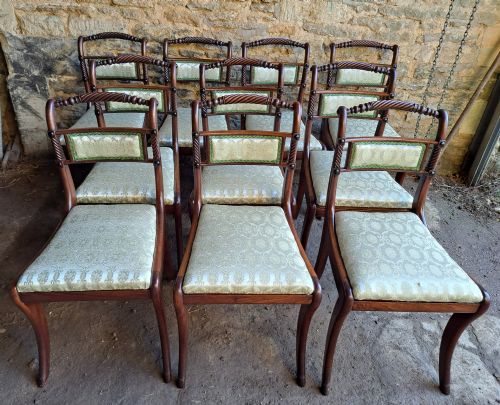
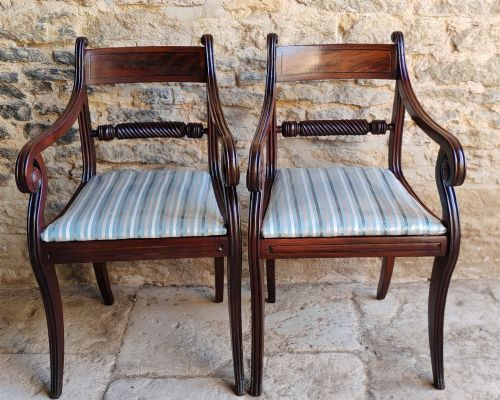
Georgian rope twist chairs encompass dining chairs, carvers, armchairs, and side chairs spanning the Georgian, Regency, and nineteenth-century periods. These seat forms appear singly, in pairs, and in larger sets of four, six, eight, or ten.
The defining characteristic is the carved rope back or rope twist rail, which translates nautical motifs into refined woodwork. Such seating frequently survives in matched sets suitable for formal dining rooms.
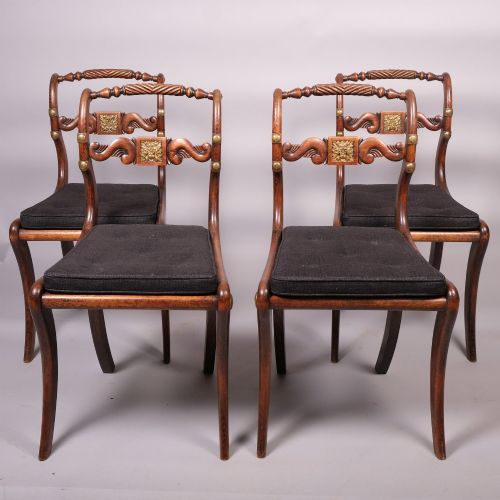
Examples on this page bridge the late eighteenth century and the early decades of the nineteenth century, including simulated rosewood and ebonised variants alongside traditional timbers.
How they were made
Cabinetmakers constructed these frames primarily in solid mahogany, supplemented by decorative alternatives such as simulated rosewood, faux bird's-eye maple, and ebonised finishes. The timbers provide the dense foundation necessary for crisp hand-carving along the top rails and splats.
Seating portions incorporate canework, drop-in upholstered pads, and traditional fabric upholstery secured over wooden frames. These diverse seat structures support daily dining use while accommodating period textiles.
Current listings feature mahogany and simulated rosewood alongside cane and upholstered seats, spanning periods from circa 1800 to the 1920s.
What varies in quality
The standard of carving defines the upper tier of these chairs, distinguishing crisp, deeply undercut rope twists from softer, mechanised profiling. Grain selection in the mahogany or the execution of simulated graining alters the visual weight of each frame.
The integrity of large sets relies on matched proportions and uniform timber selection across all side chairs and carvers. Individual examples demonstrate craftsmanship through integrated joinery and well-balanced structural members.
The Georgian Rope Twist Chairs Glossary
- Carver
- An armchair designed with open arms, traditionally placed at the head of a dining table and matching the surrounding side chairs.
- Rope twist
- A carved decorative moulding resembling twisted strands of rope, frequently applied to the top rail of a chair back.
- Regency
- A design period spanning the early nineteenth century defined by classical restraint and inspiration from ancient Greece and Rome.
- Simulated rosewood
- A painted or stained surface treatment applied to a lesser timber to imitate the rich grain and colour of genuine rosewood.
- Drop-in seat
- A removable upholstered wooden frame that fits snugly into the seat rebate of a chair.
Georgian Rope Twist Chairs: Frequently Asked Questions
Are rope twist chairs comfortable?
The curved upper rail provides supportive backrest positioning for dining use. Different seat options, from woven cane to upholstered pads, alter the firmness.
Adding loose squab cushions can increase comfort during extended periods at the dining table.
How do I spot a true Regency chair?
Examine the timber density, construction joints, and decorative carving methods. Regency pieces typically exhibit classical proportions and specific wood turning.
Comparing the stretcher arrangement and rail joinery helps confirm the nineteenth-century period of manufacture.
Can I mix carvers and side chairs?
Matching carvers with side chairs follows traditional dining arrangements where armchairs occupied the table ends. Sets often combine a single carver with several side chairs.
Ensure the wood colour and back height align harmoniously if combining separate seating elements.
How should I care for cane seats?
Cane requires moderate humidity to prevent drying and brittleness over time. Light cleaning with a damp cloth maintains the natural plant fibres.
Avoid placing these chairs near direct heat sources that might damage the tension of the woven panels.