



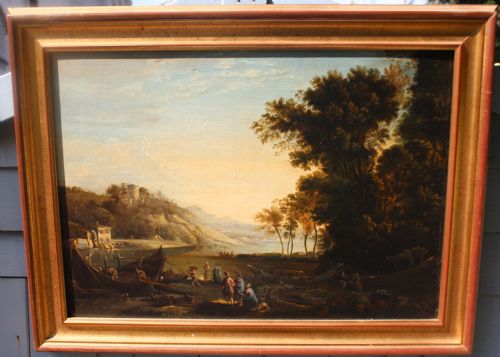
Georgian River Landscape Art
Georgian river landscape art captures peaceful waterways and pastoral estates, offering timeless rural charm for traditional interiors.
Georgian River Landscape Art
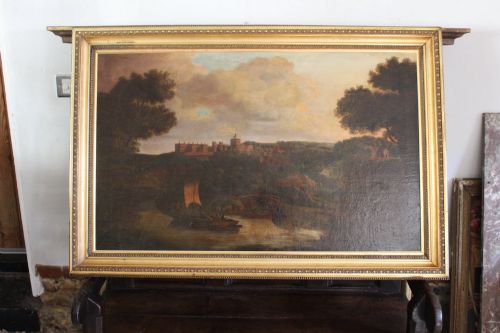
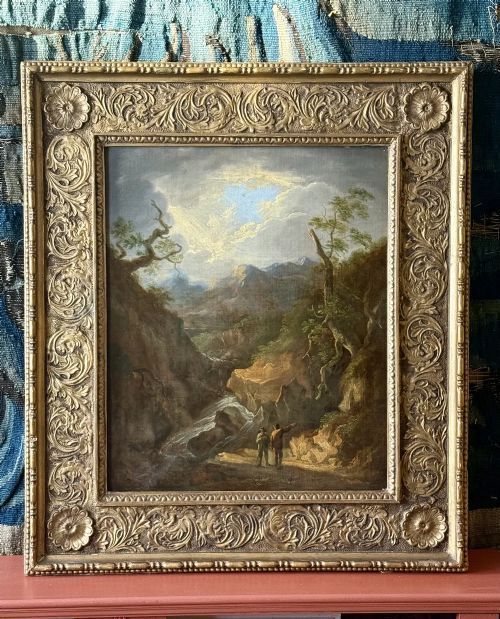
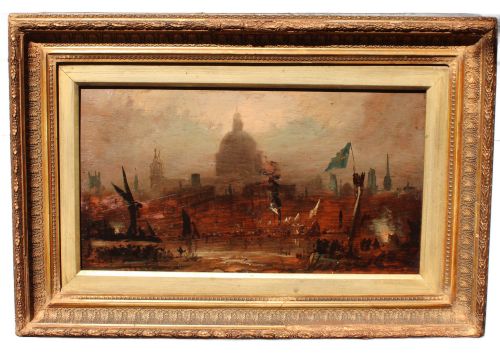
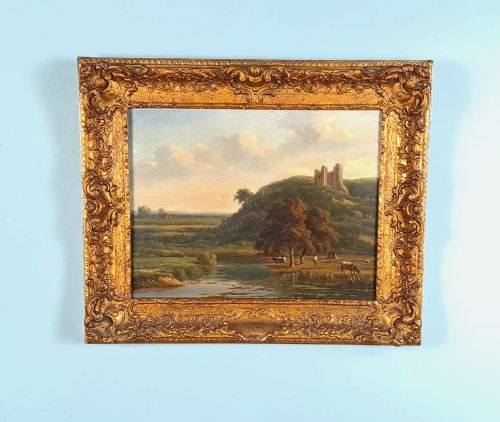
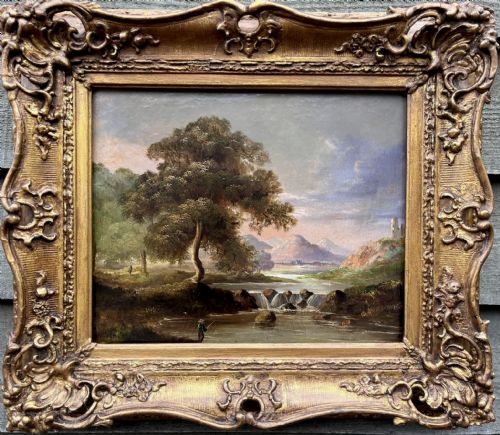
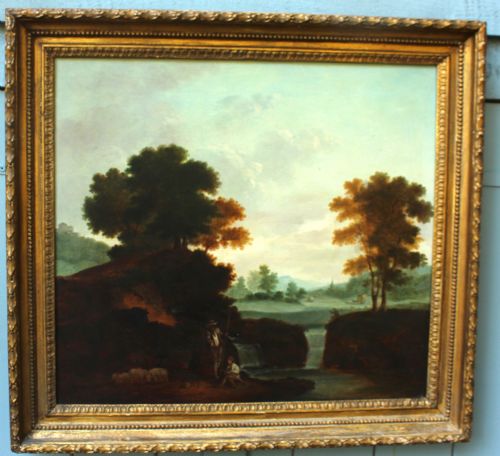
When you search for georgian river landscape art, you encounter oil paintings, watercolours, and antique prints depicting pastoral scenes, rivers, and estates. These works range from intimate watercolour studies to large oil paintings on canvas and panel.
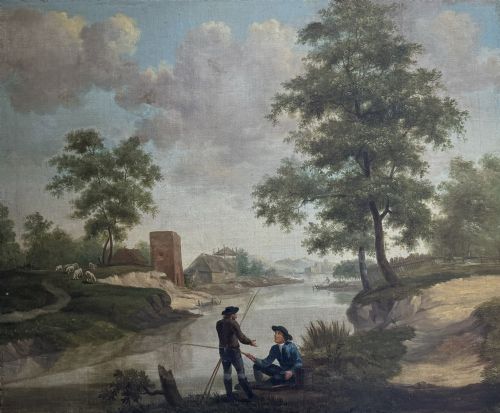
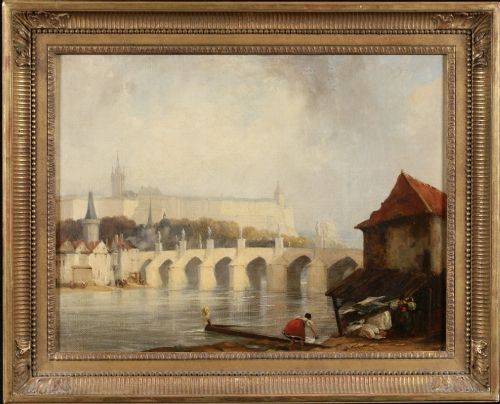
The pieces on this page are most commonly British and Scottish school works from the eighteenth and early nineteenth centuries. You will frequently find riverside conversations, historic bridges, and abbey views framed in period wood and giltwood.
Subjects often incorporate classical Italianate influences or domestic waterways such as the Thames and the Tweed. Figures by lakes and estate grounds populate these historic compositions.
Materials and Techniques
Artists painted primarily with oil on canvas or wood panel, alongside watercolours and pen and ink on paper. Canvases were occasionally laid onto board for stability, while panels utilised oak support.
Framing employed carved wood, gesso, and gold leaf to complement the fine detail of the artwork. Prints utilised hand-colouring and aquatint engraving techniques on paper beneath glass.
Several river scenes include very small fishermen who seem entirely undisturbed by the grand historic abbeys looming behind them.
What Determines Quality
Quality rests upon the sureness of the draughtsmanship and the atmospheric depth achieved by the artist. Strong handling of light upon water distinguishes masterly works from routine studio production.
The integrity of the original surface materials, including untouched oil paint layers and period frames with authentic gesso, elevates a piece significantly. Finer examples retain their original substrate without extensive intervention.
T C Hofland·John Constable·J Laporte·Joseph Farrington·Amos Green·George Lambert·Richard Wilson·Claude Lorrain·Julius Caesar Ibbetson
The Georgian River Landscape Art Glossary
- Aquatint
- A printmaking technique that produces tonal effects similar to watercolour washes. It was frequently hand-coloured in these periods.
- Italianate landscape
- A style of painting inspired by the sunny, classical scenery of Italy, featuring ruins and pastoral figures. British artists adopted this aesthetic widely.
- Gesso
- A plaster-like material applied to wood frames before gilding. It provides a smooth base for gold leaf application.
- Oil on panel
- A painting executed on a flat wooden board rather than canvas. Oak was a common choice for this rigid support.
- Romanticism
- An artistic movement focusing on emotion, individualism, and awe of nature. It heavily influenced nineteenth-century landscape painting.
Georgian River Landscape Art: Frequently Asked Questions
What subjects appear in these landscapes?
These artworks typically show rivers, lakes, and estuaries flanked by historic bridges, abbeys, and country estates. Human activity appears through figures conversing by the water or boats upon the stream.
Scenes range from imagined Italianate vistas to specific British waterways like the Thames and the Tweed.
How do I identify the period of a painting?
Dating relies upon stylistic cues, costume details of any figures, and the physical materials of the support and frame. Eighteenth-century works often favour classical composition, while early nineteenth-century pieces lean towards Romanticism.
Signatures, inscriptions, and artist attributions recorded on the reverse also help establish the date.
Are these works original or prints?
The selection includes both original hand-painted works and period prints. Originals comprise unique oil paintings on canvas or panel, alongside watercolours and pen and ink drawings.
Prints consist of hand-coloured engravings and aquatints produced in sets or individually around eighteen hundred.
How should I frame and display them?
Display these pieces away from direct sunlight to protect delicate watercolours and oil pigments from fading. Maintaining stable room humidity prevents warping in wooden panels and canvas supports.
Many retain their period giltwood frames, which should be preserved with gentle dusting rather than liquid cleaners.