


Georgian Revival Walnut Drawers
Georgian revival walnut drawers bring early twentieth-century craftsmanship and warm timber tones to modern rooms.
Georgian Revival Walnut Drawers
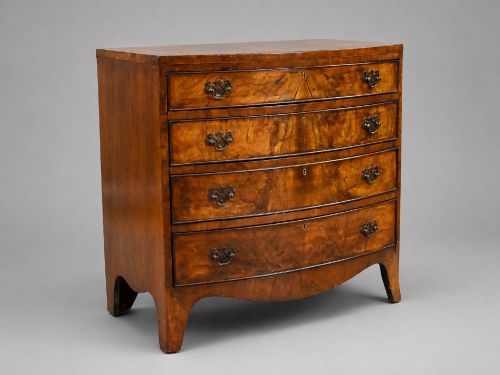
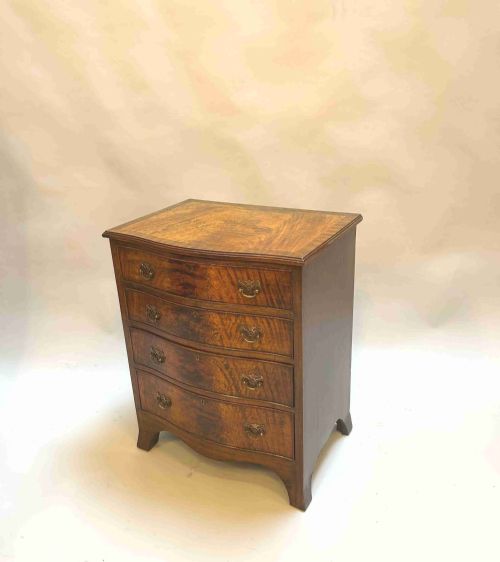
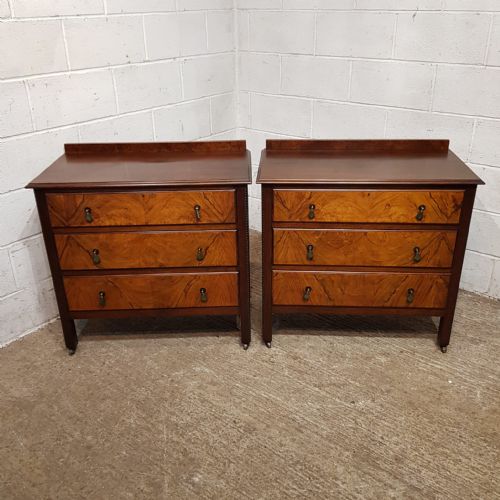
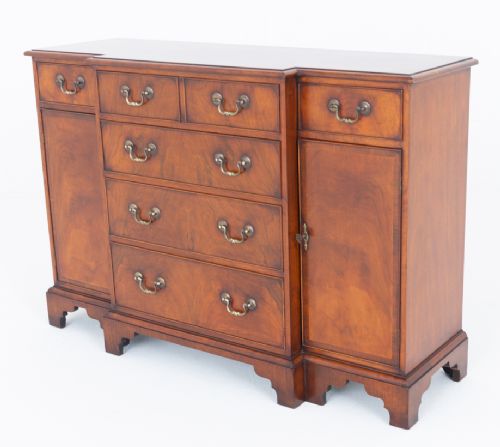
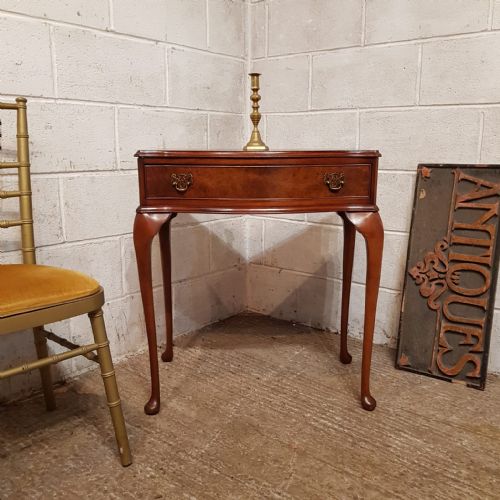
Georgian revival walnut drawers draw on eighteenth-century forms to create refined storage solutions for twentieth-century interiors. These pieces typically take the shape of chests of drawers, lowboys, sideboards, and side tables produced around the early decades of the twentieth century. Buyers seeking georgian revival walnut drawers find a variety of silhouettes, ranging from bow front and serpentine designs to tallboys and block front cabinets.
The aesthetic looks back to the reigns of George II and Queen Anne, reinterpreting earlier proportions with the cabinet-making standards of the 1900s to the 1930s. Most examples encountered here date from the Edwardian period through to the interwar years, reflecting a strong revivalist taste for figured timber. Whether configured as a compact three-height chest or a larger breakfront sideboard, each item serves both a practical storage function and a decorative role.
Materials and Construction
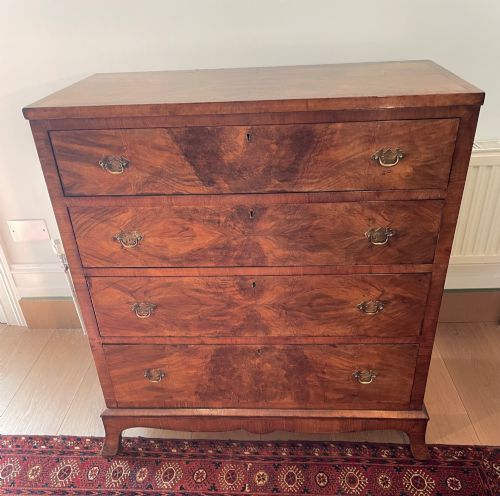
Makers of georgian revival walnut drawers relied heavily on walnut, burr walnut, and figured walnut veneers applied over secondary woods such as oak and pine. The distinctive grain patterns of burr and figured walnut provide the rich surface decoration characteristic of these pieces, often framed by cross-banding. Solid walnut and painted wood also appear in the construction of frames and specific decorative accents.
Listings feature walnut, burr walnut, and figured walnut veneers, frequently paired with solid oak, pine, and cast brass hardware.
Understanding Quality Variations
The quality of georgian revival walnut drawers rests primarily on the selection and matching of the walnut veneers across the drawer fronts and top surfaces. Finer pieces display symmetrical burr walnut grain patterns that flow seamlessly across multiple drawers, while simpler versions utilise plain walnut or painted finishes. The crispness of the shaping on serpentine and bow front models also distinguishes superior examples from standard production.
Hardware selection marks another division in quality, with heavy cast brass handles and detailed backplates elevating the overall presentation. Internal construction details, such as the neatness of the dovetail joints and the choice of secondary timbers like oak rather than pine, indicate the original maker's investment of time and material. A cohesive balance between proportion, timber choice, and decorative restraint separates the exceptional pieces from the ordinary.
The Georgian Revival Walnut Drawers Glossary
- Burr walnut
- A prized timber veneer taken from the wart-like growths on walnut trees, known for its swirling, highly figured grain patterns. It provides a rich and decorative surface on drawer fronts and table tops.
- Bow front
- A convex, outward-curving cabinet or drawer front that gained popularity in the Georgian era and was frequently revived in the early twentieth century. This shape softens the profile of a chest of drawers.
- Serpentine
- A front shape characterised by a central convex curve flanked by two concave curves, creating an undulating silhouette. It requires advanced woodworking skill to veneer accurately.
- Lowboy
- A small oak, walnut, or mahogany table with drawers, resembling the lower section of a tallboy, typically used as a dressing or side table. These pieces often feature cabriole legs.
- Tallboy
- A tall chest of drawers consisting of one chest stacked upon another, providing significant vertical storage capacity. The revival versions maintain slender proportions suited to domestic bedrooms.
Georgian Revival Walnut Drawers: Frequently Asked Questions
What periods do these pieces date from?
The pieces listed span the Edwardian era through the early decades of the twentieth century, specifically clustering around 1900 to 1930. Cabinet-makers during this time drew heavy inspiration from eighteenth-century George II and Queen Anne designs.
While some nineteenth-century examples incorporate these revival styles, the majority originate from the interwar period when revivalism flourished across British workshops.
How do I identify burr walnut?
Burr walnut is recognised by its dense, swirling grain and irregular knot formations, which create a highly decorative and mottled surface appearance. It is typically applied as a fine veneer over a stable carcase wood.
This timber was selected for prominent areas like drawer fronts and table tops to catch the light and add visual depth.
Where were these pieces used historically?
Georgian revival walnut drawers were designed principally for domestic bedrooms, hallways, and reception rooms to provide functional storage. Chests and tallboys served for clothing, while lowboys and side tables functioned as writing surfaces or decorative side furniture.
Their compact proportions allowed them to fit comfortably into both grand houses and smaller period homes.
Are the drawer linings made of walnut?
Primary display surfaces and drawer fronts feature walnut or burr walnut veneer, but internal drawer linings and carcase structures frequently employ secondary timbers. Oak and pine are commonly found inside the carcase and beneath the veneers.
This traditional method ensured structural stability while conserving costly decorative hardwoods for the exterior.
How should I care for walnut furniture?
Walnut furniture requires protection from direct sunlight and extreme humidity fluctuations to prevent the fine veneers from drying out or lifting. Regular dusting with a soft, dry cloth preserves the polished finish without leaving chemical residues.
Occasional application of appropriate wax polish maintains the warm sheen of the timber.