

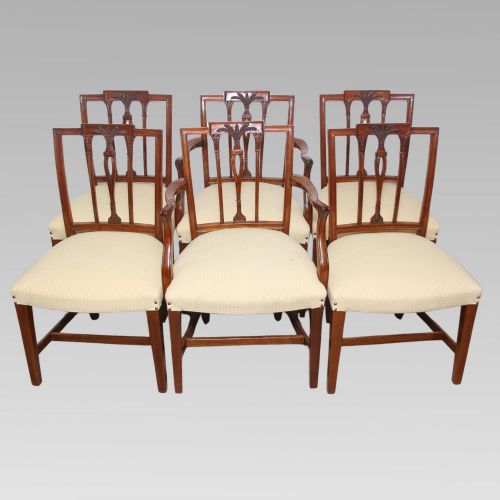
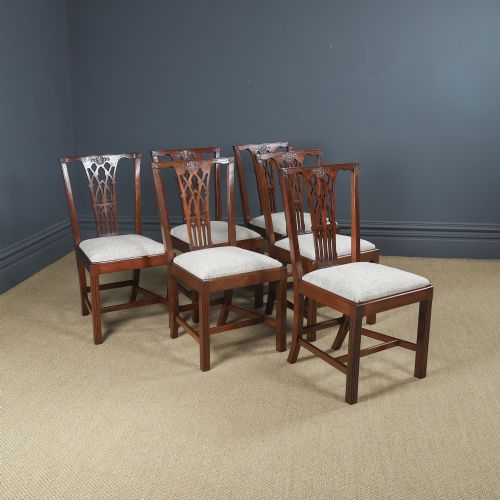

Georgian Revival Side Chairs
Georgian revival side chairs are period-inspired seating designed to bring eighteenth-century elegance into later dining rooms and halls.
Georgian Revival Side Chairs
When you search for georgian revival side chairs, you encounter seating produced across the nineteenth and twentieth centuries that echoes earlier forms. These pieces include dining chairs, hall chairs, and desk chairs created during periods such as the Edwardian era, the Victorian period, and the early decades of the twentieth century.
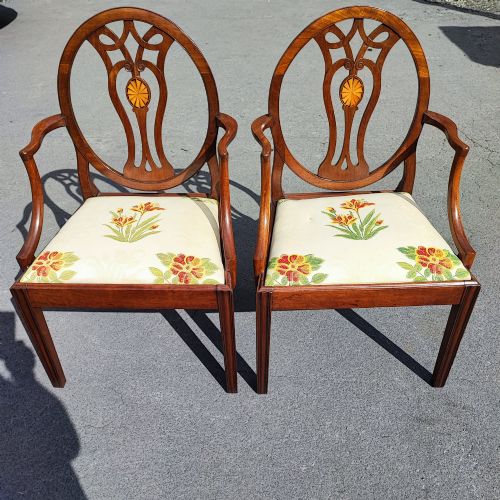
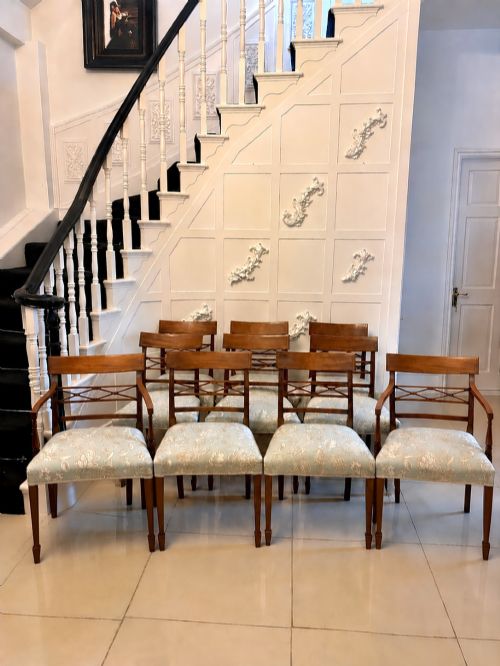
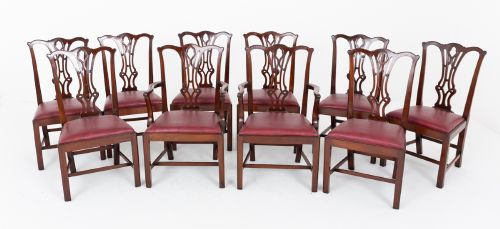
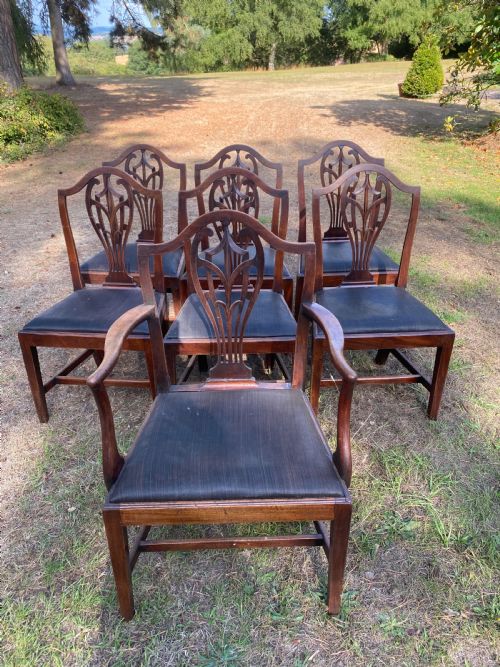
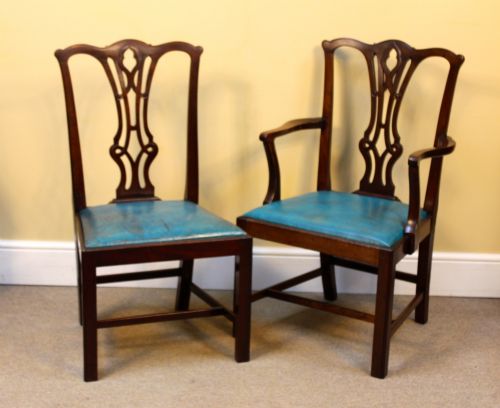
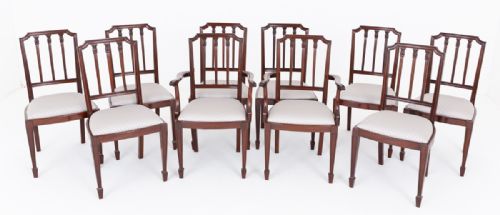
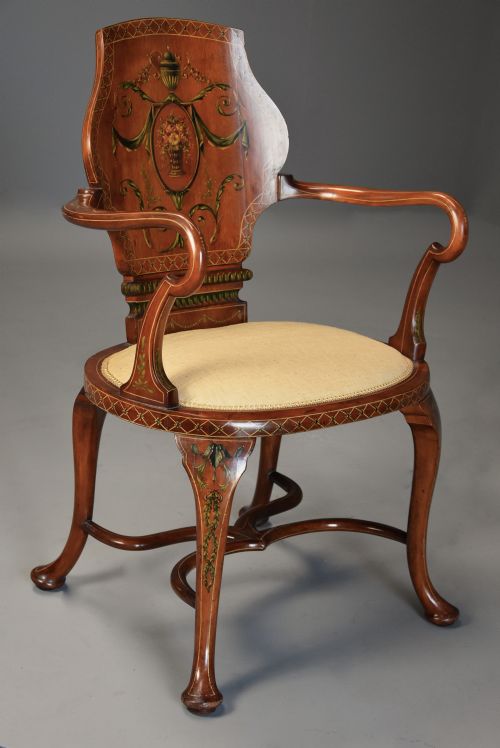
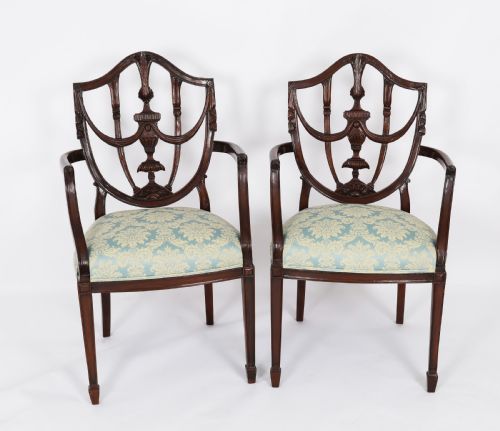
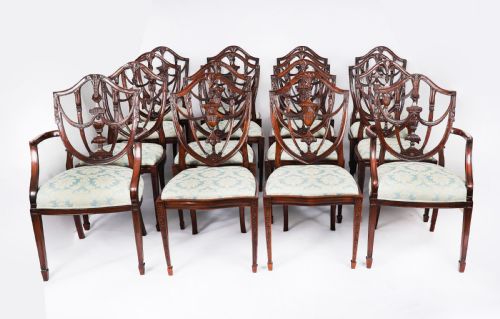
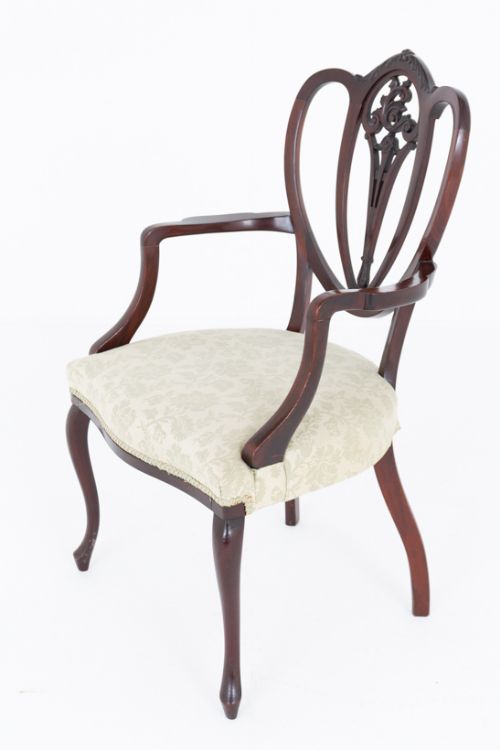
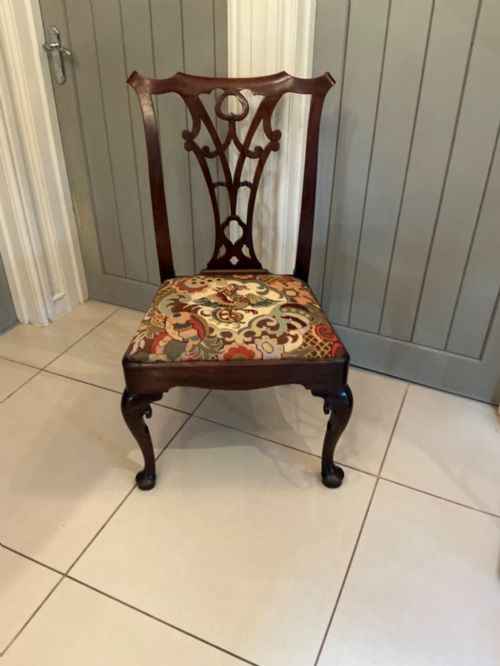
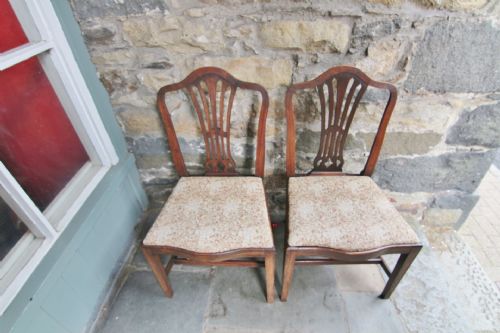
The most common examples on this page are mahogany dining chairs and side chairs following Chippendale, Hepplewhite, and Sheraton styles. You also find satinwood painted pieces, shield-back designs, and smaller groups or large sets made for formal entertaining.
Makers such as Whytock & Reid of Edinburgh, Waring, and Brights of Nettlebed contributed to this tradition of copying and adapting earlier aesthetic vocabularies. Such seating served practical domestic functions while satisfying a Victorian and Edwardian appetite for historical design continuity.
How They Were Made
The primary structural timber across these items is mahogany, supplemented occasionally by satinwood and oak for specific decorative effects. Craftsmen utilised traditional joinery methods to build durable frames capable of enduring daily domestic use.
Surface treatment involved careful polishing to bring out the grain of the timber, alongside hand-painting on satinwood models. Upholstery materials included leather, fabric, and textiles applied to drop-in or fixed seats.
Carving was employed extensively on splats, rails, and legs, translating eighteenth-century motifs into later production runs. Inlaid details using lighter woods added contrast to mahogany surfaces on Sheraton and revival pieces.
The inventory spans several eras, incorporating items from the eighteenth century, Victorian period, Edwardian era, and the 1930s.
What Varies In Quality
Quality rests upon the crispness of the carved details and the fidelity with which earlier stylistic idioms are rendered. Chairs with deeply sculpted ribbon backs or precise fretwork demonstrate superior craftsmanship compared to simpler, softer mouldings.
The selection of timber grain and the integrity of the joinery dictate the longevity and visual impact of each piece. Matching sets that retain uniform colour and consistent proportions across all chairs hold greater cohesion than assembled groups.
Whytock & Reid of Edinburgh·Waring·Brights of Nettlebed
The Georgian Revival Side Chairs Glossary
- Chippendale Style
- A design vocabulary derived from Thomas Chippendale characterised by interlaced ribbon backs, carved splats, and cabriole legs. These forms re-emerged strongly during revival periods.
- Hepplewhite Revival
- Furniture produced in the nineteenth or twentieth century imitating George Hepplewhite aesthetics, frequently identified by shield-shaped chair backs and tapered legs.
- Sheraton Revival
- A late nineteenth or early twentieth-century style drawing on Thomas Sheraton designs, noted for straight lines, satinwood finishes, and delicate inlay work.
- Bergere
- An enclosed upholstered armchair with exposed wooden framing and woven cane panels on the sides or back. This French form was adopted into British revival design.
- Shield Back
- A chair back shaped like a heraldic shield, popularised in the late eighteenth century and revived in Federal and Hepplewhite revival seating.
Georgian Revival Side Chairs: Frequently Asked Questions
Are these chairs from the eighteenth century?
Most pieces listed under georgian revival side chairs date from the nineteenth and twentieth centuries rather than the original Georgian period. They were manufactured later to emulate the classic styles of earlier designers.
Craftsmen during the Edwardian era and Victorian times recreated these historic forms for contemporary homes, maintaining traditional woodworking techniques.
What wood are most chairs made from?
Mahogany is the predominant timber found across these listings, valued for its rich tone and durability. Satinwood and oak also appear on specific decorative or regional examples.
Cabinetmakers utilised these hardwoods because they accepted fine carving and polished to a high sheen suitable for formal dining spaces.
How do I identify a revival style?
Revival pieces display historical motifs such as shield backs, ladder backs, or Gothic tracery combined with the manufacturing methods of their actual production era. Examining the underside and timber ageing helps clarify when the piece was constructed.
Matching sets often indicate later nineteenth or twentieth-century factory and workshop production rather than authentic eighteenth-century single survivals.
Can I use these chairs for daily dining?
These sturdy mahogany and oak chairs were built for regular domestic use and remain entirely functional for modern dining tables. Solid joinery and traditional construction ensure they handle daily seating demands well.
Upholstery can be refreshed or replaced easily if the fabric does not match your interior scheme.