



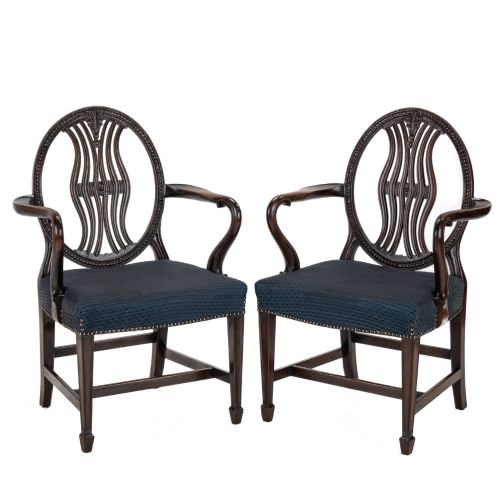

Georgian Revival Carver Chairs
Georgian revival carver chairs bring formal eighteenth-century silhouettes into Edwardian and later rooms through sturdy mahogany frames and generous armrests.
Georgian Revival Carver Chairs
When you search for georgian revival carver chairs, you encounter seating built primarily around the turn of the twentieth century, drawing heavily on earlier eighteenth-century forms. These pieces typically function as the armchaired ends of a dining set, or stand alone as desk and library chairs.
The pieces on this page span several decades of revivalism, originating from the late nineteenth century through the interwar years, alongside occasional genuine period items. You meet them most frequently as pairs of open armchairs or as larger suites accompanying matching dining chairs.
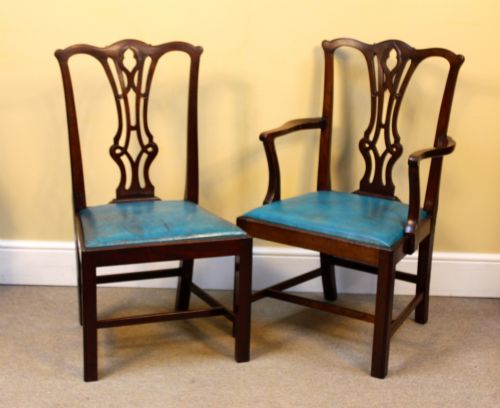
Makers of this period reinterpreted specific eighteenth-century aesthetics, resulting in distinct stylistic sub-categories such as Chippendale, Hepplewhite, and Sheraton revivals. The forms adapt historical precedents for later domestic use while retaining substantial timber frames and carved details.
How They Were Made
Carpenters constructed these frames predominantly from solid mahogany, occasionally utilising walnut or satinwood for decorative emphasis and contrasting grain patterns. Workshops employed traditional joinery techniques to secure the arms, legs, and back splats under heavy daily use.
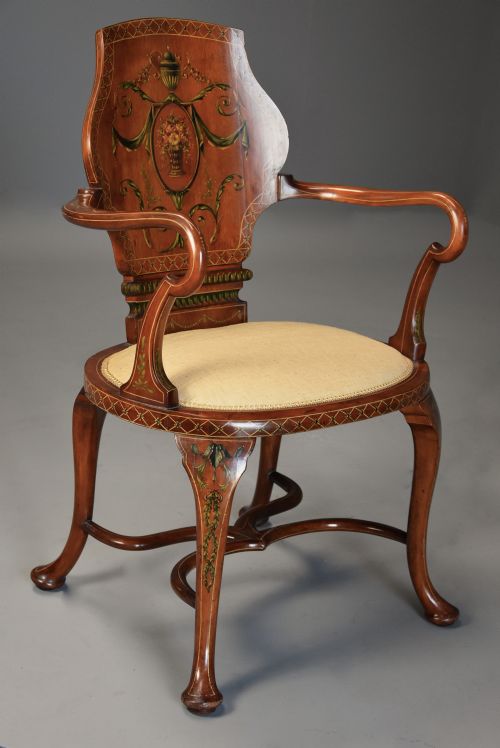
Upholstery materials range from plain fabric and velvet to leather, often applied over drop-in seat frames or webbed bases. Detail work includes brass hardware, intricate back splat piercing, and painted or inlaid motifs on specific satinwood and Edwardian examples.
Georgian Revival Carver Chairs Retail Price Guide 2026
Typical asking prices for georgian revival carver chairs among the pieces listed under this phrase on Sellingantiques today, from the lower quarter to the upper quarter. They describe what is for sale here now, not the wider market.
Listings feature mahogany predominantly, alongside alternative materials such as satinwood, velvet, leather, and brass.
What Varies in Quality
The distinction between standard commercial production and finer workshop output lies in the crispness of the carving and the selection of timber. Superior examples exhibit deep, well-defined detailing on the arms and crest rails, paired with dense, finely figured mahogany.
Structural integrity also separates the grades, determined by the tightness of the joinery and the retention of original upholstery foundations. Pieces produced by documented firms often demonstrate greater precision in the proportions and assembly of the chair frame.
Robert Strahan Dublin
The Georgian Revival Carver Chairs Glossary
- Carver chair
- An armchair designed to sit at the head of a dining table or serve as an occasional seat. The term distinguishes armed dining chairs from their side chair counterparts.
- Hepplewhite style
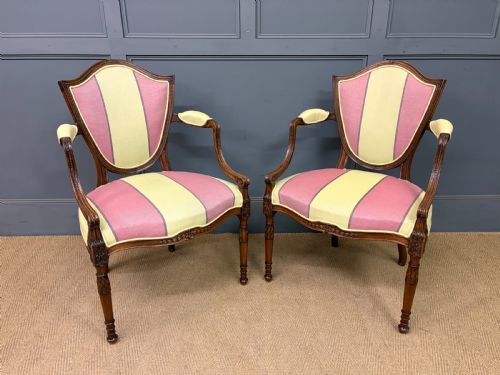
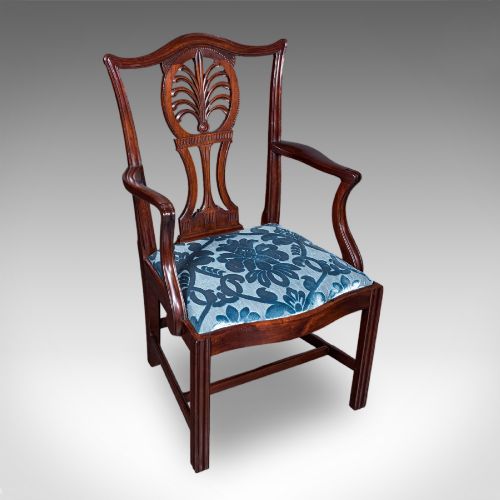
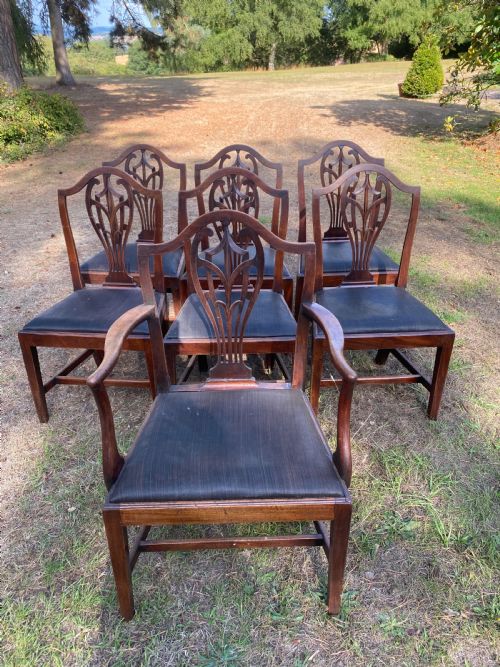
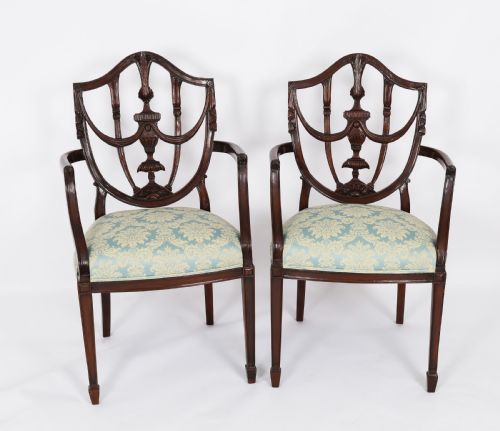
- A neoclassical furniture design characterised by shield-back or oval-back chair frames. These pieces often incorporate tapered legs and delicate carved wheat or urn motifs.
- Sheraton revival
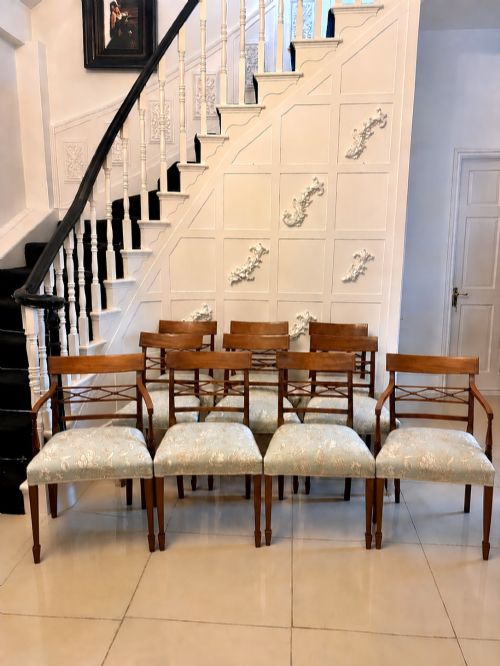
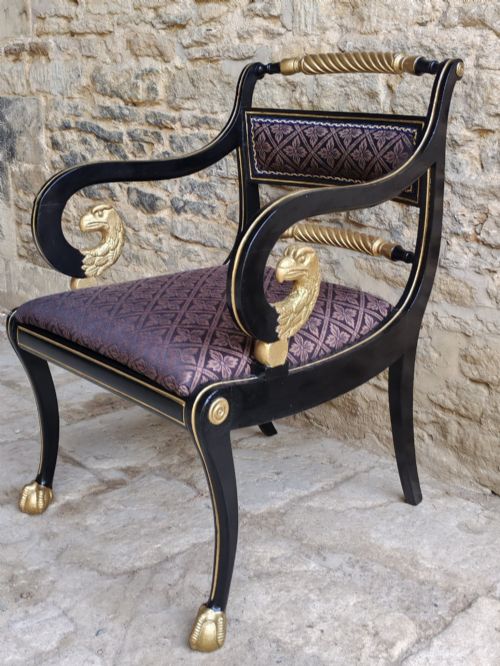
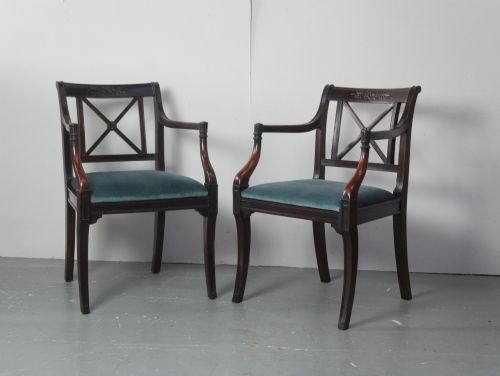
- A late nineteenth or early twentieth-century interpretation of Thomas Sheraton's neoclassical designs. It typically displays rectangular back frames, satinwood veneers, and slender proportions.
- George II revival
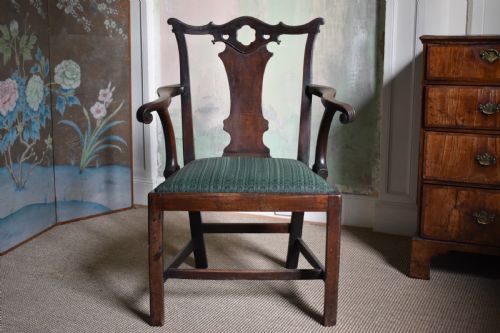
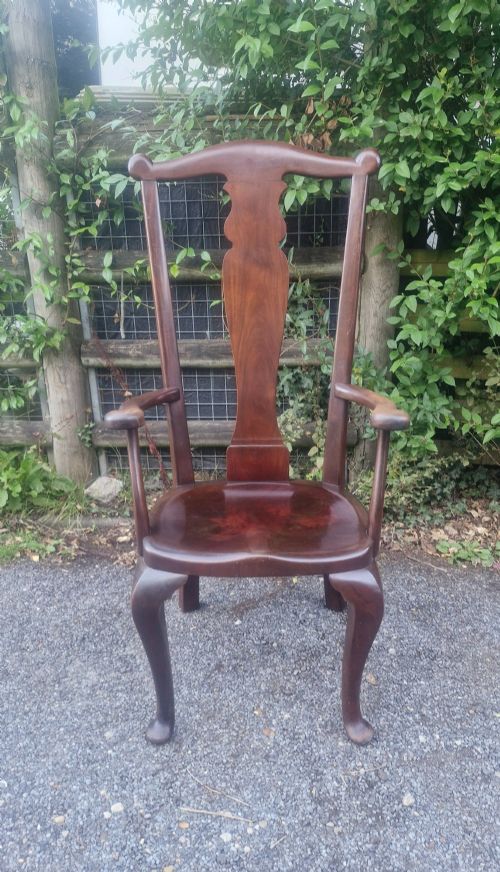
- A heavier, robust style looking back to the early eighteenth century. These chairs frequently utilise walnut timbers, pad feet, and solid vasiform splats.
Georgian Revival Carver Chairs: Frequently Asked Questions
What is a carver chair?
A carver chair is an armchair traditionally placed at either end of a dining table, featuring supportive armrests that distinguish it from standard dining chairs.
In revival sets, these pieces match the surrounding side chairs while providing a larger, more prominent seat for the head of the table.
How do I identify a revival piece?
Revival chairs copy eighteenth-century styles but generally date from the Victorian era up to the 1930s. Examination of the timber dryness, internal joinery marks, and secondary woods helps reveal the actual manufacturing period.
Makers of this era often combined stylistic elements from Chippendale or Hepplewhite while utilising machinery alongside hand tools.
Are these chairs comfortable for daily use?
These frames were built for formal dining and study, offering upright support rather than deep lounging comfort. The generous seat dimensions and supportive armrests make them practical for desk or dining room tasks.
Modern users frequently update the internal webbing and upholstery padding to improve everyday seating comfort while preserving the antique frame.
How do Chippendale and Hepplewhite styles differ?
Chippendale revival chairs typically feature ribbon-back or ladder-back designs with cabriole legs and claw-and-ball feet. The overall silhouette appears robust and heavily carved.
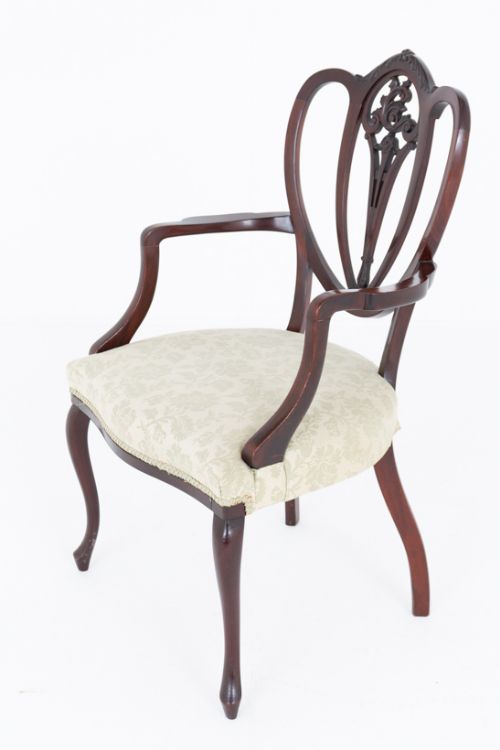
Hepplewhite revival chairs are recognised by their distinct shield-shaped or heart-shaped backs and straight, tapered legs, presenting a lighter neoclassical aesthetic.