

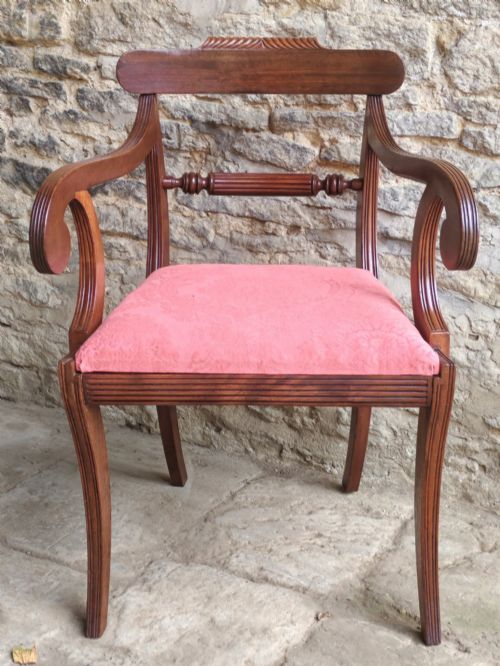
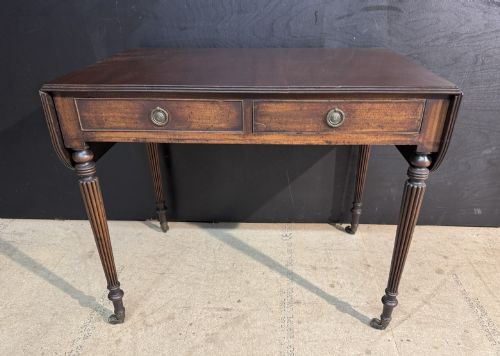
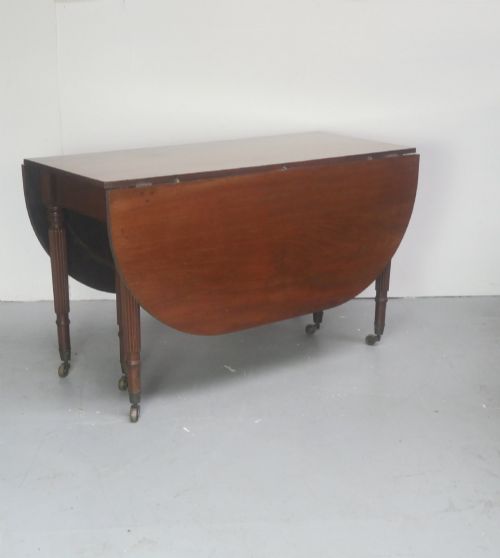
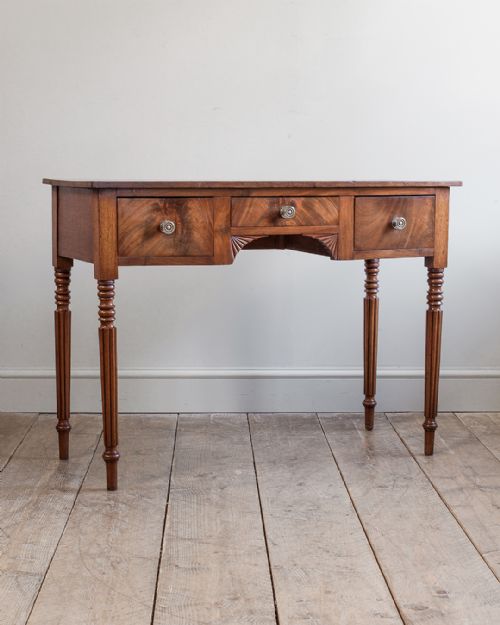

Georgian Reeded Leg Desk
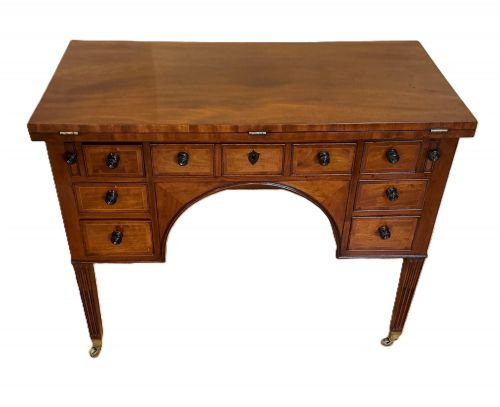
A georgian reeded leg desk brings solid mahogany craftsmanship and functional writing space into a room.
Georgian Reeded Leg Desk
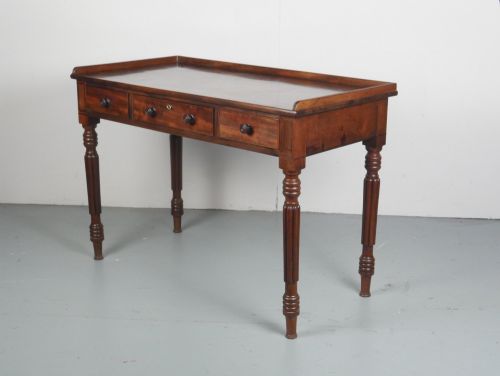
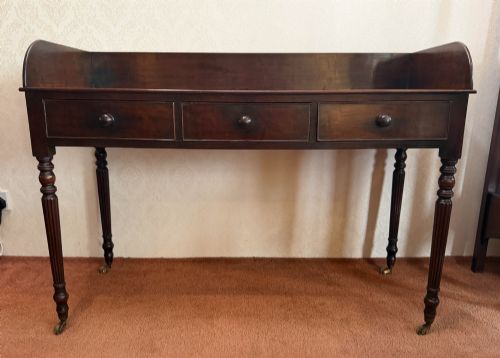
A georgian reeded leg desk unites the practical writing surfaces of the eighteenth and early nineteenth centuries with classical linear ornament. These pieces encompass writing tables, library tables, and writing desks produced during the Georgian, Regency, and George IV periods.
The selection on this page demonstrates that buyers most frequently encounter mahogany writing tables fitted with drawers and sustained by turned or linear supports. Forms range from compact side tables to large partners desks designed for central placement in a room.
Origins span standard English cabinet-making traditions alongside Scottish workshops, reflecting the widespread adoption of classical design vocabulary across Britain during the late Georgian and Regency eras.
How they were made
Cabinet-makers relied primarily on solid mahogany and mahogany veneers, selected for strength and deep grain patterns. Secondary timbers provided internal support for drawer boxes and framework.
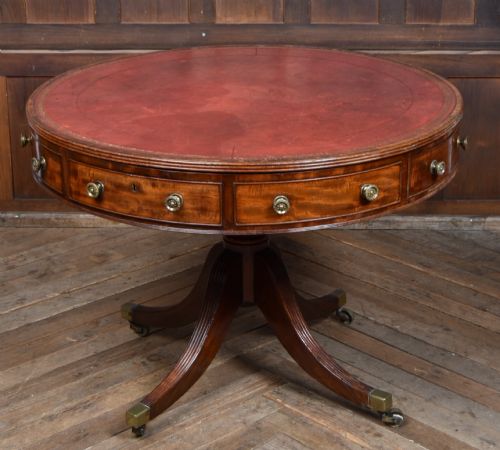
Surfaces frequently incorporated inset panels of leather for writing, whilst brass details such as castors, handles, and galleries added functional contrast to the dark timber.
Joinery methods included hand-cut dovetails for drawers and sturdy mortise and tenon frames, ensuring the structural stability required for daily writing and library use.
Georgian Reeded Leg Desk Retail Price Guide 2026
Typical asking prices for georgian reeded leg desk among the pieces listed under this phrase on Sellingantiques today, from the lower quarter to the upper quarter. They describe what is for sale here now, not the wider market.
Cabinet-makers occasionally included hidden compartments within writing tables to secure private correspondence from prying eyes.
What varies in quality
The selection of timber dictates much of the initial visual impact, with choice cuts of figured mahogany showing superior grain depth and colour consistency across top surfaces and drawer fronts.
The crispness of carved or turned details separates standard production from superior cabinet-making, particularly where linear reeding or edge moulding meets structural joints.
Proportion and balance define the top tier of pieces, where secondary woods, original brass hardware, and fitted interior compartments remain intact and unaltered by later restorations.
Gillows of Lancaster·William Trotter
The Georgian Reeded Leg Desk Glossary
- Reeded
- A decorative moulding consisting of parallel convex strips resembling inverted fluting. This technique frequently ornamented table legs and vertical supports during the Regency period.
- Partners desk
- A large double-sided writing table fitted with drawers on both long sides, designed for two people to work opposite one another.
- Drum table
- A circular library table containing a rotating or fixed top supported by a central pillar and splayed legs, often fitted with alternating frieze drawers and dummy drawers.
- Sofa table
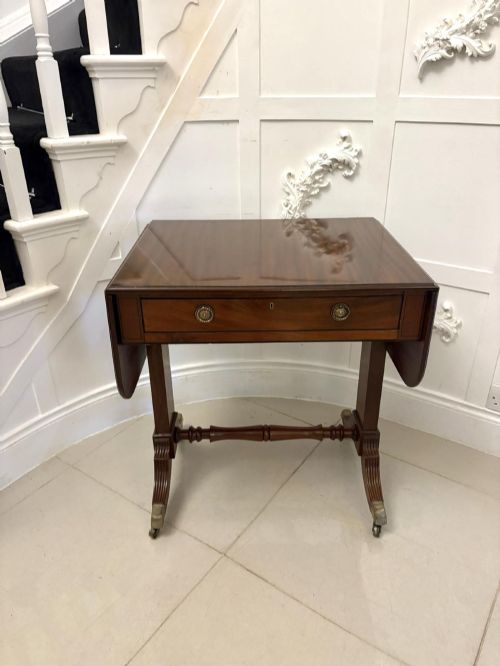
- An oblong occasional table with drop leaves on either end, originally designed to sit in front of a sofa.
- Brass gallery
- A low metal railing mounted around the top edge of a writing table or desk to prevent items from rolling off.
Georgian Reeded Leg Desk: Frequently Asked Questions
How do I identify a writing table?
Writing tables generally feature one or more frieze drawers beneath a flat top, designed primarily for correspondence and paperwork.
Unlike larger library tables, they are proportioned for placement against a wall or free within a room.
Are these desks suitable for daily use?
These pieces were built from dense timbers like mahogany using traditional joinery, making them exceptionally sturdy for modern workspace requirements.
Care should be taken to protect leather writing surfaces from moisture and heavy impacts.
How do I distinguish Georgian from Regency pieces?
Georgian furniture often displays heavier proportions and restrained classical carving, while Regency pieces embrace sharper architectural lines and brass inlay.
Both periods frequently utilise high-grade mahogany and similar cabinet-making techniques.