

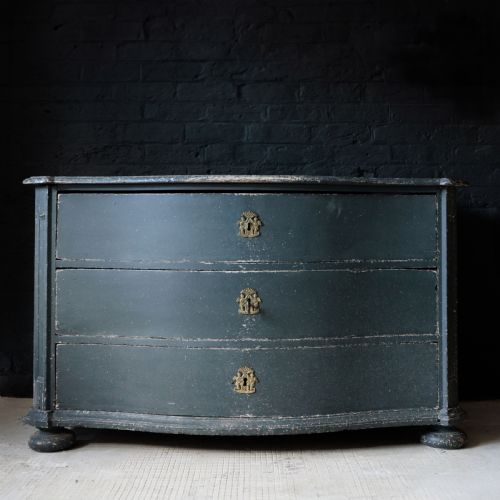
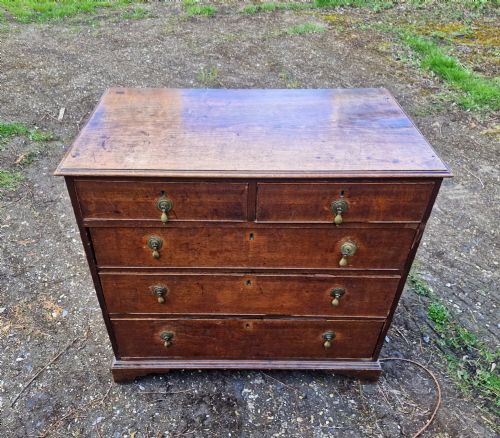


Georgian Provincial Chest
A georgian provincial chest brings robust regional character and honest timber into a room, offering practical storage grounded in eighteenth-century domestic life.
Georgian Provincial Chest
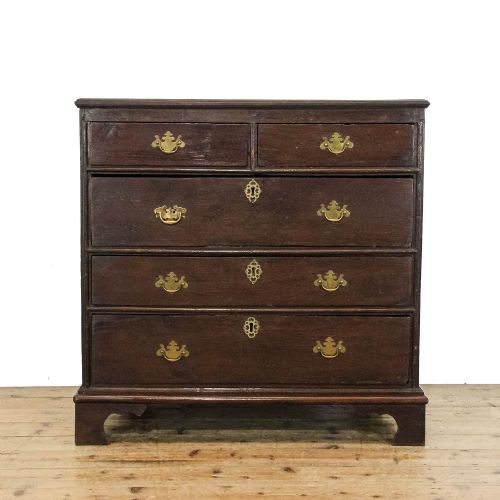
A georgian provincial chest encompasses sturdy chests of drawers, blanket boxes, and linen presses originating outside metropolitan workshops during the eighteenth century and adjacent periods. These pieces serve primarily for household storage while displaying the distinct regional traits of local cabinetmakers working in oak, mahogany, and fruitwood.
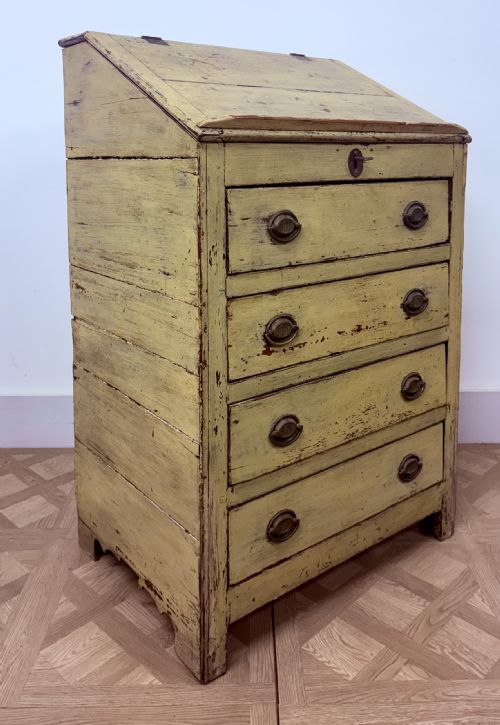
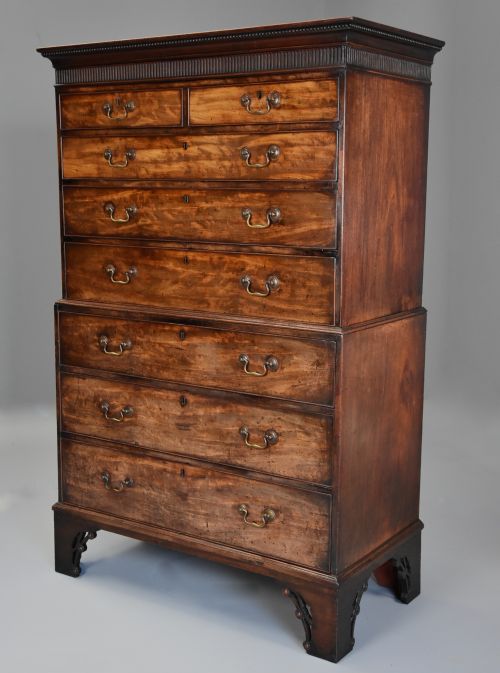
The selection on this page most frequently presents oak and mahogany drawer chests, alongside occasional walnut, elm, and painted wood variations spanning the Georgian, Regency, and nineteenth-century periods. Forms range from simple small chests to larger tallboys, chests on chests, and specialised provincial variants such as coffer bachs and food safes.
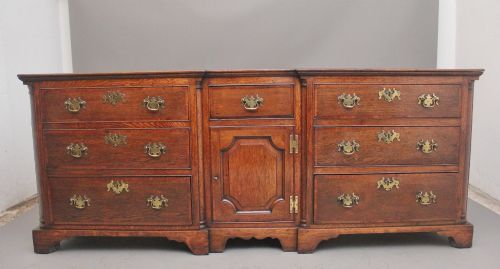
Makers in the shires often adapted metropolitan fashions with simpler construction methods and local materials, resulting in honest vernacular designs. Buyers encounter everything from rustic country dressers to sophisticated George III commodes, each carrying the marks of regional craftsmanship and domestic utility.
Materials and construction
Makers relied heavily on solid oak, mahogany, walnut, and fruitwood, often supported by pine for secondary elements like drawer linings and backboards. Brass handles, escutcheons, and occasional wood inlay provide the primary decorative contrast to the timber surfaces.
Joinery methods prioritize utilitarian strength, utilising hand-cut dovetails for drawer construction and pegged tenons for framing. Surfaces receive varying finishes, from simple painted treatments to rich wax polishing that develops a deep patina over centuries of use.
Object forms span standard chests of drawers alongside bureaux, dressers, tallboys, linen presses, boxes, food safes, and commodes.
Distinctions in quality
Quality in a georgian provincial chest rests upon the selection of timber and the integrity of the original construction rather than elaborate ornamentation. Denser grain, well-matched drawer fronts, and minimal later alterations elevate a piece above simpler utilitarian examples.
The survival of original brass hardware, uncompromised patination, and untouched internal timber components separate superior examples from heavily restored items. The harmony of regional proportions and the skill of the local joiner dictate the standing of each individual piece.
The Georgian Provincial Chest Glossary
- Patina
- The surface sheen and softening of colour developed on timber through decades of handling, polishing, and light exposure. This quality indicates age and authenticity in older furniture.
- Coffer bach
- A small Welsh chest featuring a drawer beneath the main compartment, traditionally used for storing valuables or linen. These miniature chests reflect regional domestic traditions.
- Chest on chest
- A tall storage unit comprising one chest stacked directly upon a larger base chest, maximising vertical capacity. This form often incorporates graduated drawers.
- Linen press
- A tall cupboard featuring upper sliding trays or shelves for textiles, paired with lower drawers for general storage. Some provincial examples include specialised internal screw mechanisms.
- Escutcheon
- A protective metal plate surrounding a keyhole, usually fashioned from brass. These plates prevent the timber around the lock from sustaining wear.
Georgian Provincial Chest: Frequently Asked Questions
What is a georgian provincial chest?
A georgian provincial chest is a utilitarian storage piece made outside major urban centres during the eighteenth century and surrounding eras. These items utilise regional timbers like oak and fruitwood to serve everyday household needs.
They differ from metropolitan furniture through simpler construction methods and local stylistic quirks. Each piece reflects the specific materials and cabinetmaking traditions of its geographic origin.
How do I care for my chest?
Protect antique timber furniture by placing it away from direct heat sources and strong sunlight, which can dry out and warp the wood. Maintain the finish by occasionally applying a traditional beeswax.
Avoid using modern silicone polishes, as they can degrade the historic surface. Gentle dusting with a dry cloth keeps the patina intact without harming the timber.
How do I date a chest?
Examine the construction methods, such as the hand-cut dovetails on the drawers and the tooling marks left by early saws on internal boards. Timber choice also offers clues, as walnut and certain oaks predominate in earlier eighteenth-century pieces.
Hardware styles, secondary woods like pine or deal, and overall wear patterns help narrow down the period. Comparing the construction details to dated examples in the record confirms the era.
Where were these pieces made?
These pieces originated in regional workshops across the British countryside and occasionally provincial France, far from London furniture hubs. Local joiners utilised nearby timber supplies such as oak, elm, and local fruitwoods.
This regional independence resulted in distinctive vernacular styles unique to specific shires or valleys. Makers adapted urban high-style designs to suit local tools and materials.