
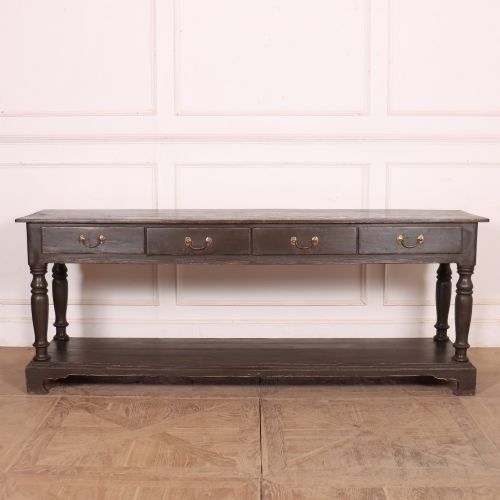
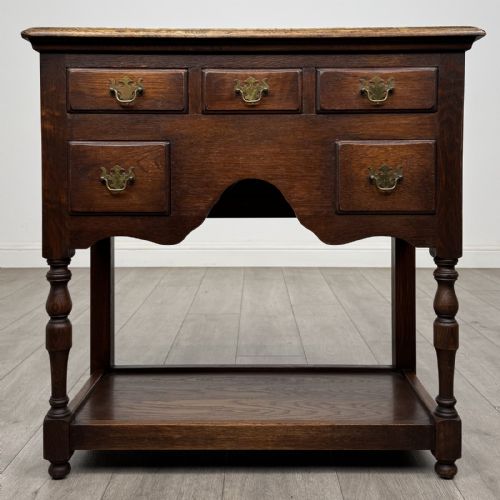
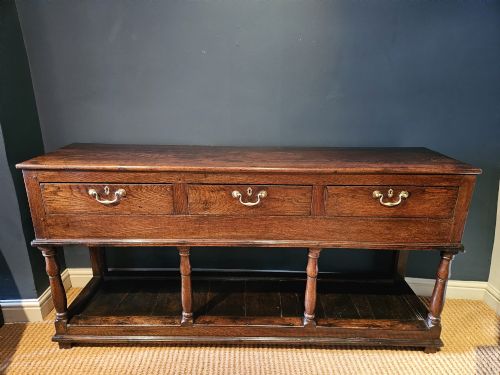
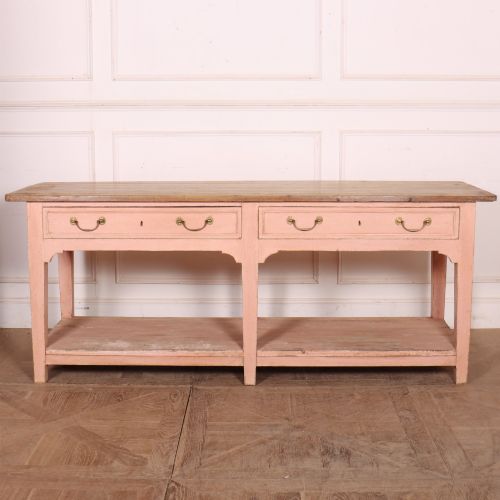
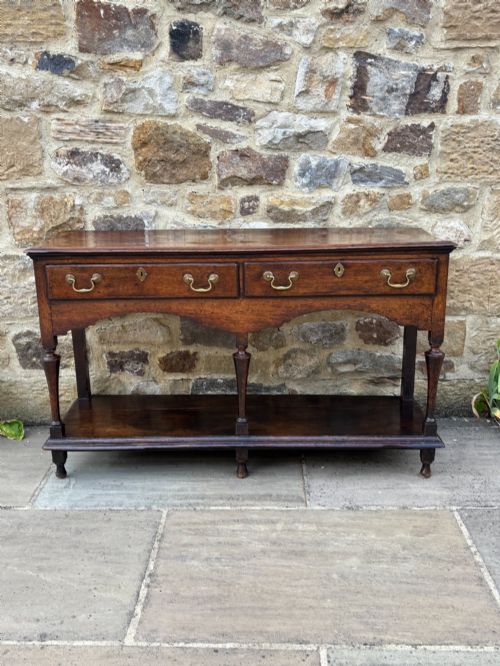
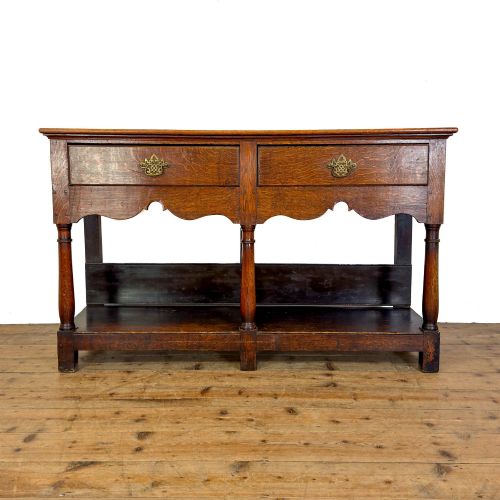

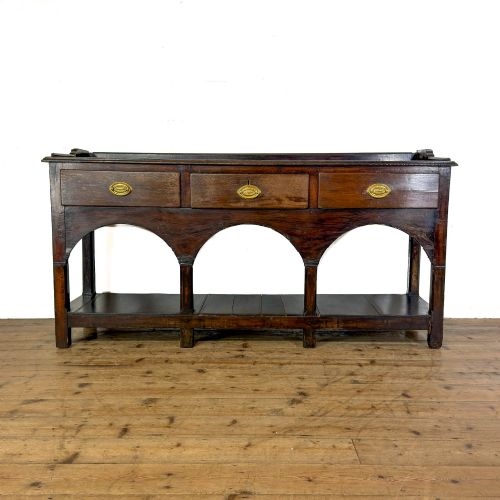
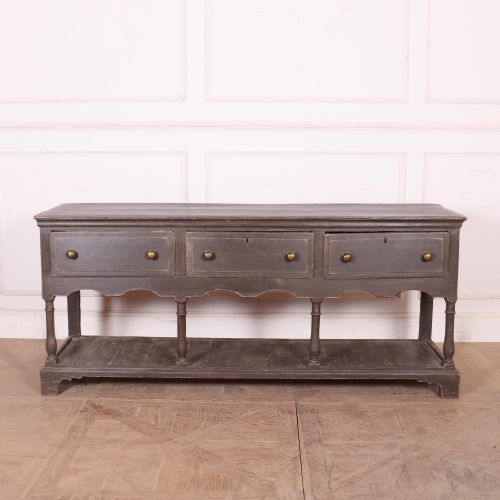



Georgian Potboard Server
A georgian potboard server is a sturdy wooden base for storage and display, grounded by a low slatted shelf that anchors the room.
Georgian Potboard Server
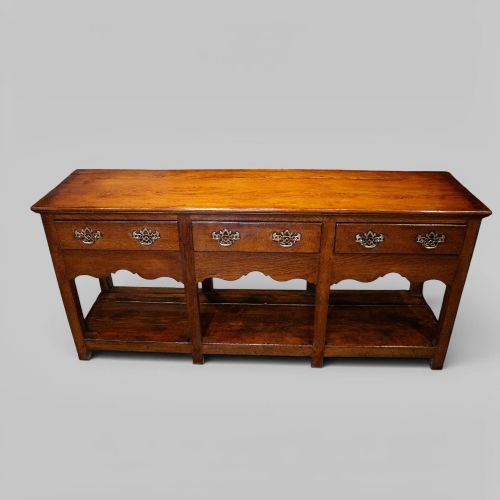
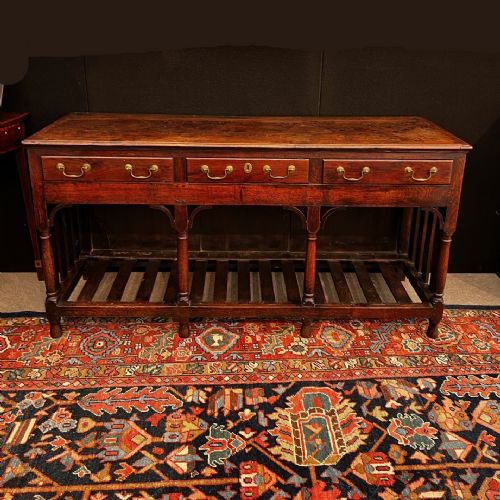
A georgian potboard server functions as a low kitchen or dining table fitted with drawers above an open lower platform, known as a potboard. These sturdy pieces originate primarily from English and Welsh country workshops during the eighteenth and nineteenth centuries.
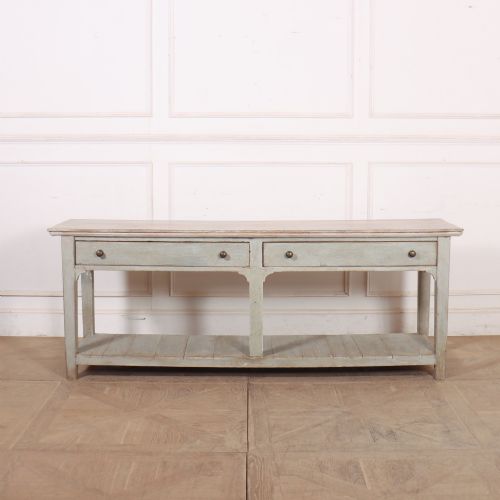
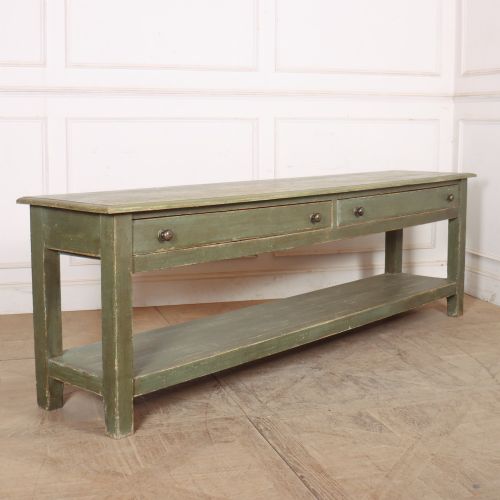
The version most commonly met on this page is the oak dresser base, sometimes rendered in pine, elm, or painted timber. These items double as serving tables and sideboards, combining surface workspace with accessible lower storage.
Regional variations span English country, Welsh vernacular, and rustic farmhouse styles. Certain examples feature geometric carvings or multiple drawers, reflecting the domestic needs of the period.
How they were made
Cabinet makers built these pieces using solid timbers such as oak, elm, and pine, selecting sturdy woods capable of enduring daily kitchen use. Panels and frames joined together with traditional pegged mortise and tenon construction.
Lower potboards consist of horizontal slats or boards fixed between the lower stretchers to hold heavy pots and pans. Drawers utilise hand-cut dovetails, sliding within timber runners beneath the main serving surface.
Early potboards were raised above the flagstone floor to keep dampness away from the crockery and out of the cooking pots.
What varies in quality
The integrity of the timber and the crispness of the joinery separate standard examples from finer works. Superior pieces retain their original patination, unaltered drawer linings, and sturdy potboards without excessive timber replacement.
Proportion and scale dictate the desirability of a base, with smaller dimensions or multi-drawer layouts commanding particular attention. The depth of colour in the wood and the presence of period brass hardware further distinguish the grade.
The Georgian Potboard Server Glossary
- Potboard
- The lower open shelf fixed between the legs of a dresser base or serving table. This platform provided storage for earthenware pots and kitchen utensils.
- Dresser base
- The lower section of a kitchen or dining dresser, comprising a flat top and drawers without the upper plate rack. It serves the same function as a sideboard.
- Vernacular
- Objects built by local country joiners using regional traditions rather than formal architectural patterns. These pieces reflect practical domestic requirements.
- Dovetail
- A joint formed by interlocking wedge-shaped fingers, used to construct drawer boxes securely. Hand-cut versions help indicate earlier manufacture.
- Patina
- The surface sheen and colour developed by wood over centuries through handling, light, and waxing. A rich patina signals age and regular use.
Georgian Potboard Server: Frequently Asked Questions
What is a potboard server used for?
These pieces served as practical work tables in country kitchens and dining rooms, providing a flat surface for food preparation and serving.
The lower slatted shelf held heavy pots, pans, and ceramics, while the upper drawers stored utensils and linens.
How do I date a dresser base?
Dating relies on timber choice, construction methods, and hardware styles. Eighteenth-century examples often feature pegged joinery and hand-cut drawer dovetails.
Later nineteenth-century pieces may show different internal wood selections and machine-sawn components.
Are these pieces English or Welsh?
Evidence shows both English and Welsh origins, with distinct regional characteristics visible in the proportions and timber usage.
Welsh vernacular styles often highlight local oak and elm construction, while English country pieces share similar rustic farmhouse traits.
How do I care for antique oak?
Maintain the wood by applying natural beeswax sparingly and buffing gently with a soft cloth. Keep the furniture away from direct heat sources and sudden humidity changes.
Avoid commercial silicone sprays that can damage the historical surface finish.