
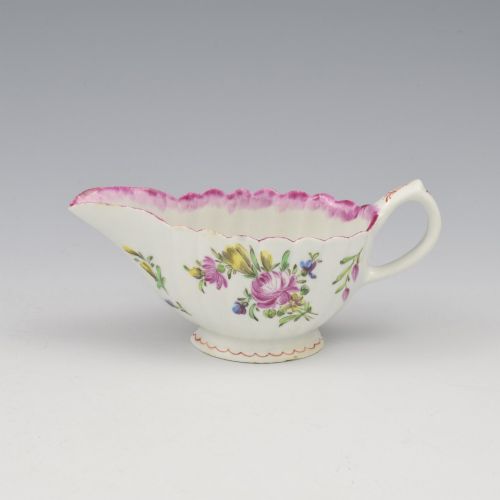
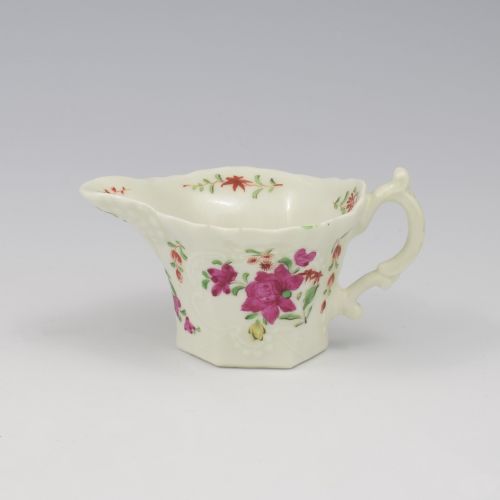
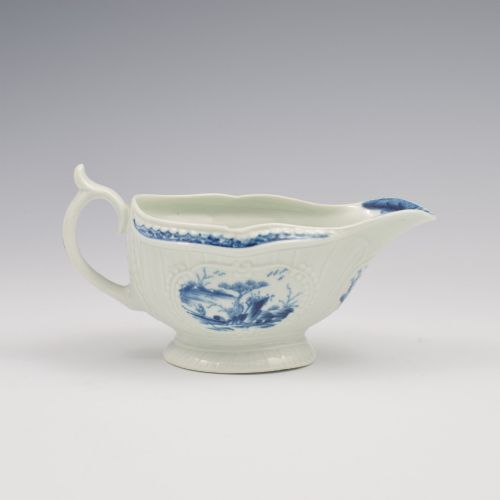


Georgian Porcelain Sauceboat
A georgian porcelain sauceboat brings eighteenth-century dining craft to your table, offering sculptural form and hand-painted blue and white detail.
Georgian Porcelain Sauceboat
A georgian porcelain sauceboat provides a glimpse into the sophisticated dining tables of the eighteenth and early nineteenth centuries. These vessels were utilised for serving gravies, melted butter, and sauces, combining utility with artistic ambition.
Most examples encountered here stem from the eighteenth century, spanning periods like the Georgian Rococo and Georgian Chinoiserie. Forms range from traditional fluted profiles and triangular platforms to whimsical lettuce leaf shapes and dolphin ewers with lamprey handles.
Makers of the era drew heavily on Chinese artistic motifs, resulting in popular patterns such as mandarin figures, the fisherman design, and the doughnut tree. Buyers will find both delicate blue and white underglaze pieces and polychrome enamel versions decorated with gilt highlights.
Materials and construction
Potters of this era relied primarily on soft-paste porcelain, a vitreous composition that yielded a warm tone beneath the glaze. Cobalt glaze was applied by hand to create rich blue and white designs before the final firing.
Skilled hands shaped these vessels through moulding and casting, adding intricate handles modelled as sea creatures or foliate scrolls. Enamel pigments and gilt details were often added over the glaze and fired again to secure the vibrant colours.
The site's listings show eighteenth-century soft-paste porcelain decorated with cobalt blue glaze, enamel, and gilt.
Assessing quality and craftsmanship
Quality in a georgian porcelain sauceboat rests primarily on the crispness of the moulding and the clarity of the painted decoration. Superior pieces display fluid brushwork in patterns such as the fisherman or mandarin figures, whereas lesser examples show hurried lines and blurred cobalt.
The complexity of the form further separates standard wares from superior works of art. Sculptural elements like lamprey handles and triangular platforms demand advanced technical skill during the firing process to prevent warping.
Bow Porcelain·Worcester Porcelain·Chelsea Derby
The Georgian Porcelain Sauceboat Glossary
- Soft-paste porcelain
- An artificial ceramic body composed of white clay, glass frit, and ground minerals, fired at lower temperatures than hard-paste porcelain. It produces a slightly warmer appearance and softer glaze.
- Cobalt glaze
- A metallic oxide pigment applied under the glaze to achieve a deep blue colour during high-temperature firing. It remains stable under intense heat, resulting in enduring patterns.
- Chinoiserie
- A European artistic style reflecting Chinese aesthetic traditions, popular in ceramics throughout the eighteenth century. It incorporates imaginary landscapes, figures, and architectural motifs.
- Dolphin ewer
- A vessel form featuring a marine-inspired body supported by dolphin motifs, often accompanied by a lamprey-shaped handle. These fantastical shapes showcase the sculptural ambition of period potters.
Georgian Porcelain Sauceboat: Frequently Asked Questions
What were sauceboats used for?
These vessels held warmed liquids such as drawn butter, gravies, and thin sauces during formal eighteenth-century dining. They sat upon the dining table to allow guests to serve themselves.
Their generous spouts and comfortable handles ensured smooth pouring without drips onto fine linen tablecloths.
How do I care for soft-paste porcelain?
Gentle hand washing in lukewarm water with mild soap preserves the fragile glaze and delicate enamel decorations. Dishwashers and harsh detergents cause irreversible damage to eighteenth-century surfaces.
Display these vessels away from direct sunlight and sudden temperature shifts to protect the historical ceramic body.
How do I distinguish eighteenth-century pieces?
Examine the unglazed footrims and the characteristic pooling of the glaze to identify period characteristics. Soft-paste porcelain often exhibits subtle imperfections and translucency variations under strong light.
Look for hand-painted underglaze blue motifs and period-specific forms like fluted bodies and rococo scrolls.