


18th Century Porcelain Sauceboat
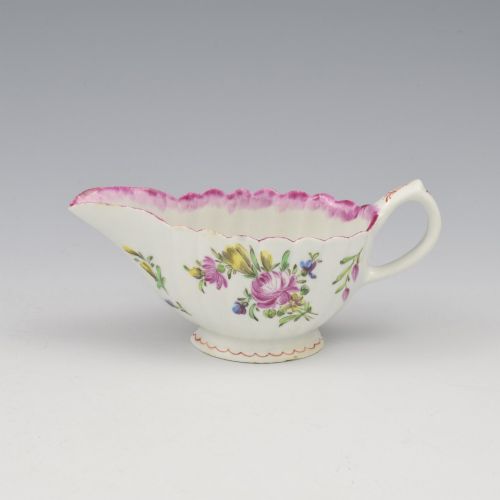
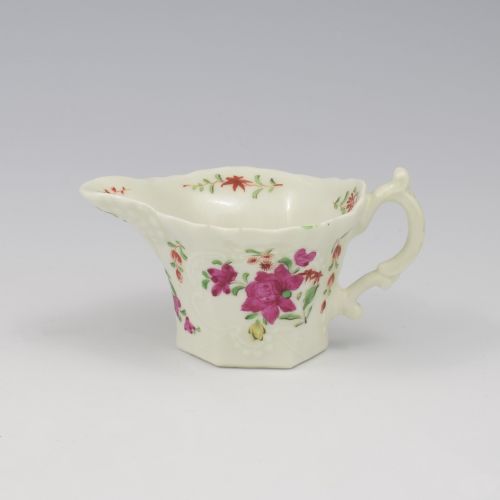
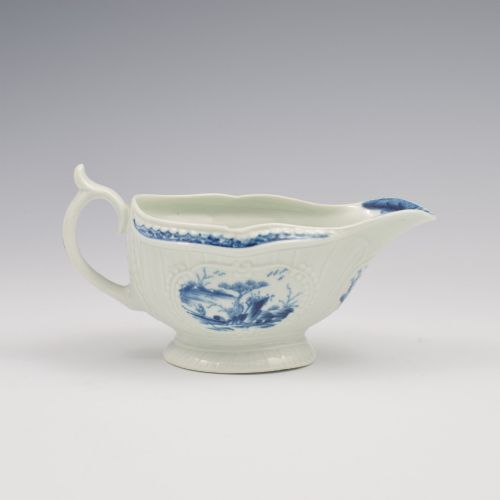
An 18th century porcelain sauceboat brings dining table elegance from the Georgian era, combining functional form with intricate hand-painted detail.
18th Century Porcelain Sauceboat
An 18th century porcelain sauceboat is a small, handled vessel designed for serving gravies, cream or sauces during formal meals. When buyers search this phrase, they find tableware originating primarily from English factories such as Worcester, Bow, and Chelsea, alongside Chinese export pieces destined for European markets.
The pieces on this page showcase forms ranging from simple fluted bodies and hexagonal vessels to naturalistic lettuce shapes and dolphin ewers with lamprey handles. Most items date from the mid to late Georgian period, reflecting the era's demand for refined serveware.
Materials and Construction
Potters utilised soft-paste porcelain to shape these vessels, often employing moulds to create ribbed or fluted bodies before hand-finishing the rims and handles. Cobalt blue glaze provided the base for underglaze decoration, while enamel colours and gold leaf were applied in subsequent firings.
Factories such as Worcester and Bow mastered the application of cobalt glaze and detailed enamel painting, depicting Chinese figures, floral sprays like the rose, and transfer-printed or hand-painted narrative scenes.
Listings feature 18th century porcelain sauceboats spanning soft-paste bodies, cobalt glazes, and enamelled Chinese export styles.
Markers of Quality
Quality in an 18th century porcelain sauceboat depends on the crispness of the moulding and the skill of the brushwork. Pieces featuring complex transfer prints or precise hand-painted Chinese figures display a higher grade of craftsmanship than simpler utilitarian wares.
The translucency of the soft-paste porcelain and the stability of the glaze during firing also separate superior examples from standard production pieces, particularly in specialised forms like dolphin ewers or lettuce-leaf servers.
Bow Porcelain·Worcester Porcelain·Chelsea Derby·Sevres
The 18th Century Porcelain Sauceboat Glossary
- Soft-paste porcelain
- A type of artificial porcelain composition fired at lower temperatures than hard-paste, common in 18th-century English factories. It produces a warm, creamy body and a distinctive glaze texture.
- Cobalt glaze
- A metallic oxide pigment applied under the glaze to produce deep blue decoration. It remains stable at high kiln temperatures.
- Sauciere
- A French term for a sauceboat, often applied to continental European vessels and matching service plates. These items share the same functional serveware purpose as their English counterparts.
- Chinoiserie
- A decorative style reflecting European interpretations of Chinese artistic traditions. It appears frequently on Georgian porcelain depicting imagined Eastern landscapes and figures.
- Enamel
- Opaque vitreous colours painted over the fired glaze and fixed in a second, lower-temperature kiln. This technique allows for a broad palette of reds, greens, and pinks.
18th Century Porcelain Sauceboat: Frequently Asked Questions
How were sauceboats used at Georgian dinner tables?
These vessels held warmed gravies, melted butter, or cream to accompany formal courses. Servants passed them around the table during dining.
Their poured spouts and ergonomic handles allowed diners or attendants to dispense liquids cleanly onto plates.
How do I care for 18th century porcelain?
Wash these pieces strictly by hand in warm water using mild soap, avoiding modern dishwashers entirely. Soft cloths prevent scratching the delicate enamel and gold leaf.
Display or store them away from direct sunlight and sudden temperature shifts to protect the soft-paste body.
What is Chinese Export porcelain?
Chinese Export porcelain refers to wares made in China specifically for European and American markets during the Qing Dynasty. Factories fulfilled orders for armorial services and popular European shapes.
These pieces combine traditional Chinese ceramic techniques with Western decorative preferences, including famille rose enamels and tobacco leaf patterns.