



Georgian Poker and Shovel
Georgian poker and shovel sets are hearth accessories that bring period weight to a fireplace, and you want them for their proportion and honest metalwork.
Georgian Poker and Shovel
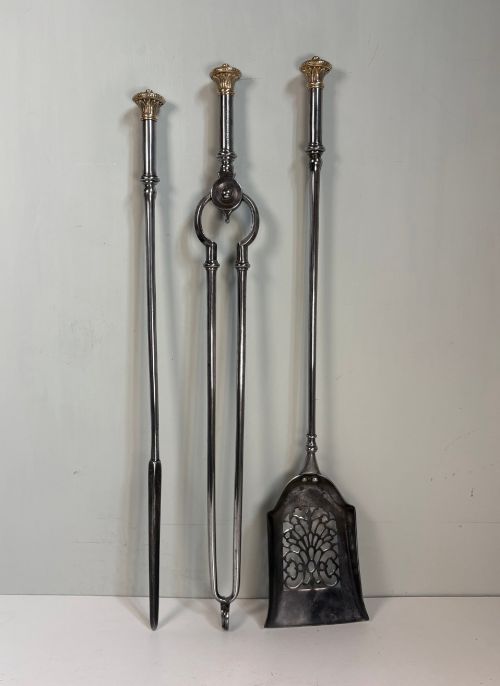
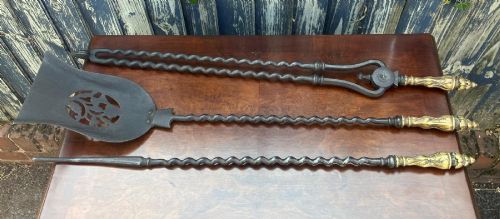
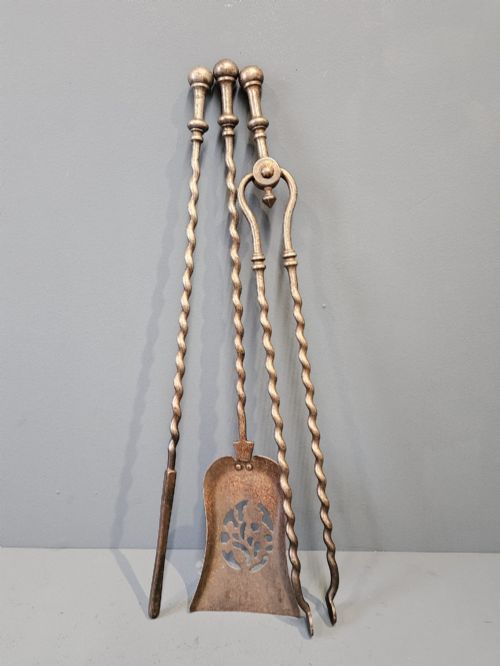
Georgian poker and shovel sets comprise functional hearth implements originating from the eighteenth and nineteenth centuries, often appearing alongside tongs as companion sets. The pieces listed span Georgian, Regency, and Victorian periods, with distinct iterations in steel, brass, and iron.
You are most likely to meet steel and brass combinations from the Georgian and Regency eras, alongside later nineteenth century interpretations. These items served daily domestic duty in managing coal and wood fires before graduating to decorative fireside furnishings.
How they were made
Makers shaped these tools primarily from steel, iron, and brass, utilising burnished or polished finishes to catch the light of the hearth. Gilt brass elements appear on finer examples, adding contrast to the sober grey of polished steel shafts.
Forging and turning dominated production, with handles cast or turned separately before being secured to the poker stems and shovel blades. Details such as claw and ball designs required careful casting and hand-finishing.
Georgian Poker and Shovel Retail Price Guide 2026
Typical asking prices for georgian poker and shovel among the pieces listed under this phrase on Sellingantiques today, from the lower quarter to the upper quarter. They describe what is for sale here now, not the wider market.
Some nineteenth century shovels feature elaborate claw and ball designs, proving that even ash management deserved a touch of theatre.
What varies in quality
Quality rests in the integrity of the metalwork and the crispness of handle turning, distinguishing workshop production from standard utility output. Heavier gauges of steel and well-balanced brass mounts maintain their line over centuries of use.
Proportion and the retention of original surface finishes dictate the standing of a set, where over-zealous cleaning can strip away the historical character of the iron and steel.
The Georgian Poker and Shovel Glossary
- Poker
- A metal rod used to stir or poke a fire. It forms the primary utility piece in any hearth companion set.
- Shovel
- A flat-bladed tool designed for clearing ash and handling coal. Companion sets pair this with the poker and sometimes tongs.
- Burnished steel
- Steel rubbed and polished to a bright, reflective finish. This surface treatment was common on Regency and Georgian fire tools.
- Gilt brass
- Brass coated with a thin layer of gold. It provides decorative warmth on handles and mounts.
- Companion set
- A matched group of fireplace tools displayed together. They sit in a stand or lean against the hearth.
Georgian Poker and Shovel: Frequently Asked Questions
Were these tools used every day?
Yes, these pokers and shovels were daily implements for tending coal and wood fires in period homes. Their sturdy construction of steel and iron handled the heavy work of the hearth.
Over time, many survived through gentle use or by moving from active grates to decorative display as central fireplace accessories.
How do I spot a Georgian set?
Look for the characteristic weight and balance of eighteenth and early nineteenth century metalwork. Georgian and Regency pieces often combine polished steel with turned brass handles.
Examine the construction methods and material choices, such as burnished steel and gilt brass, which align with documented periods from the evidence.
What is burnished steel?
Burnished steel is metal that has been polished to a bright, smooth finish. Makers used this technique to give fire tools a reflective surface that caught the flickering light of the room.
This finish requires careful preservation to maintain its historical integrity without losing the underlying texture of the iron.
Can I use them on my fireplace?
Many of these pieces remain structurally sound for actual hearth use if handled with care. However, their age and finish often make collectors prefer them for display.
Ensure that any active use respects the historical surface of the steel or brass components to prevent unnecessary wear.